
Polythene Bags for Stockists: Retailer Packaging Requirements
By The Velocity Wear Team
Need this made?Get pricing for this product— free, no obligation, 50 pieces minimum.
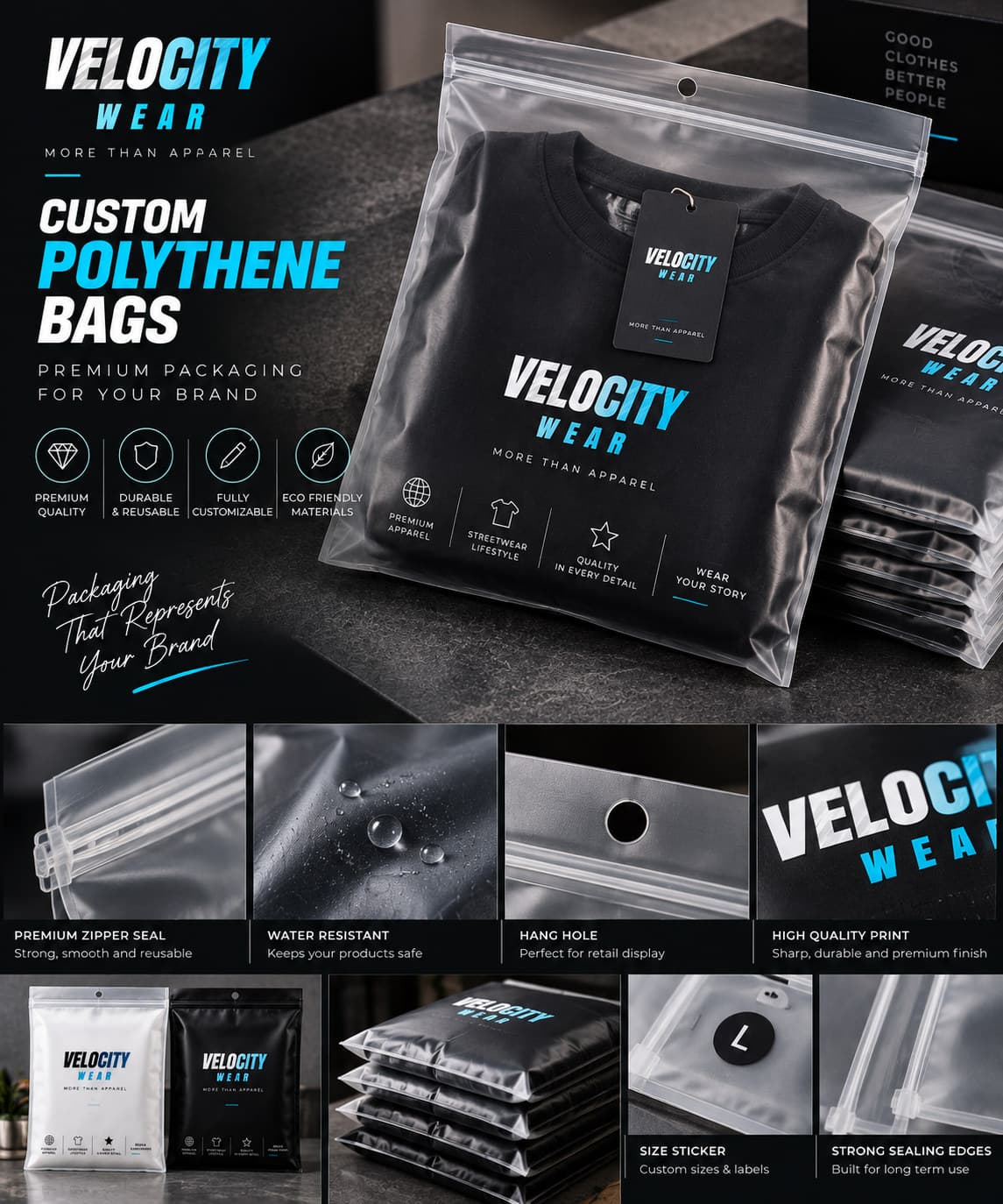
Packaging requirements for retailers usually come down to three things: every item individually bagged, its size readable without opening, and stock sorted so goods-in can check it quickly. Velocity Wear's printed zip-seal bags cover the first two, with size stickers, custom labels and a hang hole for pegged ranges, from 50 bags per design. Always check each stockist's own guidelines first.
What do stockists expect when stock arrives?
They expect to put it out without repacking it. Each shop sets its own rules, and larger retailers often issue a packaging manual, so get the requirements in writing before you order bags or garments. As a general guide, boutiques and independent stockists tend to look for:
- Every garment in its own bag, clean and folded to the same size within a style.
- The size readable from outside the bag, using the same size names as your line sheet (the product list a buyer orders from) and your invoice.
- A hang hole on anything they plan to hang from pegs.
- Stock sorted by style, colour and size, not mixed loose in a carton.
- Cartons labelled with their contents, agreeing with the delivery note.
- A barcode on the bag, but only where their till or goods-in system scans one.
Winning the account in the first place is covered in getting your first stockist. This post picks up once a buyer has said yes and asked when the stock will arrive.
How should the size show on each item?
On a sticker, on the bag face, in the same position on every bag. A shop assistant restocking a shelf should find a medium in a pile of bags by glancing at one corner, not by unfolding anything. Use the size names the stockist ordered in: if their purchase order says S, M and L, a sticker reading 36, 38 and 40 creates a mismatch at goods-in. The size stickers on our printed garment bags are matched to your size run, and size stickers and labels on garment bags covers what else a label can carry.
What goes on the garment, the bag and the carton?
Each layer of packaging answers a different question for the shop, and a delivery that gets all of them right is quick to book in.
| Level | What it carries | Why the shop needs it |
|---|---|---|
| Garment | Woven neck label, care label and a swing tag if you use one | Identifies the product once it is out of the bag |
| Bag | Printed logo, size sticker, custom label with style or colour | Staff can sort and shelve stock without opening it |
| Carton | A contents list: style, colour, sizes and quantities | Goods-in checks the delivery against the order |
| Delivery note | Your order reference and the same contents list | Ties the delivery to the purchase order and the invoice |
Neck labels, care labels and swing tags come under our labels and packaging service. The cartons and the delivery note are your part of the job when you send stock on to a shop, and they are where most goods-in queries start, so pack by style and then by size, and keep a copy of every contents list.
Do all stockists want a hang hole?
No, only the ones that peg. A boutique that folds tees on tables or hangs jackets on rails has no use for one, while a shop with a wall of peg hooks may insist on it for socks, beanies and light tees. Ask how the range will be displayed and specify the hang hole where it will be used. The display side is covered in hang hole poly bags for retail.
Getting stock retail-ready before it leaves the factory
The simplest route is to have garments bagged where they are made. When Velocity Wear makes your clothing and the bags together, every garment is folded, sealed in its printed bag and size-stickered before it ships, so the stock that reaches you is already in the state a stockist expects; factory bagging explains the steps. If your garments come from elsewhere, the bags are sold on their own at the same 50-per-design minimum, and you bag the stock before sending it on.
Briefing a stockist order
Forward any packaging requirements your stockists have sent, then add your logo file, the garments and size breakdown, where hang holes are needed and the number of bags per design, with the delivery country and the date the stock must be ready. Send it all through the enquiry form on this page. The garment bag range has the specification, and our full guide to printed polythene bags covers lead times and samples.