
Retail-Ready Clothing Packaging: Factory Polythene Bagging
By The Velocity Wear Team
Need this made?Get pricing for this product— free, no obligation, 50 pieces minimum.
Retail ready clothing packaging means each garment arrives folded, bagged and labelled, ready for a shelf or a parcel. Order printed polythene bags with your Velocity Wear apparel run and that happens at the factory: every piece folded, sealed in its frosted zip-seal bag and given its size sticker before shipping. Production takes 10 to 15 working days from artwork approval, then freight.
What does factory bagging involve?
It is the final stage of your production run, before the stock is packed for freight. For each garment, in order:
- 1The finished garment is folded to the fold agreed for its bag.
- 2It goes into its printed bag, sized to that folded garment.
- 3The zip seal is pressed shut.
- 4The size sticker, and any custom label, goes on the bag face to match the garment inside.
- 5The bagged stock is packed for shipping to your address.
The bags are the same range sold on its own, the printed polythene bags with a zip seal, hang hole and size stickers, so a brand that later brings some garments in from elsewhere can keep identical packaging across both sources. The customer never sees the difference.
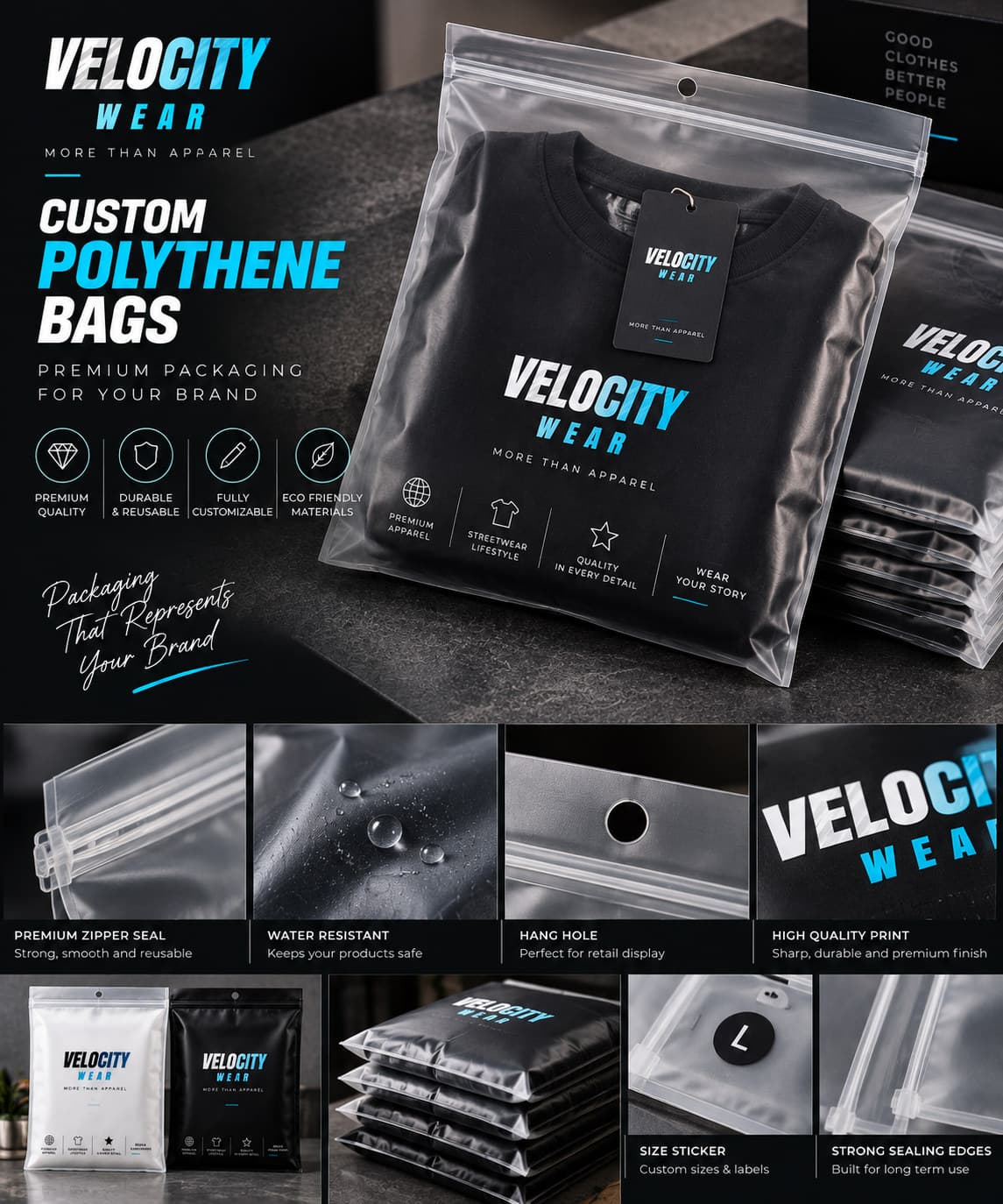
What does it save compared with bagging on arrival?
Mostly time and handling, and the saving grows with the size of the order. Here is where the work moves:
| Task | Bagging on arrival | Bagged at the factory |
|---|---|---|
| Unpacking bulk stock | Every garment unpacked and handled | Bagged stock goes straight into storage |
| Folding | Your team folds each piece | Folded before bagging, to the agreed fold |
| Bagging and sealing | A separate bag order, then packing by hand | Done as part of the run |
| Size labelling | Stickers applied by hand, with room for mix-ups | Matched to the garment as it is bagged |
| Time to first sale | After the repack is finished | As soon as the stock arrives |
There is a quality benefit too. A garment folded once, at the factory, and sealed straight away is handled far less than one unpacked from bulk, refolded on a studio table and bagged there. Fewer hands mean fewer marks on pale fabric, fewer creases from a second fold and fewer size stickers on the wrong bag.
What should you specify?
- The fold for each style, if you have a preference.
- The logo artwork for the bag, which can differ from the artwork on the garment.
- The size breakdown per design, which sets the size stickers.
- Any custom label content, such as style names, colour references or barcode numbers a stockist has asked for.
- The delivery address and the date you need the stock in hand.
Which garments can be bagged at the factory?
Garments from the apparel range that ship folded: custom t-shirts, wholesale hoodies, sweatshirts, joggers and the rest. The minimum is 50 pieces per design on the clothing, with sizes mixed freely within it, and 50 bags per design on the packaging. Each bag is sized to its folded style, as set out in our bag sizing guide.
The rest of the finish
Bagging is one part of making a garment read as your brand rather than a blank. Woven neck labels, care labels and hang tags come under the labels and packaging service, and the stickers on the bag are covered in size stickers and labels.
One quote for garments and bags
When you enquire about the clothing, add a line asking for it bagged, and send the bag artwork, size breakdown and any label content alongside, with the delivery country and the date you need the stock. You get one quote covering garments and bags, usually within hours on a working day. The bag range page lists the specification, and the full printed polythene bag guide covers the bags in depth.