
Polythene Bag Sizes for T-Shirts, Hoodies and Jackets
By The Velocity Wear Team
Need this made?Get pricing for this product— free, no obligation, 50 pieces minimum.
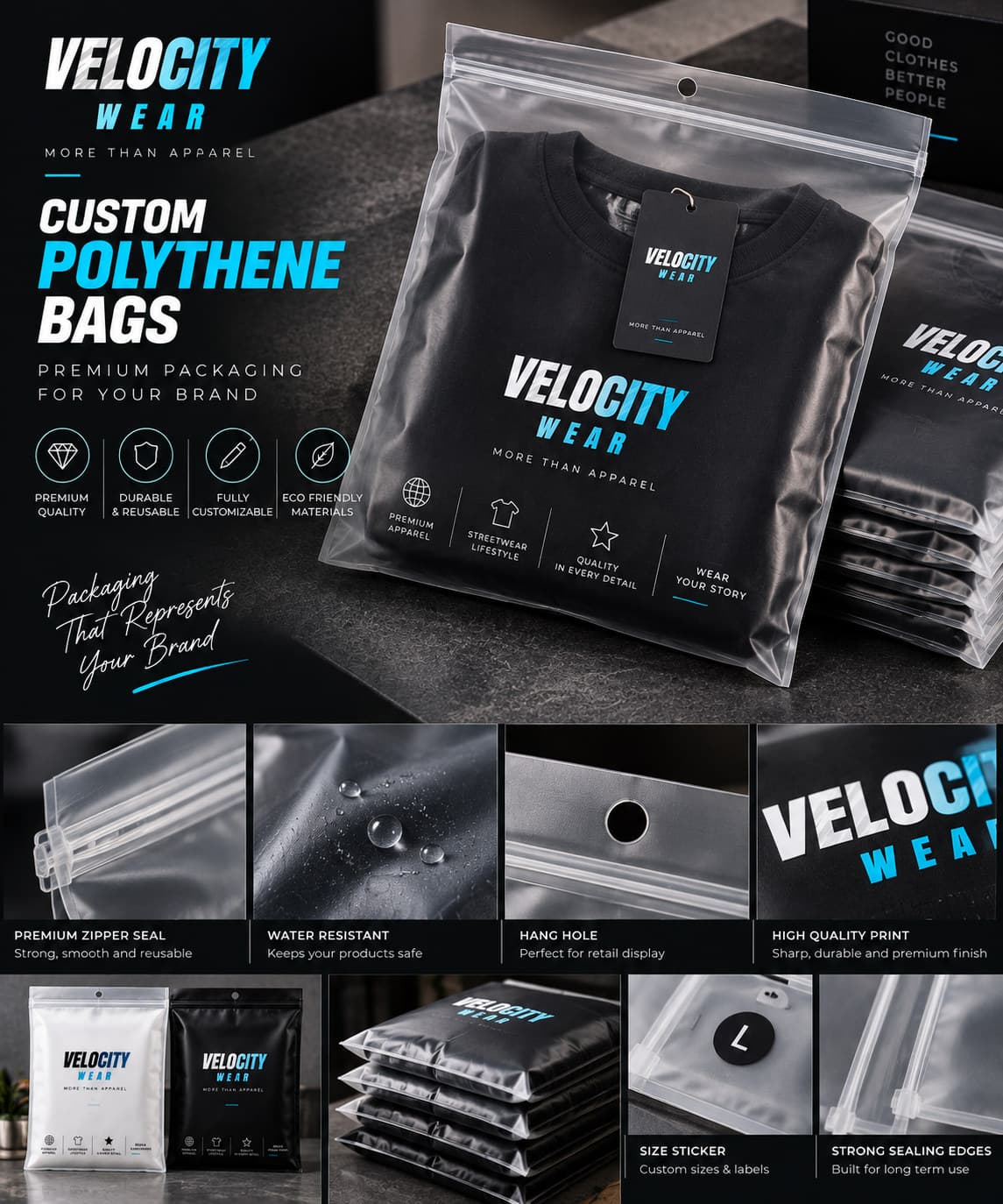
Polythene bag sizes for clothing are set by the garment as it will be folded, plus room for the zip seal and the hang hole, rather than by a standard chart. At Velocity Wear each bag is sized to your folded piece, and the dimensions for every style are confirmed in your quote before production. The minimum is 50 bags per design, made in 10 to 15 working days.
How do you work out the right bag size?
Fix the fold first, then measure. A bag that fits a garment laid flat on a table can still be wrong if the piece is folded differently on the packing line. Every bag in our garment bag range is cut to the fold you will actually use, and these steps get you there:
- 1Fold the garment exactly as it will ship, ideally around the same folding board every time.
- 2Measure the folded piece: width across, length from top to bottom, and depth at the thickest point.
- 3Allow a margin on width and length so the garment slides in without dragging on the film.
- 4Allow extra height above the garment for the zip seal and the band the hang hole is punched through.
- 5Add depth if a swing tag or an insert card travels in the bag too.
- 6Check the result against a real bagged sample before committing to the whole run.
What to measure for each garment
| Garment | Usual fold | What to measure | What goes wrong |
|---|---|---|---|
| T-shirt | Sleeves in, folded in thirds lengthways, then in half | Folded width and length; depth is slight | A bag cut for a hoodie, so the tee slides about and creases |
| Heavyweight or long-sleeve tee | As a tee, with sleeves folded across the back | Depth, which grows with fabric weight | A standard tee bag that strains at the seal |
| Hoodie | Hood folded down, sleeves in, folded in half | Depth at the hood and cuffs | Forced into a tee bag, crushing the hood |
| Joggers | Legs together, folded in thirds or quarters | Folded length and waistband depth | Too long for the bag, so it is folded again and bulges |
| Jacket | Fastened, sleeves back, folded in half | Depth at collar, zips and hardware | Hardware makes the bag bulge and the seal hard to close |
Why does a stock size chart get it wrong?
Because a chart is built around an average garment, and yours is not average. A boxy heavyweight tee folds wider and deeper than a fitted one, an oversized hoodie is deeper than a regular fit, and a jacket with a collar and hardware is a different shape altogether. Put a tee in a bag cut for a hoodie and it slides around, arrives creased and looks untidy behind the film. Force a hoodie into a tee bag and the zip seal strains and the hood gets crushed. Sizing each bag to the folded garment avoids both, whether the garment is one of ours from the hoodie range or your own.
Do you need a different bag for every clothing size?
Usually not. Many brands fold a whole size run to the same width using a board, so small to extra large of one style can share a bag and only the depth changes. The largest sizes of a heavyweight hoodie can outgrow that bag, which is worth checking with a folded XXL before you order. List the styles and the size run in your enquiry, and the quote sets out which bag sizes you need and how they count towards the 50 per design.
Remember the top band as well. The hang hole is punched above the zip seal, and on a bag meant for pegs that band needs space of its own, above the folded garment rather than on top of it; hang hole bags for retail explains how stockists use it.
Getting sizes confirmed in a quote
The simplest route is to order the bags with your clothing: we are making the garments, so we fold and measure them ourselves, and the bags arrive around the stock, as described in factory bagging. For bags only, send the garments or their folded measurements with a photo of the fold. Either way, dimensions are confirmed for each style in your quote. The printed polythene bag page has the rest of the specification, and the printed polythene bag guide covers the minimum and samples.