
How Custom Towels Are Made: Weaving, Dobby, Embroidery
By The Velocity Wear Team
Need this made?Get pricing for this product— free, no obligation, 50 pieces minimum.
Custom towels are made in stages: long-staple cotton is combed and ring-spun into yarn, woven into looped terry with a dobby border built into the weave, reactive-dyed, cut and hemmed, then embroidered with your logo and checked. Velocity Wear makes them from 50 pieces per design, in 10 to 15 working days from artwork approval. A home machine can decorate a towel; it cannot weave one.
What are custom towels made from?
Ours start as 100% combed cotton spun from long-staple fibres. Staple is the length of a single cotton fibre, and combing is the step that pulls the short fibres out altogether; short fibres are the ones that shed as lint and make a towel feel scratchy.
The combed cotton is ring-spun: drawn out and twisted continuously round a spindle into a fine, strong, smooth yarn, used across our towel range. Twist and yarn count are covered in towel cotton and weave explained.
How is towel pile woven?
Terry, the looped surface of a towel, is woven with two sets of lengthways threads. A tight ground warp forms the base cloth, and a slack pile warp is pushed up into loops on both faces each time the crosswise weft is beaten into place.
Loop height and density set the GSM, grams per square metre, the weight of cotton in each square metre. Our range runs from 400 to 700 GSM: 450 for a gym towel that must dry fast, 650 for a bath sheet that must feel generous. More loops hold more water but dry slower, so the weight follows the job.
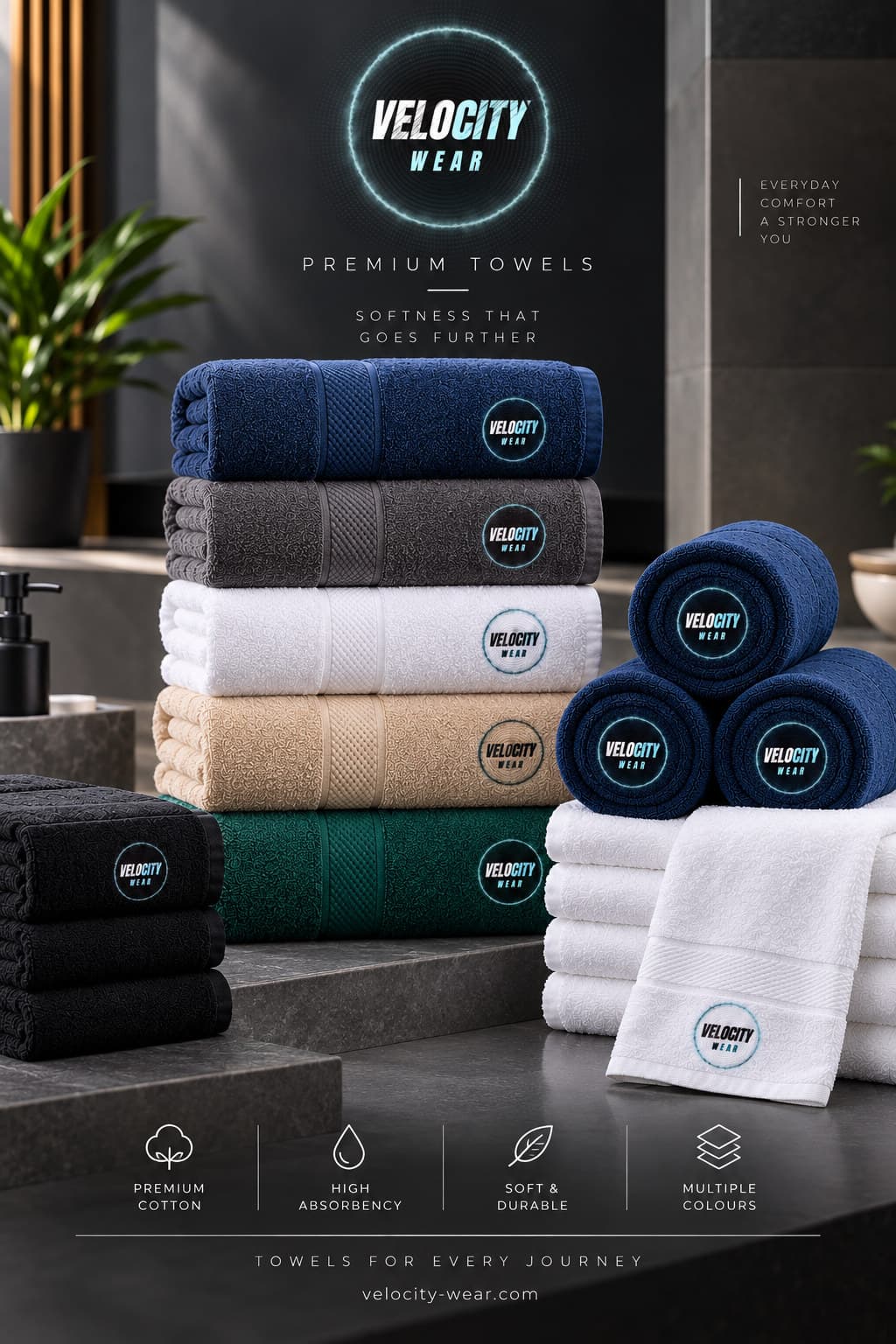
How does a dobby border get into the towel?
It is woven in on the same loom, not sewn on. A dobby is a loom mechanism that raises selected warp threads in a programmed sequence, so near each end the loom stops forming loops and weaves a flat band with a small repeating pattern.
A satin border uses long floats of yarn across the band to catch the light. Either way the border is part of the cloth, so it cannot peel or wash off, and it is the best base on a towel for embroidery. Dobby border towels compares the two.
Dyeing, cutting and hemming
Our towels are reactive-dyed: the dye bonds chemically with the cotton fibre rather than sitting on its surface, so the shade holds through repeated washing. Every colour is wash-tested and can be matched to a brand palette, picked from more than 20 colourways or left as hospitality white. The woven length is then cut into towels and the ends hemmed, with hems reinforced for industrial wash cycles and snag-resistant edges on gym towels.
When does the logo go on?
Last, once the towel is dyed and hemmed, so the thread never goes through the dye bath. Your artwork is first digitised, converted into a stitch file that sets the path, direction and density of every stitch, and you approve a mockup before any towel is embroidered.
The logo is stitched on the flat border, where edges come out sharpest, or on the pile, where a high stitch count keeps the thread above the loops. Woven labels and loop tabs are sewn in at this stage. Which suits a gym, spa or hotel is in our guide to towel branding methods, and the stitching itself on the embroidery service page.
How is a finished towel checked?
Before packing, the run is checked against what you approved: finished size, colour against the agreed shade, logo position and stitching against the proof, and hems for loose threads. Check at your end too; quality checks on bulk towels covers what to open first when a delivery lands.
| Stage | What happens | What it decides |
|---|---|---|
| Spinning | Cotton combed and ring-spun into yarn | Softness, strength and lint |
| Weaving | Pile warp forms loops over a ground warp | GSM and absorbency |
| Border | Dobby mechanism weaves a flat band | Hotel look and a flat base for a logo |
| Dyeing | Reactive dye bonds with the fibre | Colour match and wash fastness |
| Hemming | Length cut, ends hemmed and reinforced | Life in industrial wash cycles |
| Branding | Logo embroidered, labels sewn in | How the logo reads and lasts |
| Inspection | Run checked against the approved proof | Whether delivery matches sign-off |
Can you make custom towels yourself?
You can personalise a finished towel at home with an embroidery machine or a sewn-on patch, fine for a few gifts. What you cannot do is choose the cotton, weave a border, set the GSM or dye to a brand colour, so you are decorating somebody else's towel. A factory order makes colour, weight, border and logo one specification, and every towel in the run matches. We do not print onto towels; branding is stitched or woven.
Starting a custom towel order
Send your logo, the towel colour, the sizes, the quantity per design, the delivery country and the date through the enquiry form on this page. A priced reply usually follows within hours on a working day, and every size and colourway is on the custom towels page.