Sampling Towels Before a Bulk Order
By The Velocity Wear Team
A towel sample is £150, credited against your bulk order when you place it. That buys you a physical piece in the fabric, weight and branding you specified, which is the only way to judge a product people assess by touch. Allow time for it in your schedule: the sample sits before the 10 to 15 working day production window rather than inside it.
What does a towel sample cost?
£150, and the amount comes back off the invoice when the bulk order follows. Samples are never free and we would rather be straight about that than bury a cost somewhere else. What you are paying for is a short custom production run of one: the cloth is sourced, the decoration is set up and the piece is finished exactly as the bulk would be. Order one through the towels page, and check where your intended quantity falls on the pricing tiers while it is being made.
What can you only learn by holding one?
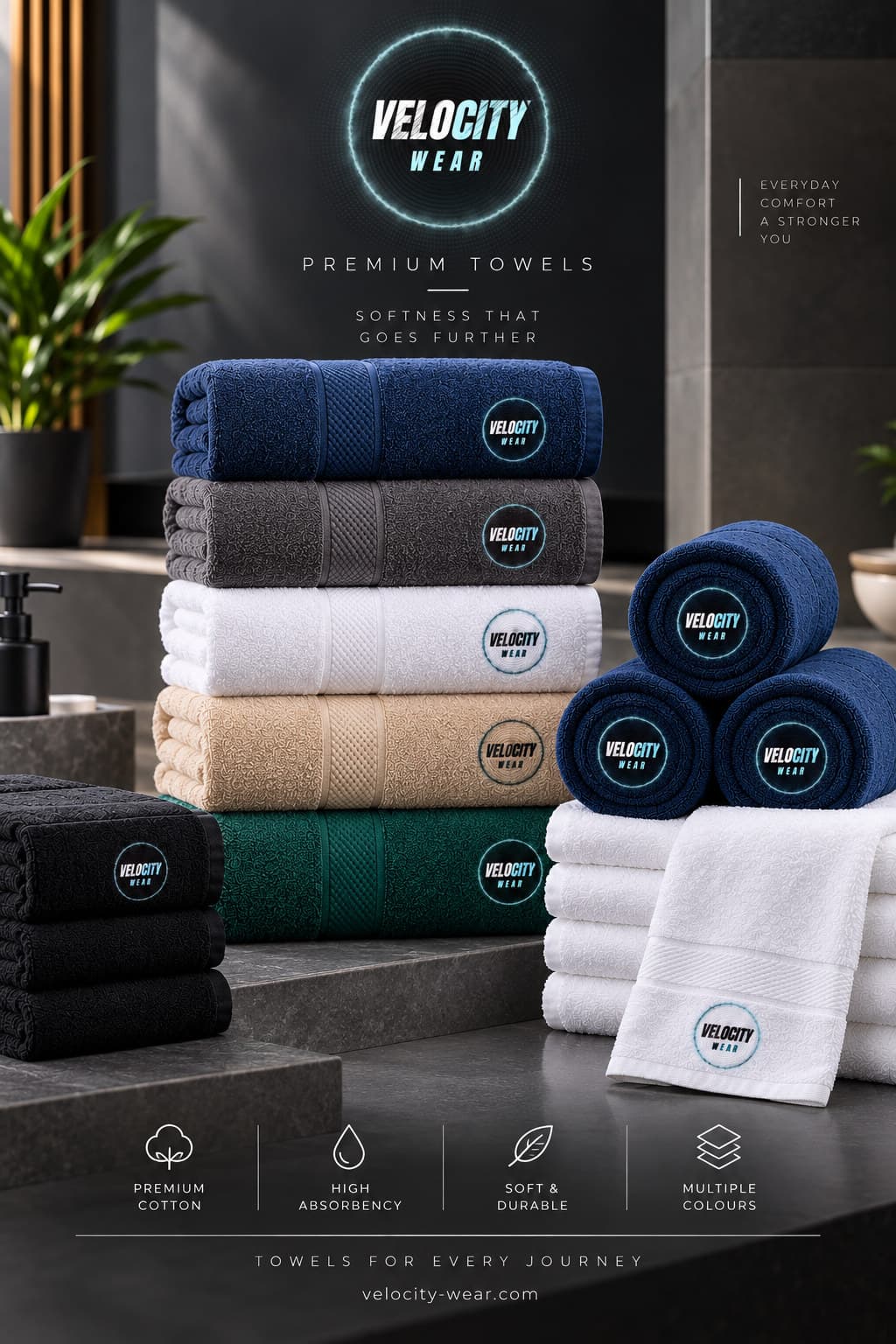
Weight, absorbency and how the branding sits against the pile. A mockup shows you placement and colour approximately; it cannot tell you whether the cloth feels substantial, whether the stitched mark is rough against skin, or whether the towel drapes or stands up when folded. It also cannot tell you how the colour reads under your own lighting, which is a recurring surprise for hotels and spas. The general limits of a render are set out in AI mockups vs physical samples.
How should you test the sample before approving?
- 1Wash it the way you actually will — same machine, same temperature, same detergent.
- 2Repeat that wash several times in a row and look at the branding after each one.
- 3Dry it the way you will, whether that is a tumble dryer or a rail.
- 4Fold it and put it where the real ones will sit, then look at it from across the room.
- 5Hand it to someone who was not involved in choosing it and listen to their first reaction.
The laundering test is the one people skip and the one that matters most, because a towel that looks right on day one and goes stiff after five washes is a problem you will live with for a year. Pair the sample with the fabric decision in choosing fabric for wholesale towels so you are testing the right cloth in the first place.
Does sampling push the delivery date back?
Yes, and you should plan for it. Sampling adds its own production and shipping time, then your review time, then artwork approval before the bulk clock starts. For a fixed deadline — a season opening, an event, a store launch — count backwards from the date and put the sample request at the front of that plan rather than fitting it in later. The minimum on the bulk order stays at 50 pieces per design whether you sampled first or not.
Set against that, the time a sample costs you is usually less than the time a wrong bulk order costs. Several hundred towels in a weight nobody likes is not a problem you solve quickly, and it ties up both the budget and the storage until it is dealt with. The sample is the cheap version of finding out.
One habit worth adopting: keep the sample after approval rather than putting it into service. It becomes your reference piece for checking the bulk delivery on arrival and for any repeat run later on, when the question of whether the colour has shifted needs a physical answer rather than a memory. Bag it, label it with the date and the job number, and keep it out of the light.
If several people have to sign off the order, get them all to handle the sample rather than circulating photographs of it. A towel is the wrong product to approve by email. Fifteen minutes with the piece on a table settles arguments about weight and feel that would otherwise run for a fortnight, and it means the decision is made by people who know what they are agreeing to.