Choosing Fabric for Wholesale Towels
By The Velocity Wear Team
Pick towel fabric by where the towel will live, not by what it costs. Gym cloth wants to be lighter and quick to dry because it goes through a wash every day. Spa and hotel cloth wants weight, because guests judge it in the hand before they use it. Towels are quoted per job rather than from a published from-price, so the fabric sits inside the quote.
Which towel fabric actually suits your setting?
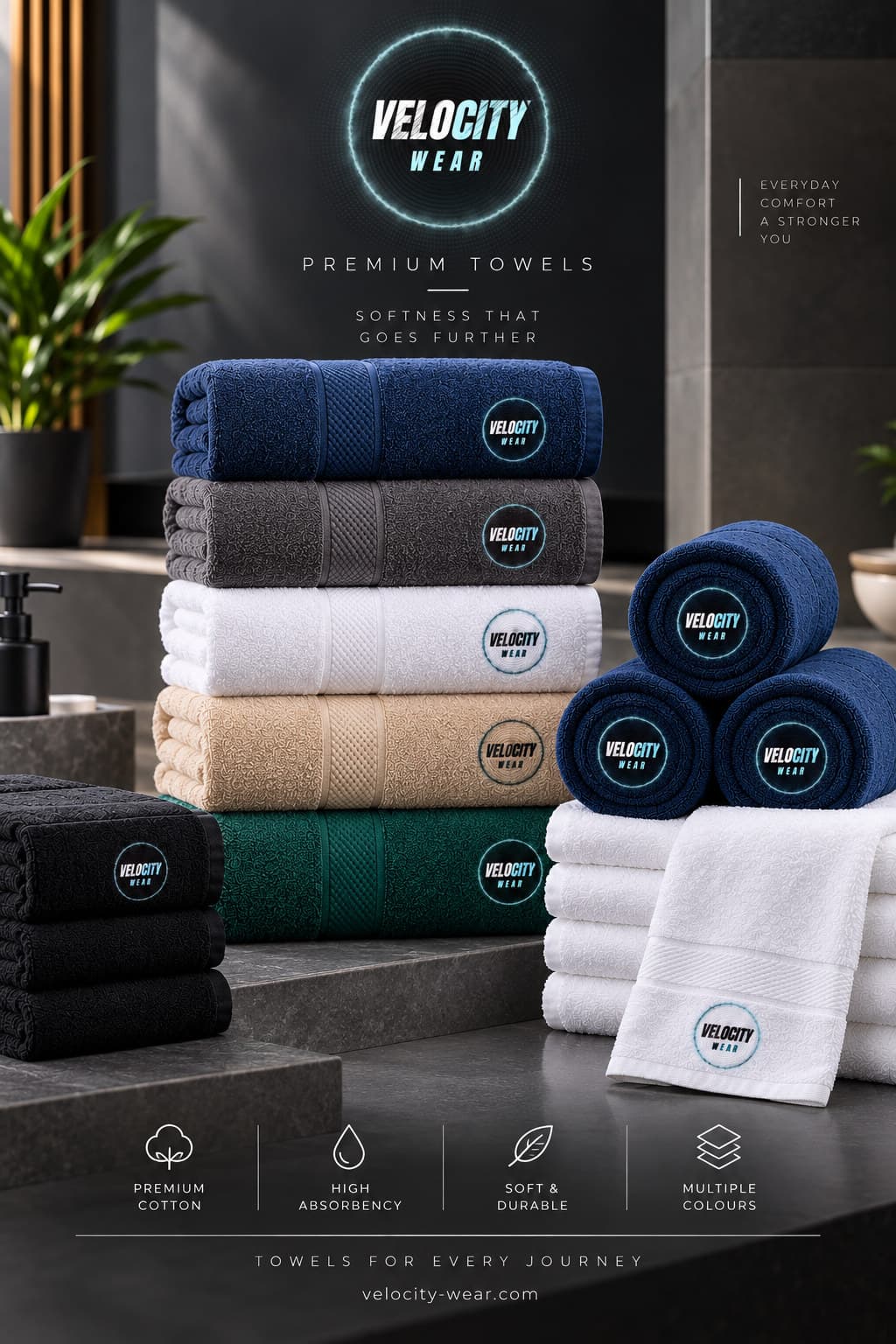
There are three working categories and they behave differently. Gym weight is the workhorse: thinner, faster drying, cheap enough to lose a few without it hurting, and happy being laundered every night. Spa weight is thicker and softer, meant to be wrapped round someone rather than slung over a shoulder. Hotel weight sits between the two but is specified for volume laundering above all else, because a hotel towel is washed several hundred times in its life. Tell us the setting first on the wholesale towels page and the fabric shortlist gets very short very quickly.
How does weight change what a towel does?
Weight is the single decision that moves everything else. Heavier cloth holds more water, feels better folded and photographs well, but it takes longer to dry, costs more per piece and adds real freight weight across a few hundred units. Lighter cloth dries between sessions, stacks smaller and ships cheaper, at the cost of feeling ordinary. Neither is right in the abstract. A gym handing out towels at reception wants turnover; a treatment room wants the towel to be part of the experience.
We do not publish a fixed weight list because the mills we buy from run different constructions, and the honest answer for your order comes with the quote. What you can rely on is that the difference between a light and a heavy towel is obvious the moment you hold both, which is why sampling matters more here than on a printed tee. The process is set out in sampling towels before a bulk order.
Does the fabric limit how you brand it?
It narrows the sensible options. Woven branding, where the logo is built into the cloth on the border, needs a construction that supports it and is decided at fabric stage rather than afterwards. Printed branding sits on top of the pile, so a denser, flatter cloth carries fine detail better than a deep loop. Embroidery is happiest on a woven border rather than in the middle of the pile, where stitches sink. If a particular logo treatment is non-negotiable, say so before the fabric is locked, not after.
What should you check before signing off a fabric?
- Wash regime — domestic, commercial or industrial, and at what temperature.
- Whether the towel is given away, hired out or expected to last years.
- Whether the border needs to carry a woven or stitched mark.
- How it packs, because freight is charged on what the pallet weighs.
Then check it against budget properly. The minimum is 50 pieces per design, sizes mixed as you like, and the price per piece falls as volume rises to a ceiling of 35% off the 50-piece rate at the top tier. That is enough movement that a heavier cloth at 500 units can land near a lighter one at 50. The tiers are on the pricing page. Care instructions matter too, and why branded towels go hard and grey covers what laundering does to the cloth you picked.
A last point that is easy to overlook: pick the fabric before you finalise the design, not alongside it. The cloth determines which decoration methods are available, how much detail survives, whether full-coverage printing is possible at all, and where the branding can sit. Designers who work the other way round produce artwork that then has to be compromised to fit the material, which is a frustrating conversation to have twice. Settle the cloth, then draw to it.