How Retailers Buy Towels Wholesale
By The Velocity Wear Team
Towels for resale are quoted per job, bought at a minimum of 50 pieces per design and produced in 10 to 15 working days from artwork approval. For a retailer the advantage over apparel is structural: there is no size curve, so the whole buy is one decision about depth rather than a forecast split across five sizes that will end badly in two of them.
What margin does a wholesale towel leave?
That depends on the specification, because towels are quoted per job rather than from a list price. Weight, size, colour count and whether branding is woven or printed all move the unit cost. Get the quote against a written specification first, then set retail, rather than deciding a shelf price and working backwards into a towel that cannot support it.
What is predictable is the quantity effect. The discount reaches up to 35% off the 50-piece price as volume rises, stepping at 50 to 99, 100 to 249, 250 to 499, 500 to 999 and 1,000 plus. Because tiers are worked per order rather than accumulated, a retailer who buys once a year rather than quarterly gets a materially better cost on the same annual volume. The full range sits at wholesale.
Which sizes should a retailer stock?
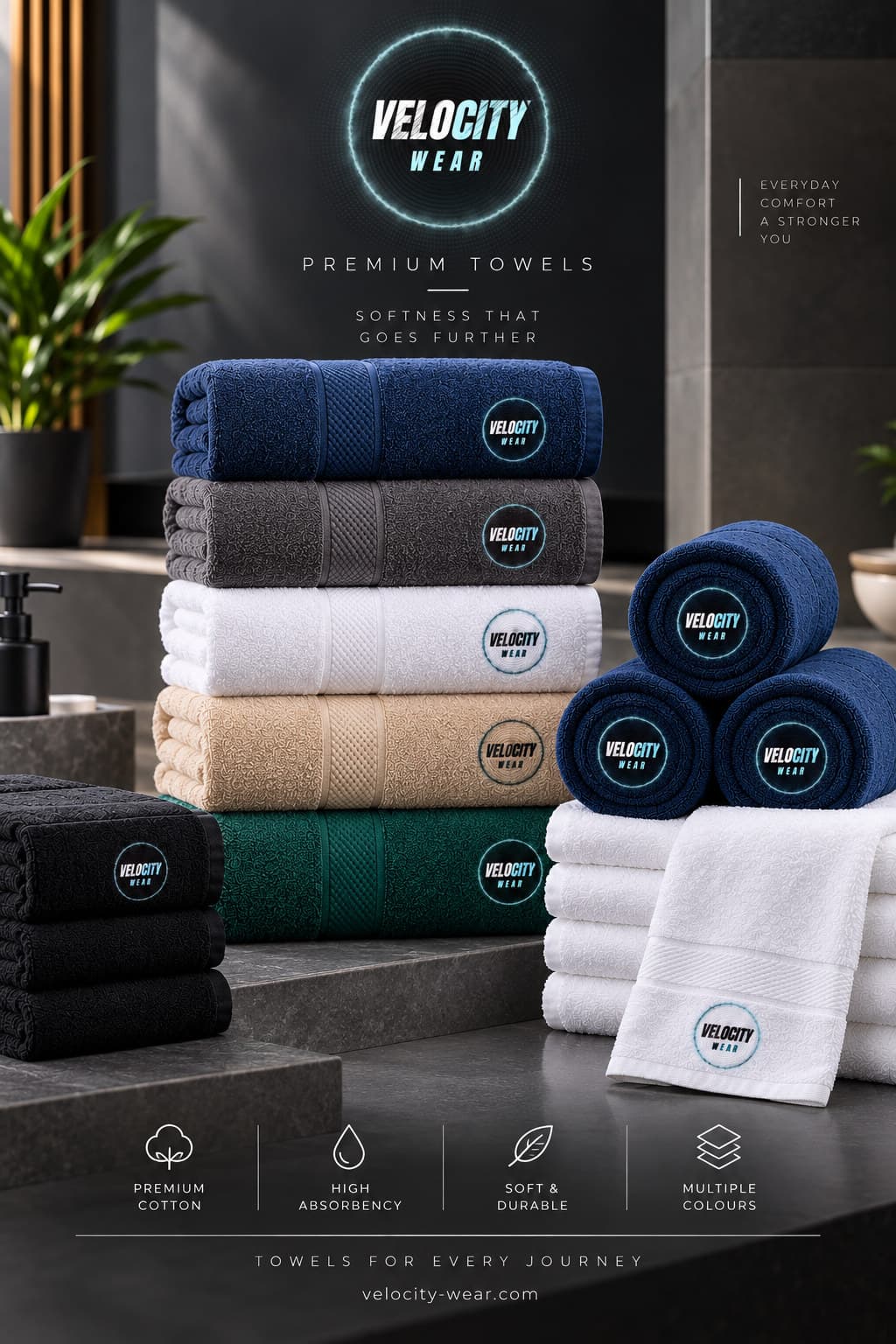
Two sizes cover most shops: a hand size and a bath size. The hand size sells as an impulse item and a gift, the bath size as a considered purchase. A bath sheet is a third specification and only worth carrying where the store already sells at the upper end.
Each size is its own design for minimum purposes, so a two-size range is 100 pieces before a single colourway is added. That arithmetic is why most independents start with one size and one or two colours, prove the line, and widen it from sell-through rather than from a plan. The weights and sizes are listed on our wholesale towels page.
How often should a shop restock?
Less often than instinct suggests. Because each order is priced on its own quantity, four small restocks cost more than one consolidated buy of the same total. Towels also store well: no date, no seasonal styling, no fit that goes out of favour, so held stock keeps its value in a way that printed apparel does not.
The counterweight is cash. A year of stock in a stockroom is money not working elsewhere, so the right cadence sits where the tier saving stops covering the cost of holding it. For most independents that is two orders a year rather than four. Our post on what wholesale towels cost sets out the numbers that feed into it.
What does a retailer need before the first order?
A specification in writing, an approved artwork file and a decision on branding method. Woven branding is built into the towel and lasts its life, which suits a premium shelf position. Printed branding carries detail and colour, which suits graphic-led stock. The two look different enough on a shelf that mixing them in one range reads as inconsistent.
Take a sample before the first order. It is £150, credited against the bulk order, and it is the only way to judge hand feel before committing to stock that has to sell at a price you have already advertised. We deliver across the UK, USA and Europe and invoice in seven currencies, so a multi-country retailer can buy on one order.
Think about how the towel sits next to everything else on the shelf. A branded towel in a display of unbranded homeware looks like a mistake, and a plain one dropped into a branded range looks like filler. The line works where the shop already has a point of view, because the towel then reads as part of it rather than as an experiment. That is a merchandising judgement rather than a buying one, and it predicts sell-through more reliably than the specification does.