Bulk Towels for Charities: A Buyer's Guide
By The Velocity Wear Team
Charity towels are quoted per job, with a minimum of 50 pieces per design and 10 to 15 working days of production from artwork approval. For a fundraising committee the question is not what a towel costs but what it returns. A towel priced at a fundraising event has to cover its own unit cost first, and only the margin above that counts as raised.
Does a branded towel raise enough to justify the outlay?
It depends on where it is sold. At a sponsored swim, a triathlon or a beach clean, a towel sells because it is needed on the day. At a gala dinner or a shop counter, it competes with items that cost less to produce and carry a similar retail price. The towel wins where the event itself creates the need.
Work out the numbers before the order, not after. Take the quoted unit price, add whatever you spend on delivery, set a retail price the audience will actually pay, and multiply the difference by a sell-through you would be happy to defend to a trustee. If that figure is small, a lower-cost item raises more per pound spent. The weights and sizes are on our wholesale towels page.
What unit cost should a fundraising committee plan around?
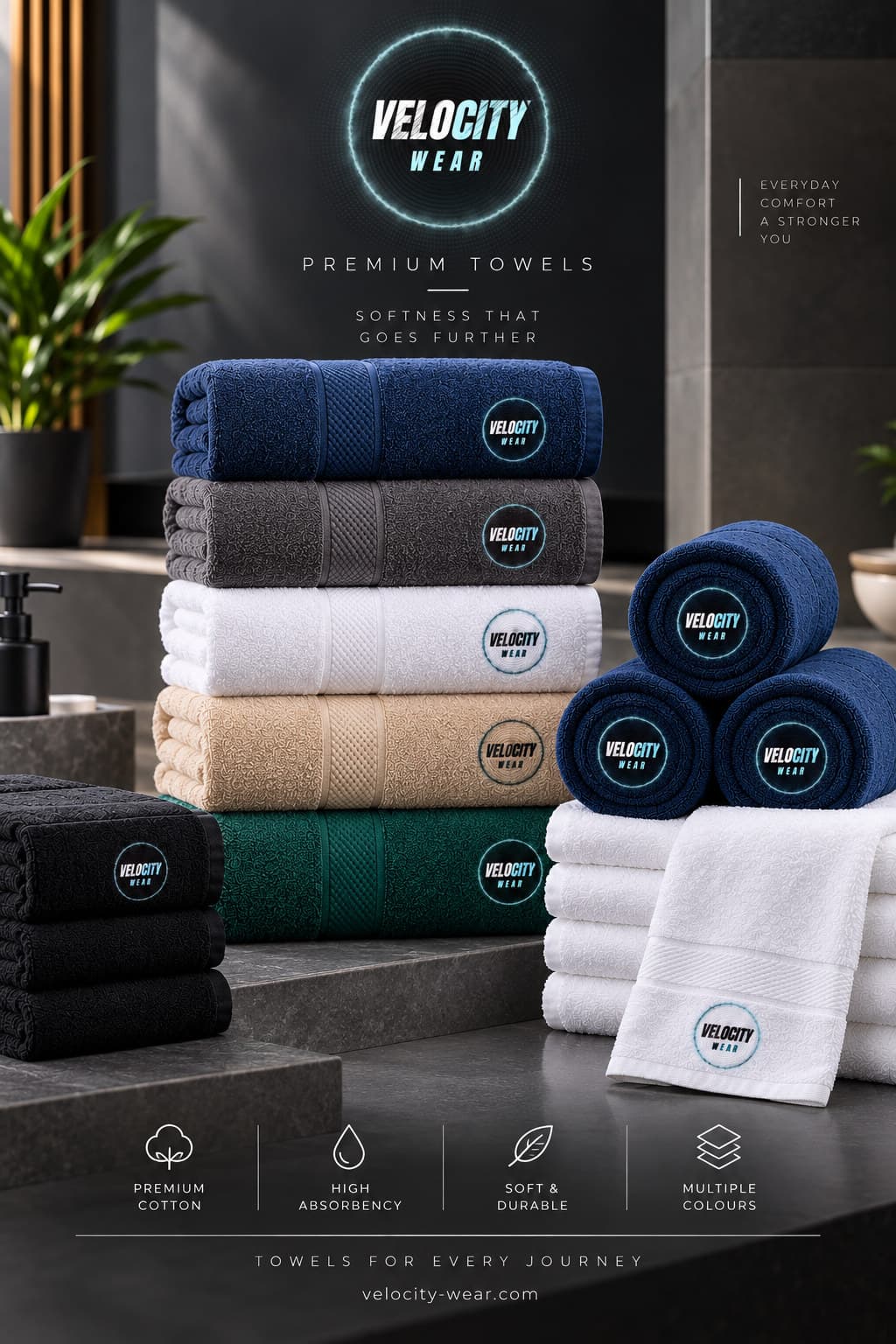
Towels are priced per job rather than from a fixed list, because the specification moves so much: gym, spa and hotel weights, several sizes, and branding that is either woven in or printed on. A committee should get a quote against a written specification before setting a retail price, rather than the other way round.
The discount structure itself does not move. Up to 35% comes off the 50-piece price as quantity rises, with tiers at 50 to 99, 100 to 249, 250 to 499, 500 to 999 and 1,000 plus. That tempts committees into larger runs, and it is only the right call if the sell-through supports it. Our charities and fundraising page covers the rest of the range.
How do you avoid ordering stock you cannot shift?
Two habits help. Keep the year off the artwork, so anything unsold goes into next year stock rather than a cupboard. And start at the minimum for any new item, however good the tier price looks at four times the quantity. A charity that sells out of 50 towels has a decision to make next time. A charity sitting on 200 has a storage problem and a line in the accounts.
If you are running several items, order the towel small and the proven item large. The discount lost on 50 towels is a much smaller number than the cost of 150 that never sell, and a committee that can show sell-through has an easier conversation the following year. If you want the pricing mechanics in full before drawing up a budget, they are set out in our post on how much wholesale towels cost.
Who signs off the artwork?
Name one person. Charity artwork tends to pass through a committee, a communications lead and sometimes a trustee, and every extra reviewer adds days before the production clock even starts. Production is 10 to 15 working days from approval, so a fortnight of internal circulation is a fortnight added to the delivery date.
Where a logo has usage rules, check them against a towel specifically. A mark cleared for print on white may need a different treatment on a coloured towel, and woven branding simplifies to fewer colours than a printed version. A £150 sample, credited against the bulk order, settles that before the run.
Give the volunteers on the stall something simple to say. A towel sells better where a helper can explain in one sentence what the money funds, and worse where the answer is vague. That is a copy decision rather than a production one, but it belongs in the planning, because printing a line about a specific appeal onto the towel itself fixes it permanently and shortens how long the stock stays sellable. Keep the message on the signage and the crest on the towel.