Towels for Agencies, Ordered Properly
By The Velocity Wear Team
Towels for a client campaign are quoted per job, ordered at 50 pieces per design and produced in 10 to 15 working days from artwork approval. For an agency the risk is not the product, it is the approval chain: the production clock starts when artwork is signed off, and a client brand team can take longer to approve a towel than we take to make one.
What does a client expect from a branded towel?
Something that does not look like a giveaway. Agencies reach for towels because the category is less crowded than tees and bottles, and because a towel survives in a client household long after a printed pen has gone. That only holds if the weight is right. A thin towel with a good logo on it reads worse than no towel at all.
Spa and hotel weights are the ones that carry a premium impression. Gym weight is the right pick for anything handed out at a sporting activation, where drying speed and quantity matter more than hand feel. All three are described on our wholesale towels page.
How do you hold brand guidelines on a woven towel?
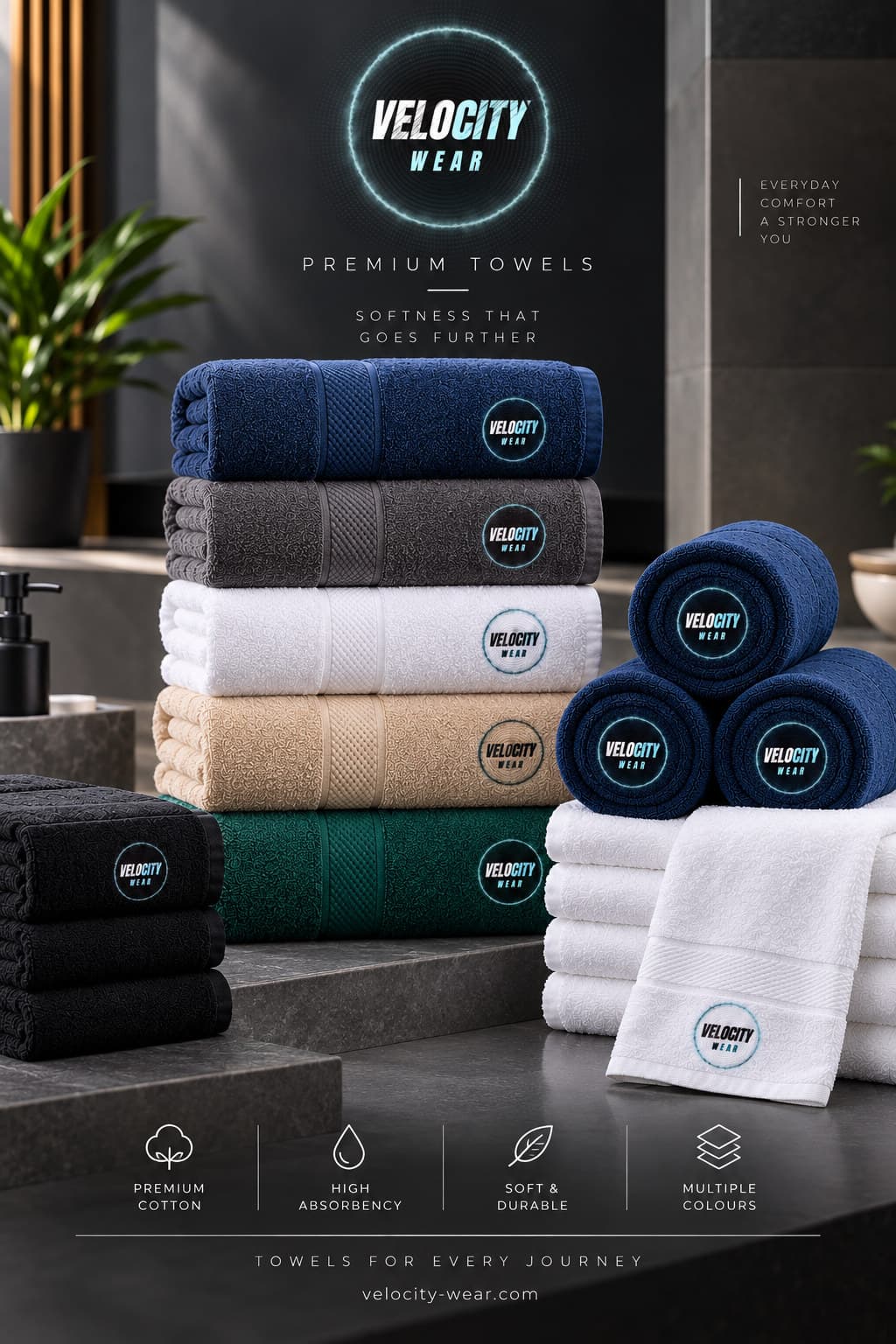
Weaving simplifies. A mark is built into the towel during manufacture, which means it resolves to a limited number of colours and to shapes that survive at thread scale. Brand books written for screen and print rarely account for that, so a logo with a gradient, a thin outline or five colours needs a woven-specific treatment agreed with the client in advance.
Printing is the alternative and keeps the artwork closer to the guidelines, with full colour and finer detail on the pile. The trade is longevity: a printed mark softens over a long wash life where a woven one does not. Take a £150 sample, credited against the bulk order, and put it in front of the brand team before the run rather than after.
How do agency timelines line up with production?
Badly, unless the approval time is built into the plan. Production is 10 to 15 working days from approval, plus transit. Agencies routinely quote that figure to a client as though it starts on the day the brief lands, and then lose a week internally to a round of amends and a legal review.
Plan backwards from the activation date and mark artwork approval as a hard milestone with a date attached, not as a step that happens when everyone gets round to it. If a sample is going through the client, add its round trip at the front. Our corporate page covers the wider set of items agencies usually run alongside.
Who approves the sample?
The person who can say no at the end. This sounds obvious and is the most common failure in agency-run merchandise: a sample is approved by a marketing manager, the run is produced, and a brand guardian sees it for the first time on the delivery. Get the final approver onto the sample, in writing, before the order goes in.
Once approved, keep the file, the colour reference and the specification. A campaign that repeats reuses all three, so a second wave is production time only, with no new approval cycle. The programme-level version of that discipline is set out in our post on building a corporate apparel program.
Build contingency into the quantity as well as the calendar. Activations run long, guest lists grow, and a client who briefed 200 pieces will ask for another 50 the week before the date. Coming back for a top-up means a fresh 50-piece run and a fresh production window, which will not land in time however the conversation goes. Ordering a margin above the brief costs less than an emergency reorder that misses, and undated leftovers are usable at the next activation.