Print or Embroider Wholesale Towels?
By The Velocity Wear Team
Print if the logo has several colours or covers a wide area; stitch if it is small, simple and needs to read as premium. Towelling has a raised loop, so anything sitting on top of it fights the surface. The safest branding on a towel is a flat woven border carrying either a print or an embroidered mark, and that placement is decided before production starts.
Print or stitch — what decides it?
Start with the artwork rather than with a preference. A two-colour wordmark under about 10cm wide is a stitch job: it will hold shape, survive laundering and look deliberate. A full-colour crest, a gradient, or anything with photographic content has to be printed, because thread cannot do gradients without an enormous stitch count. Between those two extremes, the decision usually comes down to how many pieces you are ordering and how the towel will be used.
Volume matters because screen printing carries a setup cost per colour that spreads across the run, while embroidery is priced on stitches and stays roughly flat per piece. At 50 units a simple stitched mark often looks better value; at 1,000 the screen setup disappears into the total. Our towels range covers both, and the tiers that drive that maths are set out on the pricing page.
Where on the towel should the branding sit?
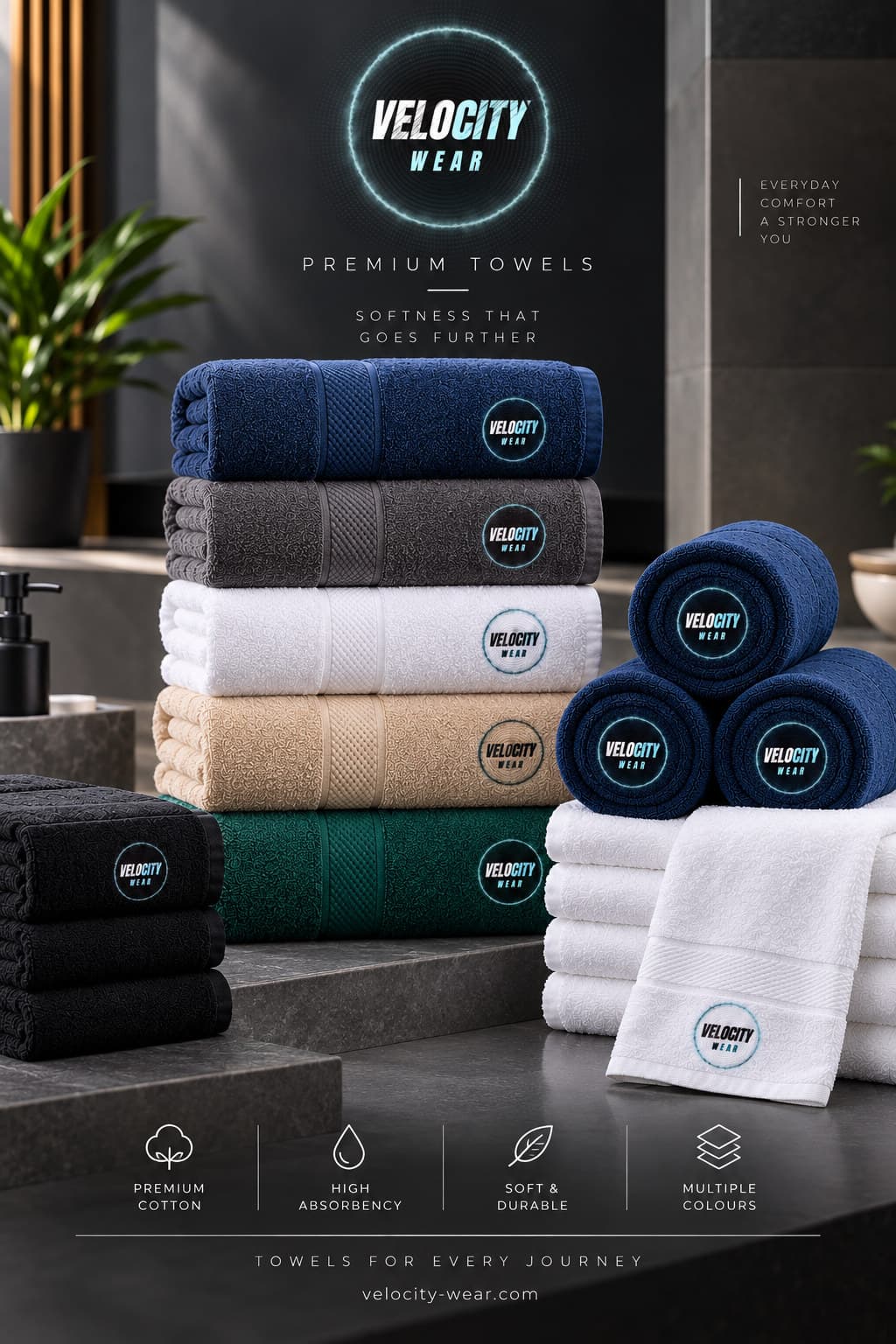
Almost always the flat woven border, usually one end, occasionally both. It is the only part of a towel that behaves like a normal fabric, so it takes detail cleanly and keeps it. Branding placed in the middle of the pile has to contend with loops that move every time the towel is used, which softens edges and blurs small type. If you want a mark visible when the towel is folded on a shelf, ask for it on the border nearest the fold and check that on a sample rather than a render.
What does each method do to the pile?
A print lays a film of ink across the loops. On a border this is barely noticeable; across the body of the towel it creates a patch that does not absorb, which guests notice. Embroidery pulls the cloth together where it sits, so a dense design in the middle of a towel can pucker after a few washes. Appliqué is a third route worth knowing about, and appliqué, patches and woven labels explains where it earns its place.
How does decoration affect the quoted price?
Towels are quoted per job, so decoration is not a line item bolted onto a list price — it is part of what determines the price in the first place. Colour count, stitch count, placement count and whether the border has to be woven all move the number. The minimum stays at 50 pieces per design however you decorate, and each colourway that needs its own screens counts as a design of its own. A direct cost comparison sits in screen printing vs embroidery on towels.
Decide the number of positions early, because it is the variable buyers change latest and it has the largest effect on the total. One mark on one border is the standard. Adding a second position on the opposite end, or a small secondary mark elsewhere, is not a minor addition — it is another setup, another pass through the machine and another thing to check on every piece. If the budget is tight, a single well-placed mark almost always looks better than two competing ones.
Finally, be realistic about what the branding has to do. A towel used inside your own building only needs to be identifiable; a towel that leaves with a customer is carrying your name into places you are not. Those two jobs justify very different levels of spend, and confusing them is how buyers end up paying for a premium finish on stock that never leaves a laundry cupboard.