Woven Labels and Hems on Wholesale Towels
By The Velocity Wear Team
A towel has no neck, so there is no neck label. The equivalents are a woven tab sewn into the side hem, a woven or embroidered mark on the dobby border, and a care label stitched into a corner. A hem tab is the discreet private-label option; border branding is the visible one. Most towel programmes use both, for different reasons.
Where does the label go if a towel has no neck?
Into the hem. A folded woven tab is caught into the side seam during making up, usually a few centimetres from a corner, and it carries a name or a small mark. It is the towel equivalent of the label inside a t-shirt collar: quiet, permanent, and the thing a customer looks for when they want to know who made the towel they liked.
The care label goes into a corner alongside it, or onto the same tab if there is room. Keeping both in one place means one sewing operation instead of two, which keeps the cost down. Our wholesale towels page covers the private label options available with a bulk run.
Woven tab or embroidered hem, which suits which towel?
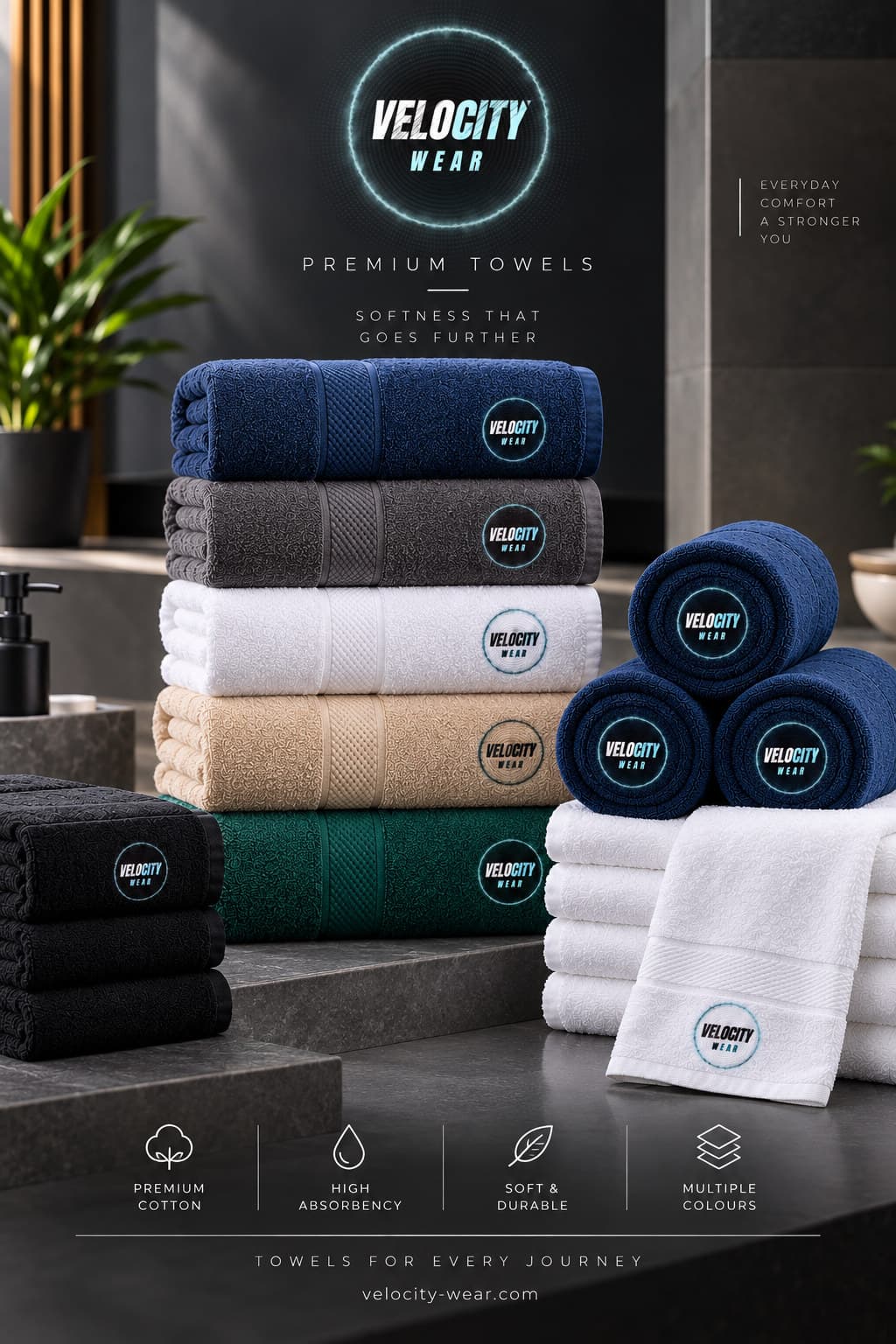
A woven tab suits a retail or private-label towel, where the brand wants to be found rather than announced. An embroidered mark on the border suits a gym, a spa or a hotel, where the towel needs to be identifiable across a room and where identification also discourages it from leaving the building.
Hotels lean towards woven border branding on the towel itself, because it survives an industrial laundry indefinitely. Spas often prefer embroidery on the border, which reads as more considered in a treatment room. Gyms mostly want the mark large and obvious. The terminology carries over from garments, and neck labels: woven, printed or tagless explains the underlying methods.
What can a hem tab actually carry?
Not much, and that is the constraint to design around. A tab is small, so it holds a wordmark or a simple symbol, not a logo with a strapline and an established date underneath. Woven tabs handle solid shapes and clean type well and fine detail badly, because the weave has a resolution limit in the same way a screen does.
Bring a simplified lockup to the artwork stage. If your mark only works at full complexity, the honest answer is to use a wordmark on the tab and keep the full logo for the border or for the packaging. Towel programmes built for retail brands are described in private label towels for wellness brands.
Colour is the other constraint. Woven tabs are made from a fixed set of yarn colours, so an exact brand shade is not always reachable in a tab the way it is in a print. Ask what the nearest available yarn is before approving, and consider a plain single-colour tab against the towel rather than chasing a match that will only ever be approximate at that size.
How does labelling affect the timeline and the cost?
Woven labels are made before the towels are finished, so the artwork for them has to be approved alongside everything else rather than after. That approval is what starts the 10 to 15 working day production window, and a label still in revision holds the whole order, not just the label.
On cost, labelling is an itemised line rather than something folded silently into the towel price, and towels are quoted per job in any case. Ask for the tab, the care label and any border branding to be priced separately so you can see what each is worth. Take the £150 sample if the tab is central to how the product reads; it is credited against the bulk order. Order a sample with the label fitted rather than loose, and check the glossary for the label terms you will see on the quote.