Ordering Towels for Summer Events
By The Velocity Wear Team
For a May or June event, place the order in March. Production runs 10 to 15 working days from artwork approval, transit follows, and spring is when everyone else is ordering event stock too. Branding the towel for the brand rather than the event date means anything left over on the Monday afterwards is still usable at the next one.
How far ahead does a May or June date need booking?
Roughly eight to ten weeks from first enquiry to towels in hand, assuming artwork exists and approval is quick. March for a May event, April for late June. If you are sampling first, add the sample's own production and shipping plus your review time on top, which pushes a May event back into February. The date on an event does not move, so build the plan around the in-hand date rather than the event date and keep a week of slack between them.
What kind of towel suits an outdoor event?
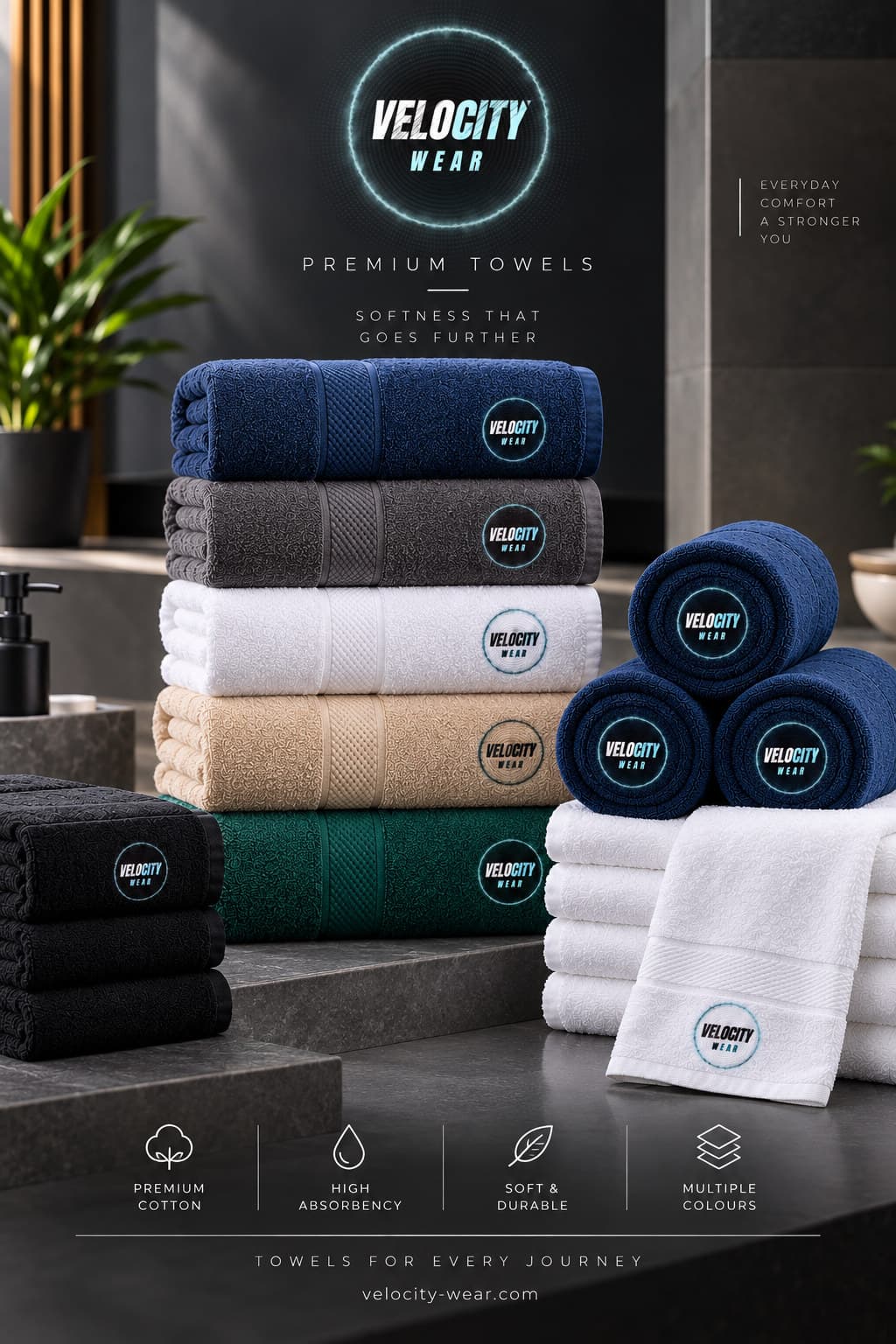
Bigger and bolder than an indoor product. A beach or bath format gives the design somewhere to live and gives the person something worth carrying home, which is the whole point of event merchandise. Colour matters more than weight here: the towel is photographed on grass, sand or concrete in bright light, and a washed-out design disappears. Full-coverage printing is possible on the right cloth, which changes the conversation from a logo on a border to a design across the whole piece — see print or embroider wholesale towels for where each method fits.
Should you brand it for the event or the brand?
The brand, almost always. A towel carrying a specific date or a one-off festival name is worthless the following week, both to you and to the person holding it. A towel carrying your identity keeps working: it gets used all summer, it gets seen, and any surplus goes straight into the next event or onto a shelf. If the event genuinely needs its own identity, keep it small and secondary rather than making it the design. Remember each variant is its own 50-piece minimum, so restraint here saves real money.
What do you do with what is left over?
Sell it, use it as staff stock, or hold it for the next date. Undated towels give you all three options; dated ones give you none. Plan the quantity against the volume tiers on the towels page honestly — the discount reaches up to 35% off the 50-piece rate at the top, which is only a saving on pieces that find a home. If the event repeats annually, keep a retained piece and the job number so next year's run matches, as set out in reordering wholesale towels in colour. A £150 credited sample in February settles the colour question before spring gets busy.
Think about how the towels get from the van to the people on the day, too. Event stock that arrives cartoned by format is easy to distribute; stock that arrives interleaved has to be sorted in a field at seven in the morning. Ask for the packing arrangement you want at quote stage, and if towels are being handed out individually, having them bagged saves a great deal of handling on site.
Weather is the variable nobody can plan around, and it is another argument for an undated design. A washed-out weekend can halve the number of towels that go out, and the ones left in the van are only a loss if they cannot be used again. Order to a number you would be comfortable holding, then treat a good weekend as the reason to reorder rather than the outcome you budgeted for.
If the summer holds several dates rather than one, order for the whole season in a single run. You take a better volume step, you pay one freight charge instead of three, and every towel comes from the same dye lot so the stock looks consistent across every event. Splitting the same total across three orders costs more and gains you nothing except the illusion of flexibility.