Towels for Hotels: samples
By The Velocity Wear Team
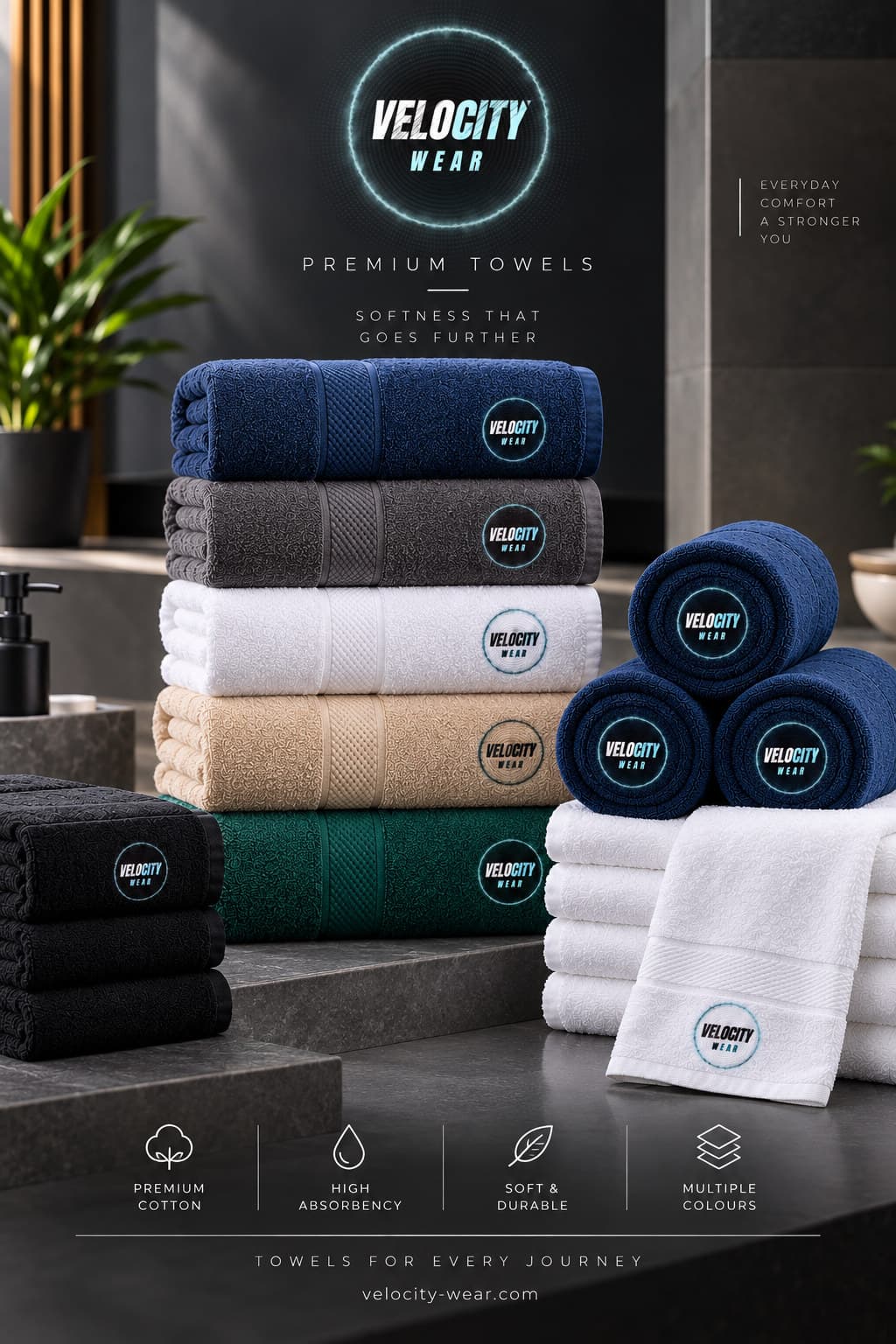
A hotel towel sample costs £150 and is credited against the bulk order when you place it. It is manufactured to the specification you approve, which makes it the only reliable way to judge weight, absorbency and how your mark reads on pile. Given that a full rotation runs to several hundred pieces, one towel tested properly is a small price for certainty.
What should a hotel buy a sample for?
Three decisions, all of which are expensive to get wrong at scale. The weight class, because it sets both the guest impression and the drying time your laundry has to absorb. The base colour, because it has to survive whatever whitening process your laundry uses. And the branding, because a mark that looks crisp on a screen can disappear entirely into deep pile. None of those can be settled from a specification sheet.
There is a commercial reason as well. Towels are quoted per job against an agreed specification rather than sold from a published rate, so the approved sample is what pins that specification down. After approval the quote is stable and everyone is discussing the same object. The wholesale towels page covers the choices that feed into it.
How do you test a towel against your laundry cycle?
Hand it to housekeeping and ask them to treat it as ordinary stock for a fortnight. The point is to expose it to the real process, including the parts nobody documents: the actual temperature, the actual detergent dosing, the actual dryer setting, and the occasional cycle that runs hotter than it should.
- 1Measure the towel before the first wash and again after ten, so shrinkage is a number rather than an impression.
- 2Note how long it takes to dry, since that figure multiplies across every cycle for the life of the stock.
- 3Check the branded area under good light after ten washes for any change in definition.
- 4Feel the pile. Towels that go hard usually do so because of drying temperature rather than the cloth.
- 5Compare it against whatever you currently use, side by side, rather than from memory.
That fortnight tells you things no render can, which is the argument in AI mockups versus physical samples.
Does the sample fee come off the bulk invoice?
Yes. The £150 is credited against the bulk order when you proceed, so for a property that goes ahead it behaves as a deposit rather than an extra cost. If you sample two weights to compare them, each is charged at £150, and the credit applies against the order you eventually place. Samples are never supplied free, because each one is a short production run in its own right.
Once the sample is approved, the order opens at fifty pieces of that design with formats mixed as you like, production runs 10 to 15 working days from approval, and the per-piece rate falls through the quantity bands to a ceiling of 35% off the fifty-piece figure.
What should you do with the sample afterwards?
If you tested one and approved it, order a second unwashed sample or pull a towel from the first delivery and seal it away. That untouched reference is what every future repeat order gets matched against, and it costs you one towel out of hundreds. Without it, a restock two years later is matched against a description rather than an object, and dye-lot variation becomes much harder to control.
The branding decision that the sample usually settles is covered separately in our piece on hotel towel print or embroidery.