Towels for Hotels: print or embroidery
By The Velocity Wear Team
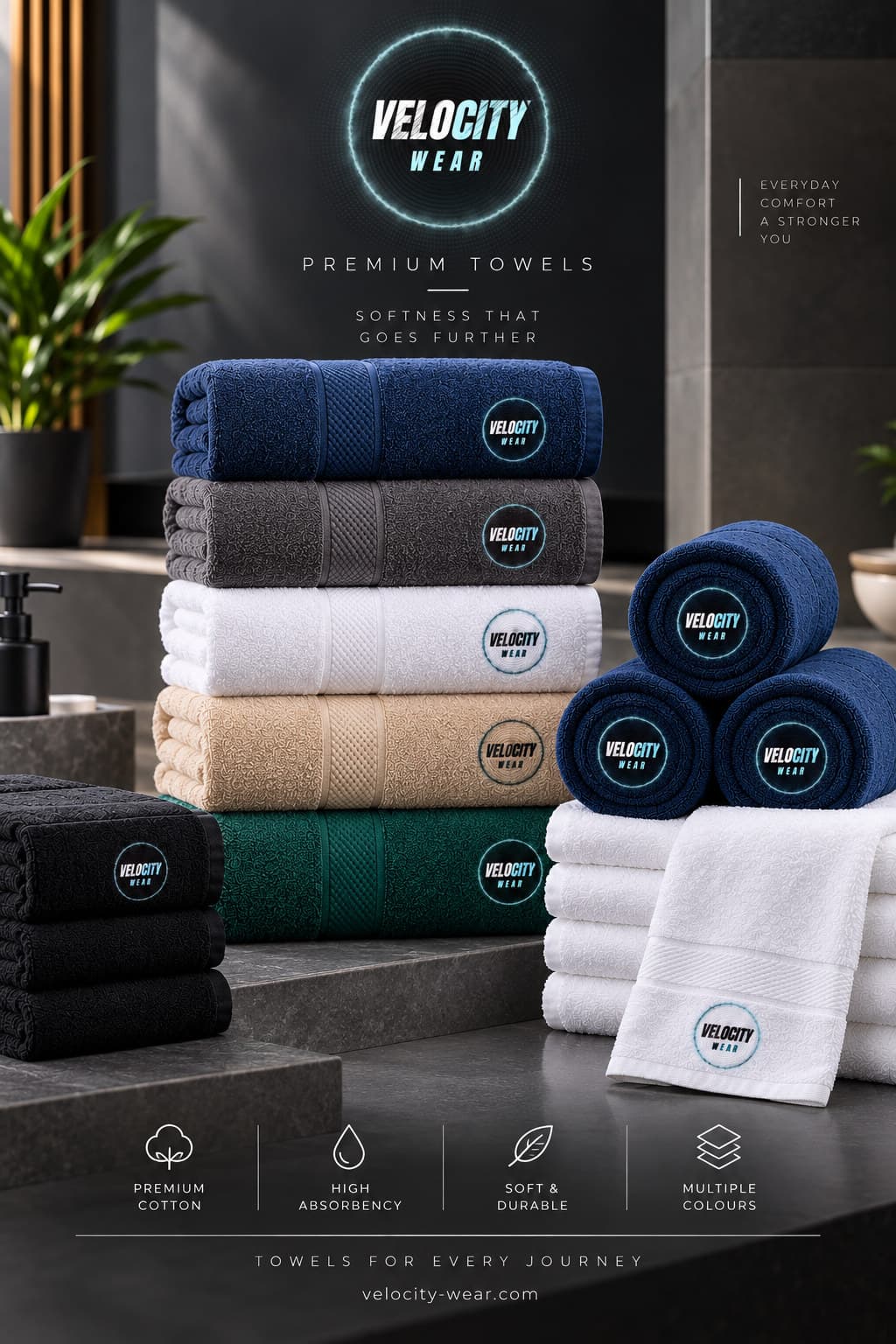
Hotel towels can carry branding woven into the cloth or printed onto the pile. For guest-facing linen going through a commercial laundry several times a week, woven branding is the durable choice, because there is no applied layer to lift or crack. Printed branding reproduces detail and multiple colours more faithfully and suits pool, spa and retail towels that live a gentler life.
Which branding method survives a commercial laundry?
Woven, comfortably. A commercial cycle combines high temperature, aggressive agitation, industrial detergent and, in many properties, a bleaching stage. That combination is designed to strip organic matter off cotton and it is not selective about what else it removes. A mark that sits on the surface of the pile has to survive all of it several hundred times over the towel's life.
Woven branding avoids the problem by not being on the surface at all. The logo is part of the construction, usually along a dobby border, so the only way it degrades is if the cloth itself degrades. That is why it dominates in hotel linen while printing dominates in retail and promotional towels. Our towels range page covers both routes and the weights each suits.
How does a woven border differ from a printed one?
Visually and practically, in four ways worth knowing before you choose.
- Colour range: woven works in one or two clean colours; printing handles gradients and many colours.
- Detail: fine serif lettering and thin rules reproduce better printed than woven.
- Feel: a woven mark is flush with the cloth; a large printed area can read differently under the hand.
- Life: woven ages with the towel, while printed branding usually shows wear before the cloth does.
A hotel with a simple wordmark or a clean monogram loses almost nothing by going woven. A hotel with a detailed crest has a genuine decision to make, and the usual resolution is a simplified version of the crest for linen and the full version everywhere else.
What artwork works on a hotel towel?
Simple, bold and reproducible at small scale. Pile is a textured surface, so anything that depends on hairline precision will fight it. Test your mark by shrinking it to the size it will appear at and looking at it from a metre away, which is roughly how a guest will see it on a folded towel. If it stops reading at that distance, simplify it rather than enlarging it.
Stitched treatments bring their own cost logic, since density and detail translate directly into production time, which we explain in how embroidery stitch count affects cost. What happens to towels under repeated industrial washing is covered in why branded towels go hard and grey.
Where should the mark sit on hotel linen?
Along the border, in almost every case. Hotel towels are seen folded far more often than open, on a rail, a shelf or the end of a bed, and a border mark stays visible in all three states. A centred mark on the face disappears the moment housekeeping folds the towel, which means you have paid for branding that the guest will rarely see.
One practical note: keep the mark away from the areas that take the most abrasion, and be consistent about placement across formats. A logo that sits on the long edge of a bath towel and the short edge of a hand towel looks like an error even when it was deliberate.