Towels for Gyms: samples
By The Velocity Wear Team
A towel sample costs £150, and that fee is credited against your bulk order when you go ahead. For a gym it buys the one thing a screen cannot show you: the real weight in your hand, your logo sitting in the pile, and the shrinkage after a wash on your own machine. Towels are quoted per job rather than from a published per-piece price, so the approved sample is also what the quote is written against.
What does the £150 sample actually get you?
The fee covers one towel built to your specification: the weight class you choose, the colour you choose, and your branding applied the same way it would be applied in production. It is not a stock towel with a badge added afterwards. Because towel pricing depends on weight, size and branding method, the approved sample is what fixes those variables. Once it is signed off, the number stops moving. The £150 comes back to you inside the bulk invoice, so a gym that proceeds pays for the sample once.
Pick the weight you expect to buy, not the lightest one on the list. A gym weight, a spa weight and a hotel weight dry at different speeds and feel different after forty washes, and finding that out now is the entire point. The wholesale towels page covers the weights we run, and the gyms and fitness page sets out how towels sit next to the rest of a club's kit.
Which towel weight should a gym test first?
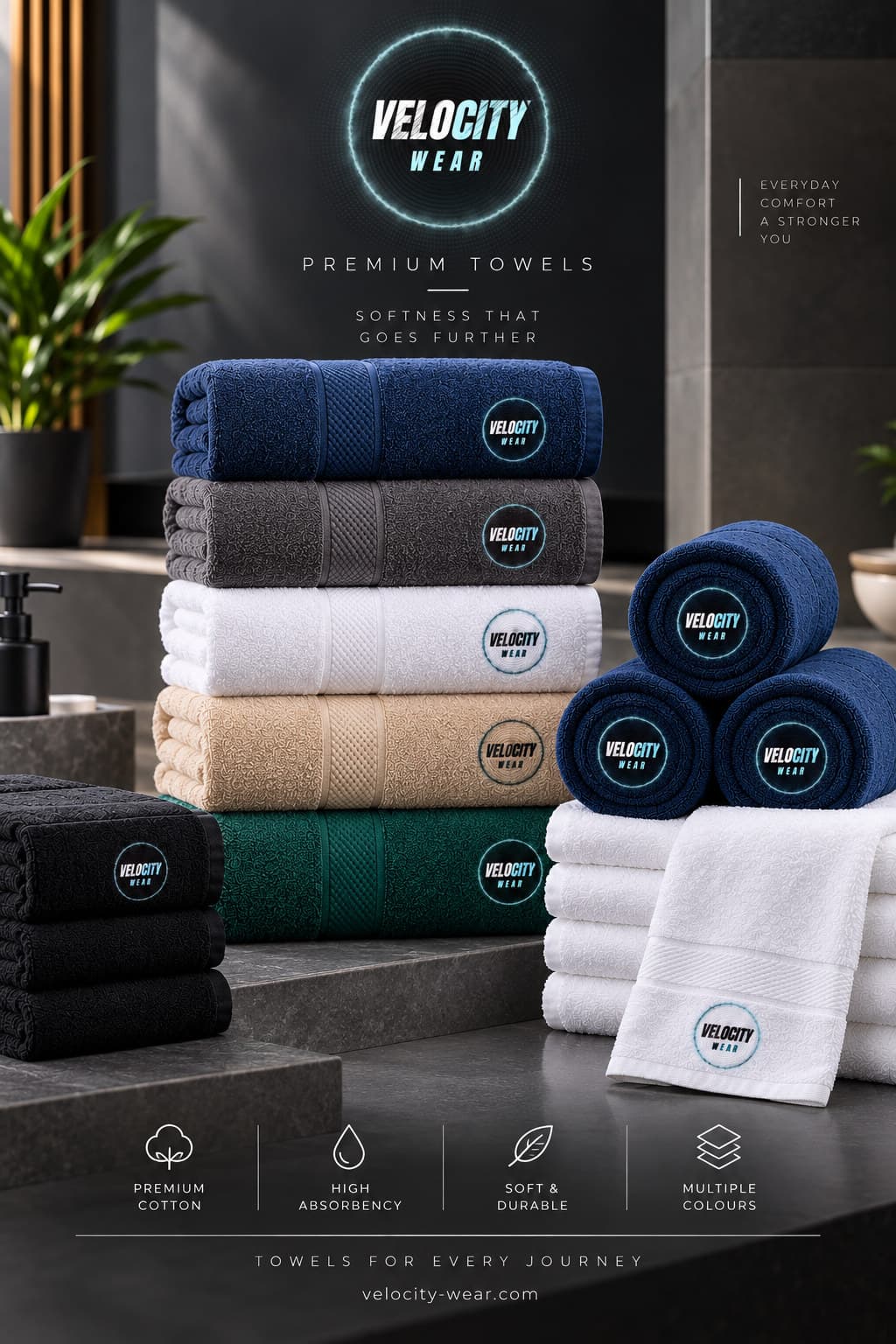
Most clubs end up buying two things rather than one. There is the small sweat towel that sits on the equipment and gets grabbed a hundred times a day, and there is the larger shower towel in the changing rooms. They pull in opposite directions. The sweat towel wants to be light so it dries between sessions and does not fill the laundry bin by lunchtime. The shower towel wants weight, because a thin one feels cheap to a member who has just paid their monthly fee.
If your budget only stretches to one sample, sample the one you will buy most of. If you can run two, sample one of each and wash them side by side. A gym that sells towels as member merch has a third consideration again, because a retail towel is judged on how it looks folded on a shelf, not on how it survives a commercial cycle. Our notes on personalised gym towels go into where each format earns its place.
What should you check when the sample lands?
Do not just look at it. Put it through the wringer, because that is what the next twelve months will do.
- Measure it, wash it five times at your normal temperature, and measure it again. Some shrinkage is normal; you want to know the number, not be surprised by it.
- Rub the branded area against a bare forearm. A print that catches on skin will annoy members long before it fails.
- Check the logo edges after the fifth wash. Woven branding holds its shape; printed branding shows wear at the outline first.
- Hold the colour against your brand swatch under the lighting you actually have in the club, not by a window.
- Look at the hems. A loose stitch at the corner is where a towel starts unravelling in a laundry drum.
Write down what you find. A short note on the sample is what makes the eventual repeat order easy to specify, and it is far more useful than a rendered mockup. We wrote about that gap in AI mockups versus physical samples.
How does the sample fee come back to you?
The £150 is credited against your bulk order, so it functions as a deposit rather than a cost, provided you place the order. Bulk begins at fifty pieces of one design, with sizes mixed however suits you inside that fifty. From there the per-piece price drops as the quantity climbs, through bands at 50–99, 100–249, 250–499, 500–999 and 1,000 and above, reaching up to 35% off the fifty-piece rate at the top. Production runs 10 to 15 working days from artwork approval, before transit.