Embroidery vs Puff Embroidery on Towels
By The Velocity Wear Team
Flat embroidery is the default for towels and puff is the exception. Puff builds the logo over a foam layer to give it height, which reads beautifully on a cap front and fights with a towel's own texture almost everywhere else. If you want puff on a towel, it belongs on the flat woven border with a bold, simple mark and nothing fine in it.
What does stitch count do to a towel quote?
Embroidery is priced on stitches, so the size and density of the design drive the cost far more than the number of colours do. A compact wordmark is a few thousand stitches; a detailed crest with a filled background can be five or six times that, and the price follows. Puff adds stitches too, because raised areas need denser coverage to hide the foam underneath, so the same logo costs more in puff than flat.
Towels are quoted per job, so decoration is priced into the total rather than listed separately. The volume steps still apply, reaching up to 35% off the 50-piece rate at the top tier — see the pricing page — and the 3D puff service explains how the raised finish is built. Send the design through the towels range for both to be quoted together.
Does a raised finish work on towelling at all?
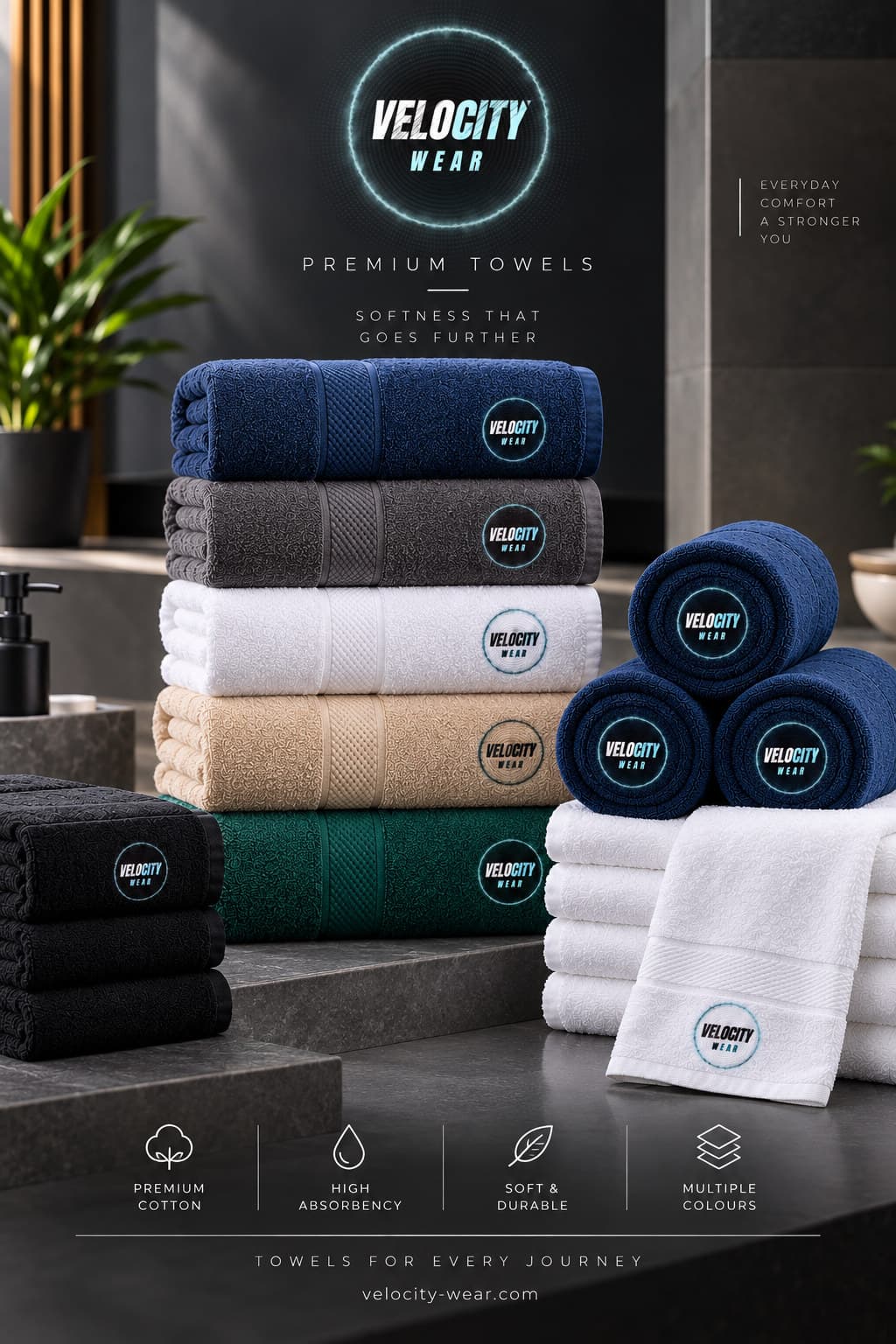
On the border, yes, with the right design. On the pile, not really. A towel's surface is already three-dimensional, so a raised logo sitting in the middle of it competes with the loops around it rather than standing out from them. The border is flat, stable and gives the puff something to read against. Even there, the design has to be bold: puff closes up small counters and thin strokes, so a mark that works flat may need redrawing before it works raised.
Where does each belong on the piece?
Flat embroidery goes anywhere on the border and can go small. It is the right call for a hotel monogram, a spa wordmark, a club crest or anything that needs to look restrained. Puff belongs where the towel is a statement piece — an event giveaway, a gym brand with a chunky logotype, merchandise sold rather than issued. It is also worth remembering that a raised finish is more noticeable against skin, which rules it out for anything used on the face. The general method comparison is in print or embroider wholesale towels.
Pick flat embroidery when… pick puff when…
Pick flat embroidery when the towel is for a hotel, spa or treatment room, when the logo has fine detail or small type, when it goes into commercial laundering, or when you want the branding to be quietly present rather than loud. Pick puff when the logo is a heavy block letterform with no small elements, when the towel is merchandise or event stock, when it is being photographed for a product listing, or when it sits alongside caps and hoodies that already use the same raised treatment. The durability case against printing is set out in screen printing vs embroidery on towels.
If puff is what you want, budget time as well as money for it. The digitising takes longer, the first proof is more likely to need a revision, and the sensible route is to see it stitched on the actual cloth before committing a few hundred pieces. None of that changes the production window, but it does add days at the front end, which matters when you are working to a fixed date.
It also helps to look at the rest of the range before deciding. Puff on a towel makes far more sense when the same treatment already appears on the caps and hoodies it sits beside, because then it reads as a house style rather than a one-off experiment. On its own, in a product line where everything else is flat, a raised towel logo tends to look like an accident.