DTF vs Screen Printing on Towels
By The Velocity Wear Team
DTF prints full colour with no setup charge per colour, which makes it the better choice for complex artwork and short runs near the 50-piece minimum. Screen printing has a setup cost that only makes sense at volume, but once you are into the hundreds it is cheaper per piece and lays down a flatter, thinner film. On towelling, both go on the flat border.
How many colours are you printing?
This is the question that settles most of it. DTF treats a one-colour logo and a twelve-colour illustration identically, because it prints the whole image at once rather than separating it into screens. Photographic content, gradients, drop shadows and fine multi-colour detail are all straightforward. Screen printing separates the design into individual colours, each needing its own screen, its own setup and its own registration pass — so complexity has a direct price.
If your mark is one or two flat colours, screens will do it cleanly and cheaply at volume. If it is anything richer, DTF avoids a conversation about which colours you can afford to drop. Our DTF printing service covers the method in detail, and the towel spec itself starts on the towels page.
Which one wins on a short run?
DTF, almost always. With the minimum at 50 pieces per design, a screen-printed multi-colour job is asking 50 towels to carry the full setup for every colour. DTF has no equivalent charge, so the per-piece cost at 50 is close to the per-piece cost at 500. That flatness cuts both ways: DTF does not reward volume the way screens do, so as quantity climbs through the tiers towards the 35% ceiling, screens close the gap and then overtake.
What does each feel like on the pile?
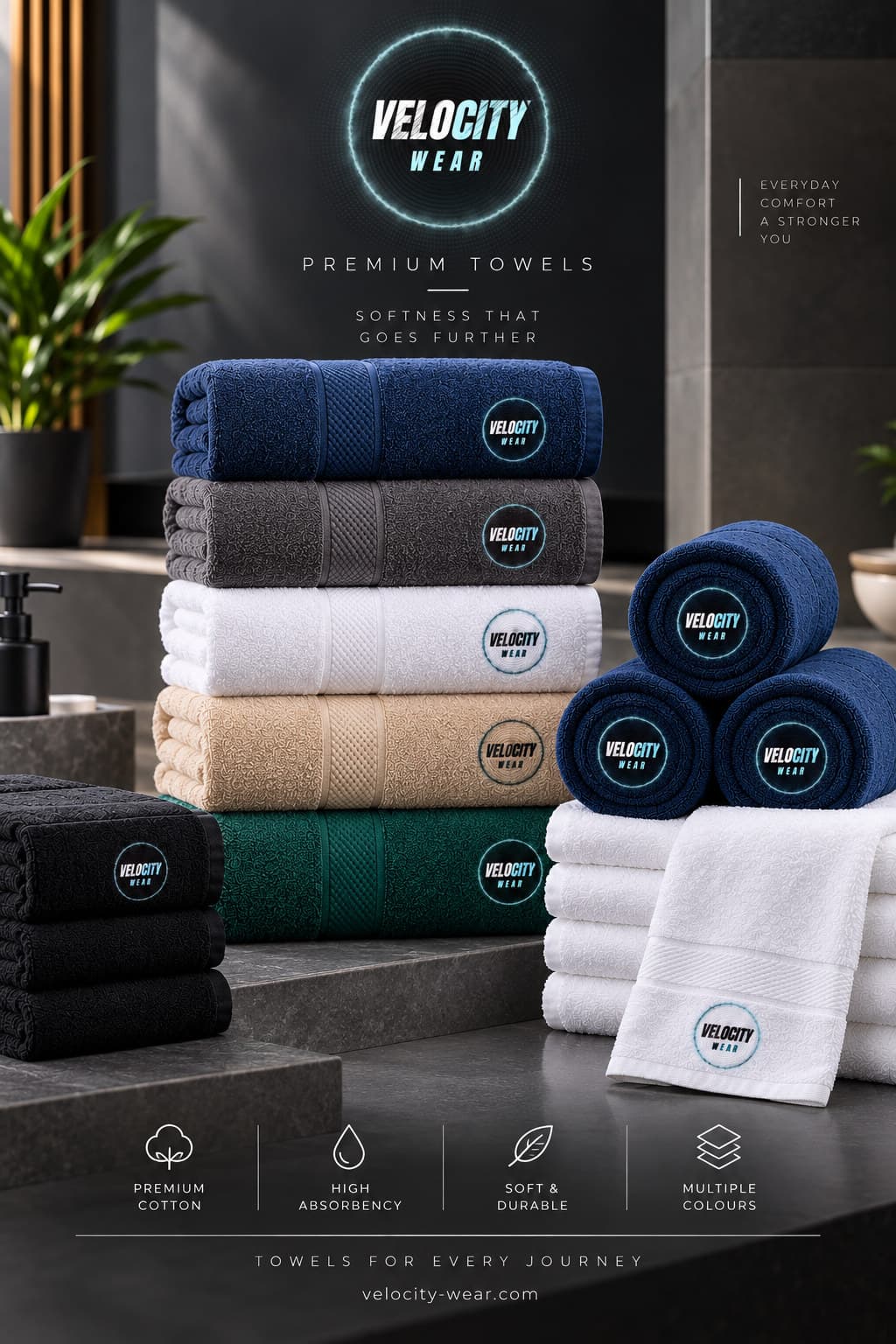
A screen print sits thin and flexible, especially with a soft-hand ink, and after a few washes it reads as part of the cloth. DTF lays a slightly thicker film with a defined edge, which on a flat border is fine and on a deep pile is more noticeable. Neither is unpleasant, but if the towel is a premium spa product where the guest is meant to notice nothing but softness, keep the printed area small and on the border. Getting the file right for either is covered in artwork setup for custom towels.
Pick DTF when… pick screens when…
Pick DTF when the artwork is full colour or photographic, when you are ordering at or near 50 pieces, when you want several designs across a small total, or when the design is likely to change between runs. Pick screens when the mark is one to three flat colours, when the order is in the hundreds or more, when you want the thinnest possible finish, or when the same artwork will be repeated for years and the setup cost is amortised across every future order. A direct durability comparison against stitching sits in screen printing vs embroidery on towels.
One caveat on the volume argument. The crossover between the two is not a fixed quantity — it moves with the complexity of the design. A single-colour wordmark crosses over early, because the screen setup is trivial and spreads across even a modest run. A six-colour illustration may never cross over at all, because you are paying six setups and running six registration passes to achieve something DTF does in one.
If you are undecided, price both on the same spec and the same quantity. Towels are quoted per job, so the comparison is quick to produce and it removes the guesswork entirely. Buyers who do this often find the gap is smaller than expected at their volume, at which point the decision comes down to how the finish should feel rather than what it costs.
There is a workflow advantage to DTF that rarely appears on a quote. Because nothing is committed to a physical screen, changing the design between runs costs nothing beyond the new file. Brands that refresh their artwork seasonally, or that want a different graphic for each event, get a lot of value out of that flexibility. A business printing the same logo for the next five years gets none of it, and should be on screens.