Artwork Setup for Custom Towels
By The Velocity Wear Team
Send vector artwork wherever you have it, with fonts converted to outlines and colours named. If the only file you hold is a raster image, it needs to be big enough to sit at final print size without softening. Towelling loses fine detail that would survive on a tee, so artwork for a towel is usually a simplified version of the logo rather than the full lockup.
What file should you send for a towel?
An AI, EPS, PDF or SVG with live vector paths is the ideal. It scales to any placement without losing an edge and lets us separate colours cleanly. Convert type to outlines before sending so the file does not depend on a font we may not hold. If you only have a PNG or JPG, it needs enough resolution to print at the final size, not at the size it looks fine on screen. The groundwork is in preparing artwork files for custom clothing printing.
How does artwork change between print and stitch?
A print keeps your file more or less intact, separated into colours. Embroidery does not use your file at all — it is digitised into a stitch path, which is a rebuild rather than a conversion. That rebuild is where thin strokes get thickened, tiny counters get closed up and a three-point registered mark quietly disappears. You approve the digitised version before anything is stitched, and it is worth looking at that proof properly rather than waving it through.
Why does fine detail disappear on towelling?
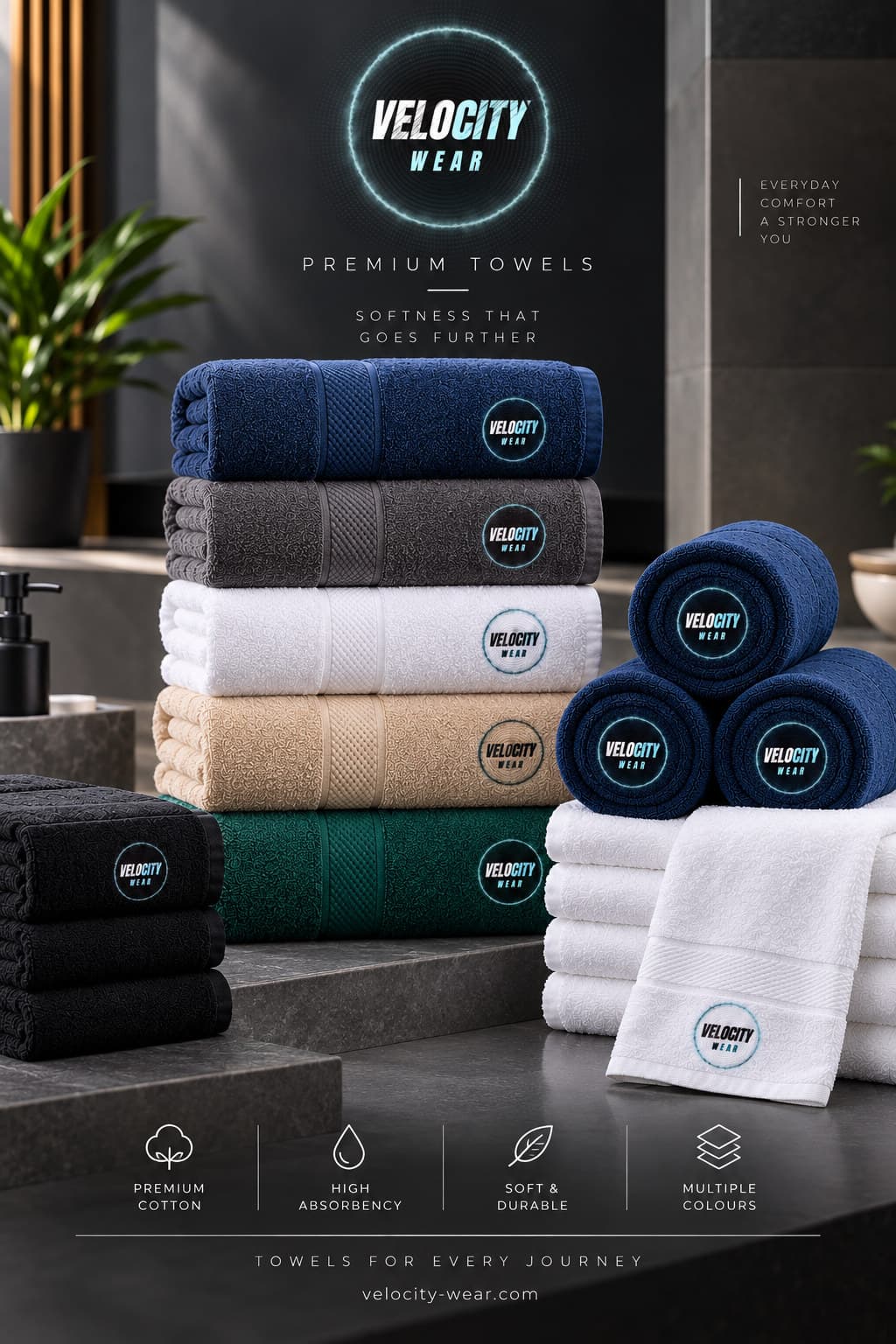
The surface moves. A towel is a field of loops, and anything applied over them sits on an uneven plane that shifts every time the cloth is handled. Hairlines break up, gaps under about a millimetre fill in, and small text turns into a grey smudge at arm's length. The fix is not higher resolution, it is a bolder version of the mark: thicker strokes, fewer colours, more space between elements. Resolution still matters for the raster case, and what 300 DPI actually means sets out the real numbers.
Who signs off the artwork, and when does the clock start?
One named person on your side signs off, and production starts from that approval — 10 to 15 working days of build, then delivery transit. Nothing before approval is counted in that window, which means a slow internal review is the most common reason an order arrives later than the buyer expected. Get the decision-maker in the loop before the proof lands. Send specs through the towels page and check the volume steps on the pricing page while artwork is in progress, so budget sign-off is not the thing holding you up.
What the proof shows you is placement, size, colour breakdown and, for stitching, the rebuilt design. What it cannot show you is how the finished mark feels on the cloth. If that matters — and on a premium towel it usually does — the proof is the moment to decide whether you want a physical piece in front of you before committing several hundred units to the same treatment.
It helps to send more than one version of your logo at the outset. A full lockup, a simplified mark and a single-colour version cover most of what a towel job needs, and having all three on file means the right one can be used for each placement without another round of emails. Buyers who supply only the full-colour master usually end up approving a simplification anyway, having lost a week to the conversation that produced it.
Keep whatever we produce for you. A redrawn vector, a set of separations and a digitised stitch file are all assets you can use again, with us or anywhere else, and they represent real work that you have already paid for inside the job. Filing them somewhere findable means the next order starts from a proven file rather than from whatever version happens to be attached to an old email.