Jackets & Outerwear for Trades: size splits
By The Velocity Wear Team
Site jacket orders skew larger than a general size curve, both because the crew skews larger and because the jacket goes over a mid-layer. Collect real sizes where you can, weight the run towards the middle and upper sizes, and thin the smallest. The fifty-piece minimum is per design with sizes mixed freely inside it, so an uneven curve costs nothing extra.
How should sizes be split on a site jacket order?
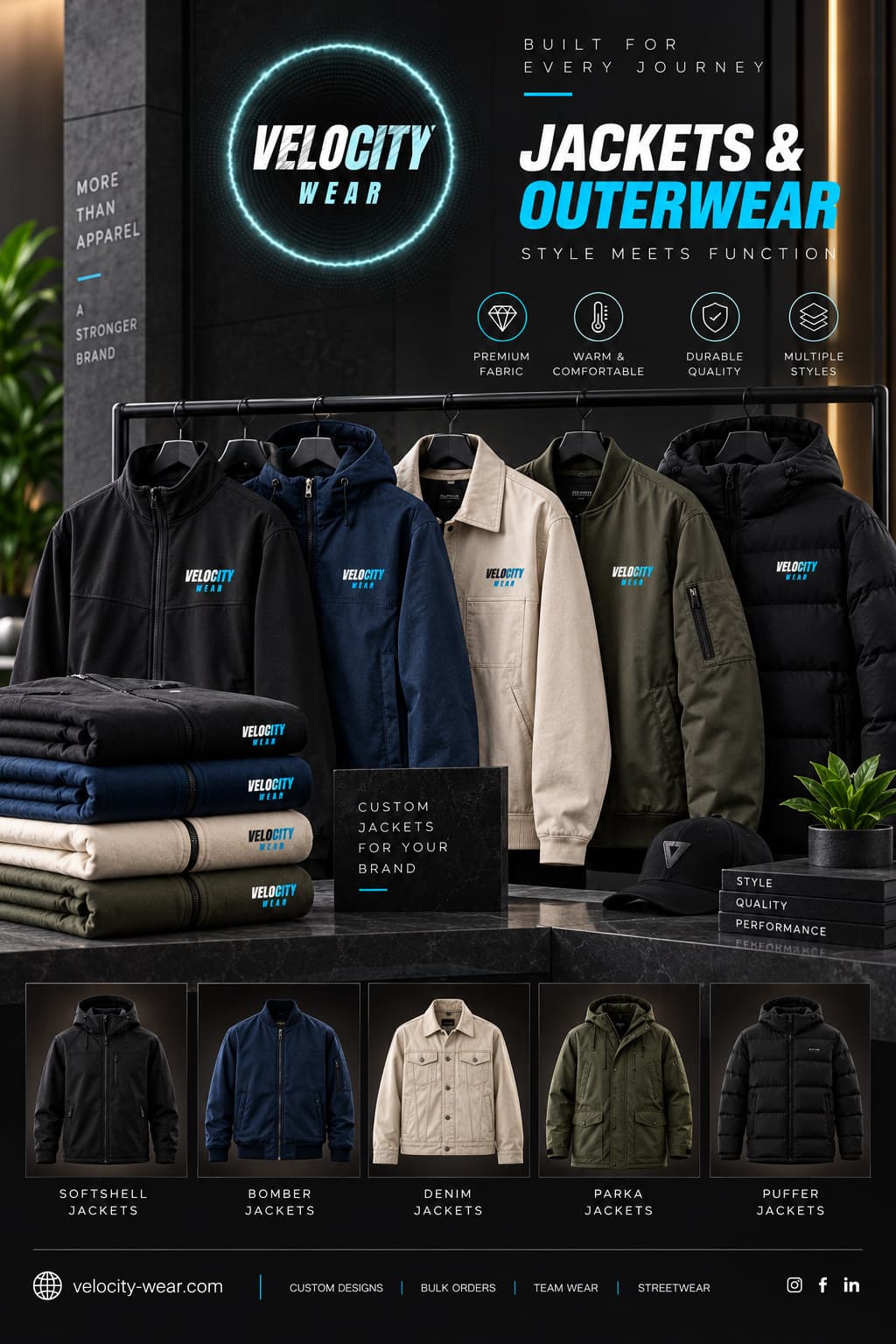
Start from the actual crew rather than a template. If you have thirty people and a fifty-piece minimum, order the thirty you know and put the remaining twenty into the sizes most likely to be needed again, which for site work is the middle and the upper end. Avoid spreading the surplus evenly across every size, because the extra small pieces will still be in the storeroom in two years. Where the crew changes constantly, base the split on last year and adjust. The trades range sits on the construction and trades page and the outerwear options on the wholesale jackets page.
What does layering do to the size run?
It shifts the whole thing up, and it shifts it further in winter than in spring. A jacket worn over a work shirt is a different garment from the same jacket worn over a hoodie and a mid-layer, and on site both happen within the same week. The practical answer is to specify the layering at the brief stage so the cut can allow for it, rather than telling everyone to add a size and leaving the smaller members of the crew in something enormous. How the cuts themselves differ is set out in fits and cuts for wholesale jackets.
How do you avoid dead stock at the ends of the run?
Order the extremes to the count you actually need and no further. Very small and very large sizes are the ones that sit unused, and they are also the ones a new starter is most likely to need, so the compromise is one or two spares rather than a proportional share. Keep a written record of what remains after distribution. That record is worth more than any chart the next time you order, because it is data about your own crew rather than an average of everyone else. Collecting sizes and handing kit out is covered in handing out jackets to a team.
Who should be measured rather than asked?
Anyone who has never worn this style before, and anyone at either end of the run. People report the size on the label of a garment they already own, which for outerwear is frequently the wrong reference because jacket grading differs from shirt grading. A tape measure round the chest, over the layer they will wear underneath, takes thirty seconds and removes most of the guesswork. If the style is new to the whole crew, a sample at £150, credited against the bulk order, can be passed round as a physical size reference before the form goes out.
The simplest long-term fix is to capture the size at induction, along with everything else you already collect when someone joins. It takes a moment while the paperwork is open and it means the next kit order starts from a list rather than a survey. Keep it in the same place as the record of what has been issued, so the two numbers can be compared. Over a couple of cycles that becomes the most accurate size curve available to you, and it is specific to your own crew rather than borrowed from a chart.