Handing Out Jackets & Outerwear to a Team
By The Velocity Wear Team
Collect sizes once, in a form, with a size chart attached and a deadline. Bag each jacket by name before anyone arrives to collect. Hold back a handful of the most common sizes as spares. Then hand out in one session and record who has taken what. The order takes weeks; the handout takes an afternoon, and it is the part people remember.
How do you collect sizes without chasing people?
Use one form with a fixed closing date, attach the actual measurements rather than only letters, and state clearly that no response means you will pick for them. The measurement chart matters more on outerwear than on anything else, because jacket sizing does not follow t-shirt sizing and people guess from the label in their own wardrobe. Mention what will be worn underneath, since a jacket sized over a shirt is not the same as one sized over a fleece. Fit differences between cuts are set out in fits and cuts for wholesale jackets.
Is bagging by name worth the extra step?
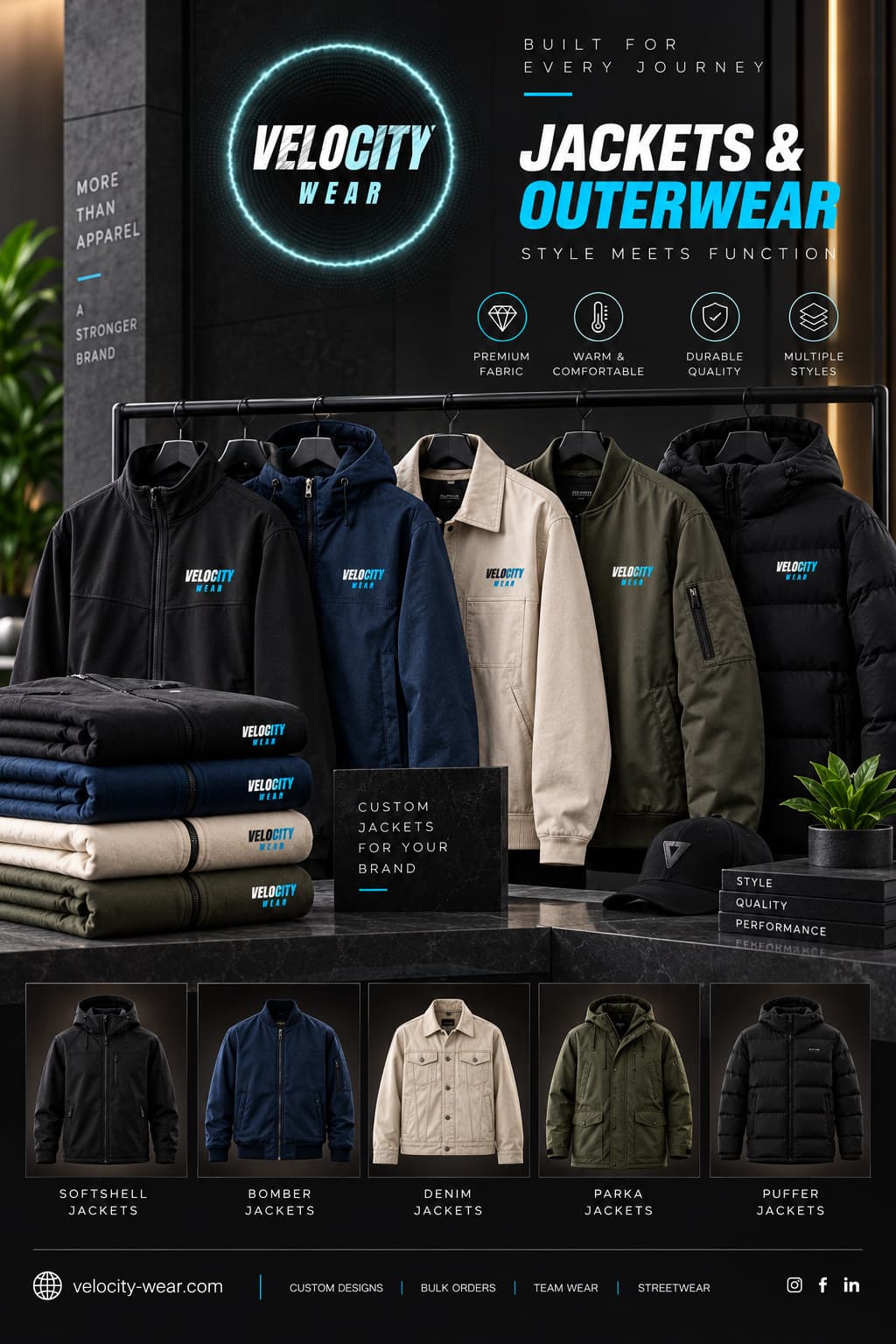
Yes, for anything over about twenty people. Jackets arrive individually bagged in cartons, either solid by size or as a mixed run, so the sorting work is mostly writing names on bags. Doing it in advance turns a handout into a collection: people take a bag with their name on it and leave. Doing it live turns it into a queue where everyone tries a size, changes their mind, and the pile becomes unsorted within ten minutes. How the cartons arrive, and which packing format suits which job, is covered in how bulk jackets are packed.
How many spares should be held back?
Enough to cover new starters and the two or three people who ordered the wrong size, which in practice means keeping a few of the middle sizes rather than a spread across the whole run. The minimum is fifty pieces per design and sizes mix freely inside it, so most teams under fifty people already have surplus built in. Store the spares somewhere findable and write down what is there, because the alternative is a second order of fifty to cover four people. Building the original size curve sensibly is covered in how to split sizes on a first order.
What do you do about leavers and new starters?
Decide the policy before the handout rather than after the first person leaves. If the jackets are branded workwear, most organisations treat them as issued kit and ask for them back; if they are a gift or a reward, they are not coming back and the spares budget has to reflect that. Either way, keep a simple record of who has which size, because that record is what makes the next order accurate instead of a fresh survey. The styles and finishing options for a repeat run are on the wholesale jackets page, and the tiers that reward a larger single order are on the pricing page.
Handing the jackets out is also the moment people form an opinion of the whole exercise, so it is worth a small amount of theatre. Give them out together rather than leaving a box by the door, say what the kit is for, and let people put it on in the room. Ten minutes of that does more for whether the jackets actually get worn than any amount of specification work, and it is the least expensive part of the entire order to get right.