Writing a Staff Uniform Policy: What to Include
By The Velocity Wear Team
Need this made?Get pricing for this product— free, no obligation, 50 pieces minimum.
A staff uniform policy is a short document that says what each role is issued, how many of each garment, how it is washed, when it is replaced and what happens to it when someone leaves. Write it before you order, because the issue numbers decide the quantities. At Velocity Wear, uniforms are made from 50 pieces per design in 10 to 15 working days from artwork approval.
This is practical guidance from the people who make the kit, not legal advice. Rules on uniform deductions, protective clothing, religious dress and discrimination differ between the UK, the USA and each European country, so have the finished policy checked against local employment law, or by whoever handles HR for you, before anyone signs it.
What should a staff uniform policy cover?
Eight sections answer almost every uniform question a manager gets asked. Keep each one to a few lines, because a policy nobody reads protects nobody. The template below sets out what each section should settle, with example wording to adapt.
| Section | What it settles | Example wording to adapt |
|---|---|---|
| Scope | Who it applies to, including temps, agency and seasonal staff | Applies to everyone working a customer-facing shift |
| Issue | What each role receives on day one, by garment and number | Front of house: three polos and two aprons |
| Wearing standards | What is worn together and what may go over it | Uniform polo with plain dark trousers; no own jumpers on shift |
| Care | Who washes it, at what temperature, how it is dried | Wash at up to 60°C and tumble dry; follow the care label |
| Replacement | When worn or damaged kit is swapped, and how to ask | Return the worn item to your manager for a replacement |
| Names | Whether a name appears, which one, and who decides | First name or role only, chosen by the employee |
| Leavers | What comes back, by when, and what happens to it | All branded items returned by your final shift |
| Exceptions | Religious dress, pregnancy, medical needs, weather | Adjustments agreed with your manager and recorded |
How many garments should each role be issued?
Issue enough that nobody starts a shift in yesterday's top. For most roles that means three per person: one worn, one in the wash and one spare. Full-time staff who wash weekly need more, and anyone in a kitchen goes through tops and aprons faster than an office does. The arithmetic by shift pattern is in how many uniforms per employee; the policy only needs the answer, written as a number per role.
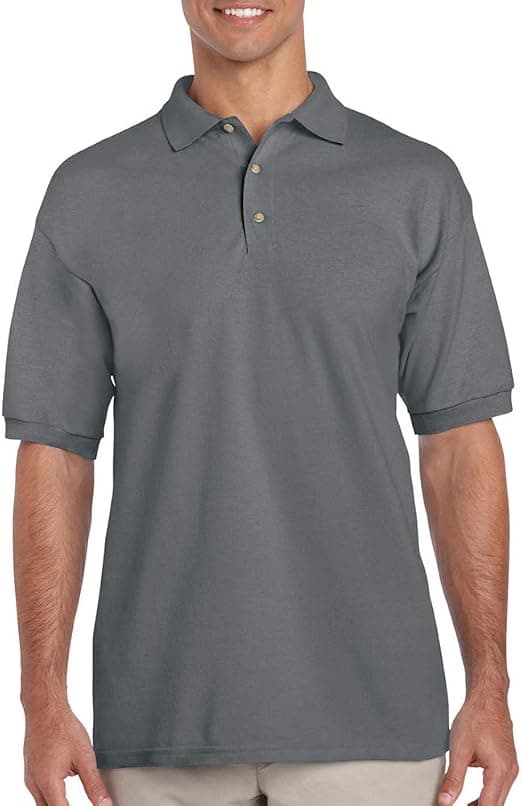
That number becomes your order. Ten front-of-house staff on three polos each is 30, which is short of the 50-piece minimum for one design, so the other 20 become stock for new starters and replacements. Our corporate uniform range starts from $20 per piece at 50, with sizes mixed freely inside the run.
Who washes the uniform, and who pays for it?
Decide who washes it and write down how. Staff washing at home need the temperature and drying the garment is made for: our uniform fabrics are pre-shrunk, colourfast and specified for 60°C cycles and tumble drying, and the embroidered logos will not crack or peel. A laundry service needs a collection routine instead. Both routes are compared in our note on domestic and industrial washing.
Payment is the clause most worth a second opinion. In the UK, for example, a deduction from wages for uniform can count against minimum wage calculations, and other countries have their own rules on who bears the cost, so check this section with an adviser before it goes in.
What happens to uniform when staff leave?
State plainly that branded kit is company property and comes back on the last shift or by a named date. Unnamed items in good condition can be laundered and reissued; anything carrying a name cannot, and should be retired. Branded clothing still circulating after someone has gone is a security risk wherever a uniform opens doors, such as deliveries or care work. Returns are covered step by step in how to handle uniform when staff leave.
Should the policy put names on uniforms?
Only if it also says whose choice it is. A name helps customers, but it puts personal information on show, so the fairest wording lets each person pick a first name, a preferred name or just their role. Names stitched into a garment tie it to one person, which matters when turnover is high; embroidered names versus name badges weighs the two.
Turning the finished policy into an order
Once the issue table is agreed, the order almost writes itself. Send us the roles, the garments and quantity per person, a size list or headcount, your logo, the delivery country and the date staff need the kit, through the enquiry form on this page. Pricing usually comes back within hours on working days, and every garment we make for teams is listed on our uniforms page.