Embroidery vs Puff Embroidery on Jackets & Outerwear
By The Velocity Wear Team
Flat embroidery stitches your logo into the shell and suits any mark with detail in it. Puff embroidery stitches over a foam layer so the shape stands proud of the fabric, which suits bold letters and thick simple shapes and nothing else. Both are priced by stitch count. Puff costs a little more because of the foam and the trimming involved.
What does puff do that flat stitch cannot?
It creates physical relief. A puff logo catches light along its edges and casts a small shadow, which makes it visible across a room in a way a flat stitch of the same size is not. On a dark softshell or a varsity chest it reads as a deliberate design choice rather than a uniform mark. The cost of that effect is detail: the foam has to be fully covered by the stitching and then trimmed, so thin strokes, sharp interior corners and small text either fail outright or look ragged. A minimum stroke width of a few millimetres is the practical rule, and anything below it should stay flat.
How does stitch count drive the price?
Embroidery is charged by how many stitches the machine puts down, not by how many colours you use, which is the opposite of how printing prices work. A large open design with light fill can be cheaper than a small dense badge. Puff raises the count because the foam demands a tighter, more complete coverage to hide it, and it adds a manual trimming step after the machine finishes. Neither method is affected by adding a fifth thread colour. On 50 pieces the digitising is spread thinly, and as quantity climbs the per-piece cost falls in line with the bands on the pricing page, which reach 35% off the 50-piece price at the top.
Which garment areas take a raised finish?
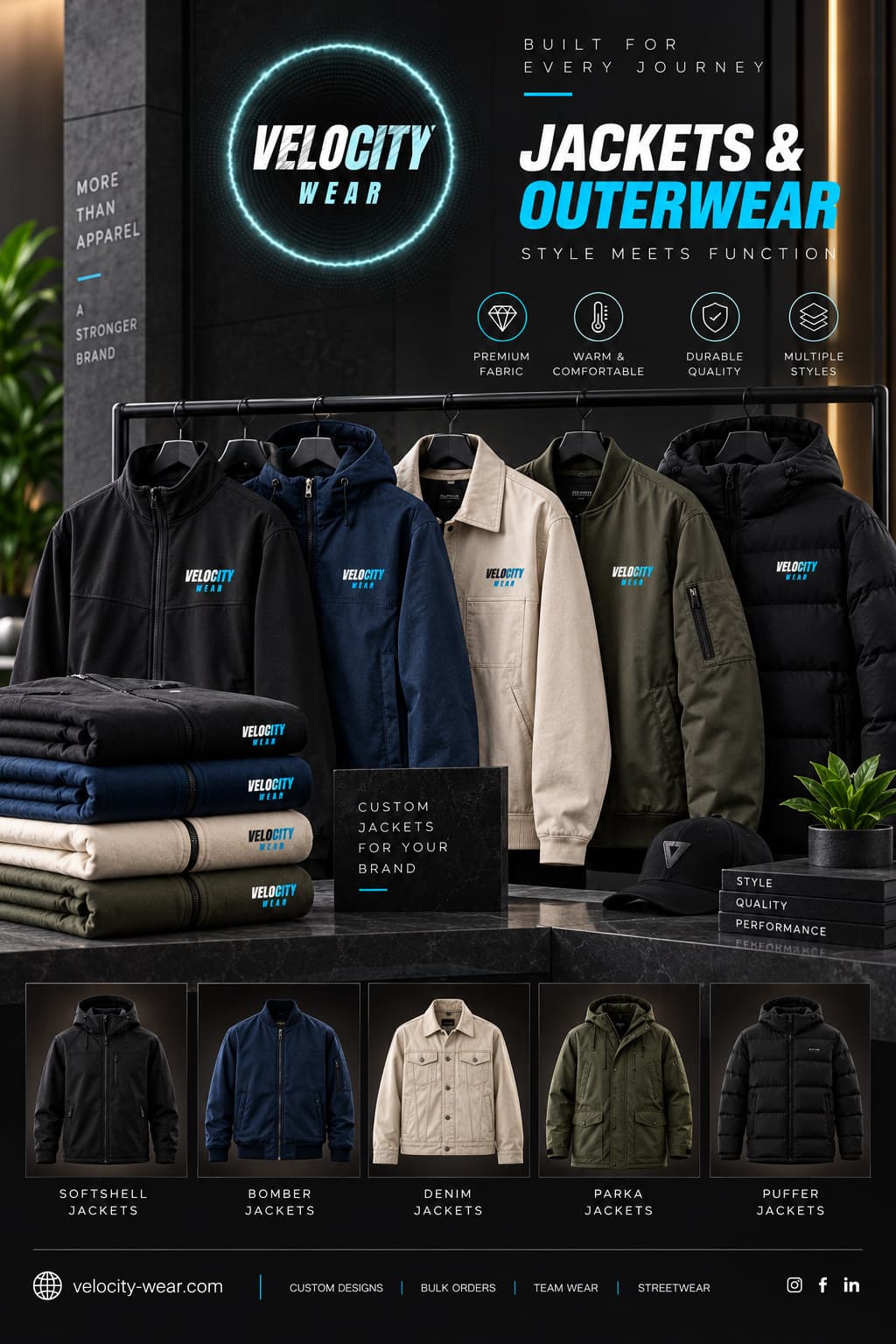
Flat, stable, single-layer areas. A softshell chest is ideal. A varsity body panel works well. A coach jacket front is usable if it avoids the placket. Quilted puffer panels are the difficult case, because a raised dense stitch area on a thin shell over loft can distort the panel around it, and a badge applied to the surface is often the better answer there. Sleeves take small puff marks but the seam and the taper limit the size. Appliqué, patches and woven labels covers the applied alternatives when the shell will not take the stitch.
When should you stay flat?
Whenever the logo has fine lines, small text, interior detail or a lot of gradient-like shading in the original. Flat stitch is also the right answer for uniform outerwear where the mark should be neat rather than loud, and for any placement that will be rubbed constantly, like a jacket worn under a rucksack strap. Most left chest logos are flat for exactly these reasons.
When is 3D puff worth it?
Bold wordmarks, thick monograms, team names across a varsity chest, and anything where the jacket is the product rather than the workwear. It works best in a single colour on a contrasting shell, where the relief does the work instead of the palette. The technique is described on the 3D puff service page, and if you are still deciding between stitch and ink altogether, print or embroider wholesale jackets starts one step further back. The styles that take each finish are on the wholesale jackets page.