Labels and Packaging for Bulk Towels
By The Velocity Wear Team
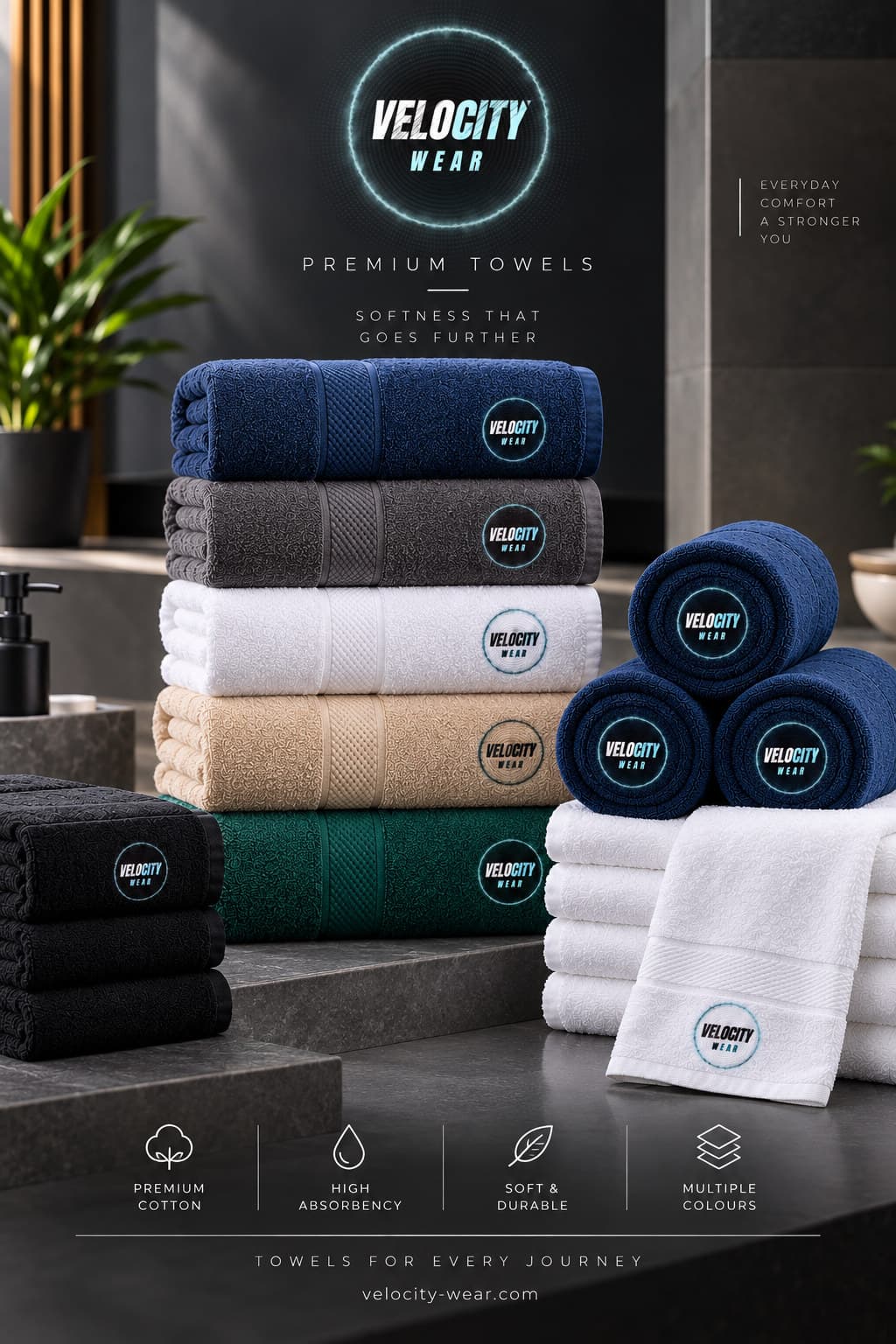
Bulk towels can carry a custom woven label, a tear-out label, a swing tag and bespoke packaging, all specified before production. By default pieces arrive folded and bagged in cartons ready to be put straight onto a shelf or into a cupboard. If the towels are going to retail rather than into service, say so early, because retail presentation changes how they are finished and packed.
What label options exist on a towel?
A woven label sewn into the border is the standard private-label route: it carries your name, is durable through laundering and is what a customer looks for when they want to know who made the towel. A tear-out label does the same job but is designed to be removed by the end user, which suits retail products where the buyer wants the label gone after purchase. A printed care label is usually required as well, and on towels going into commercial laundering it is worth having wash instructions on the piece rather than only on the box.
How do the towels arrive in the box?
Folded, bagged and cartoned, with the cartons marked so you can find a format without opening everything. If you have ordered a mixed split, ask for the formats packed separately rather than interleaved — it costs nothing to specify up front and saves an afternoon of sorting on arrival. Larger orders ship on a pallet, which changes the receiving requirements at your end more than most buyers expect. The onward logistics are covered in delivery times for wholesale towels.
Does packaging need to be retail-ready?
Only if the towel is being sold as a product in its own right. A gym handing towels out at reception wants them bulk-packed and nothing more. A hotel selling branded towels in a lobby shop wants a swing tag, a barcode and a bag that survives handling. A brand shipping direct to customers wants packaging that looks considered when the box is opened. Each of those is a different spec and a different cost, so the question to answer first is who opens the packaging. The wider picture is in branding beyond the print.
What does labelling add to the lead time?
Woven labels have their own production run and need ordering alongside the towels, not after them. That is the piece of the schedule people miss: the towels can be ready and waiting on a label that was specified late. Build time on the order remains 10 to 15 working days from artwork approval, with label artwork forming part of what you approve. Specify the full package on the towels page and check where your quantity sits on the pricing page, since private-label extras are quoted into the job rather than added afterwards.
A useful rule is to treat the label as a second artwork job with its own approval, because that is what it is. It has a size, a colour count and a weave density, and a logo that reads perfectly at chest size can turn to mush at 40mm wide in thread. Approving the towel proof and assuming the label will look after itself is how buyers end up with an illegible brand name sewn into several hundred pieces.
Swing tags are the easier half of the same job. They print like any other piece of card, take fine detail happily and can carry a barcode, a price, a care summary and a web address without crowding. Because they are attached rather than sewn in, they are also the least costly element to change between runs — which makes them the right place to put anything seasonal, promotional or likely to be revised.
Order labels and tags in quantities that cover more than the run in front of you. Both are small, cheap to store and priced far better in volume than in the exact number a single order needs. Holding a stock of them means a future towel run is not waiting on a separate label production cycle, which is the difference between a repeat order taking three weeks and taking six.