Towels for Clothing Brands, Ordered Properly
By The Velocity Wear Team
Towels are quoted per job, ordered at 50 pieces per design and produced in 10 to 15 working days from artwork approval. For a clothing brand the appeal is specific: no sizes to forecast, no fit to get wrong, and a product that sits naturally alongside a tee at a higher price point. The catch is that it sells in depth rather than volume.
Does a towel belong in a clothing drop?
It belongs in a drop that already has an audience. A towel is bought by someone who owns the tee and the hoodie and wants the third thing, which means it works as an addition and fails as an opener. A brand with no sell-through history is better putting its first 50-piece minimum into a garment.
Where it does earn its place is in summer drops, swim-adjacent ranges and anything with a beach or pool association. It also photographs well, which matters more than most people admit for a webstore. Our wholesale towels page sets out the weights a brand can choose between.
What private label options exist on a towel?
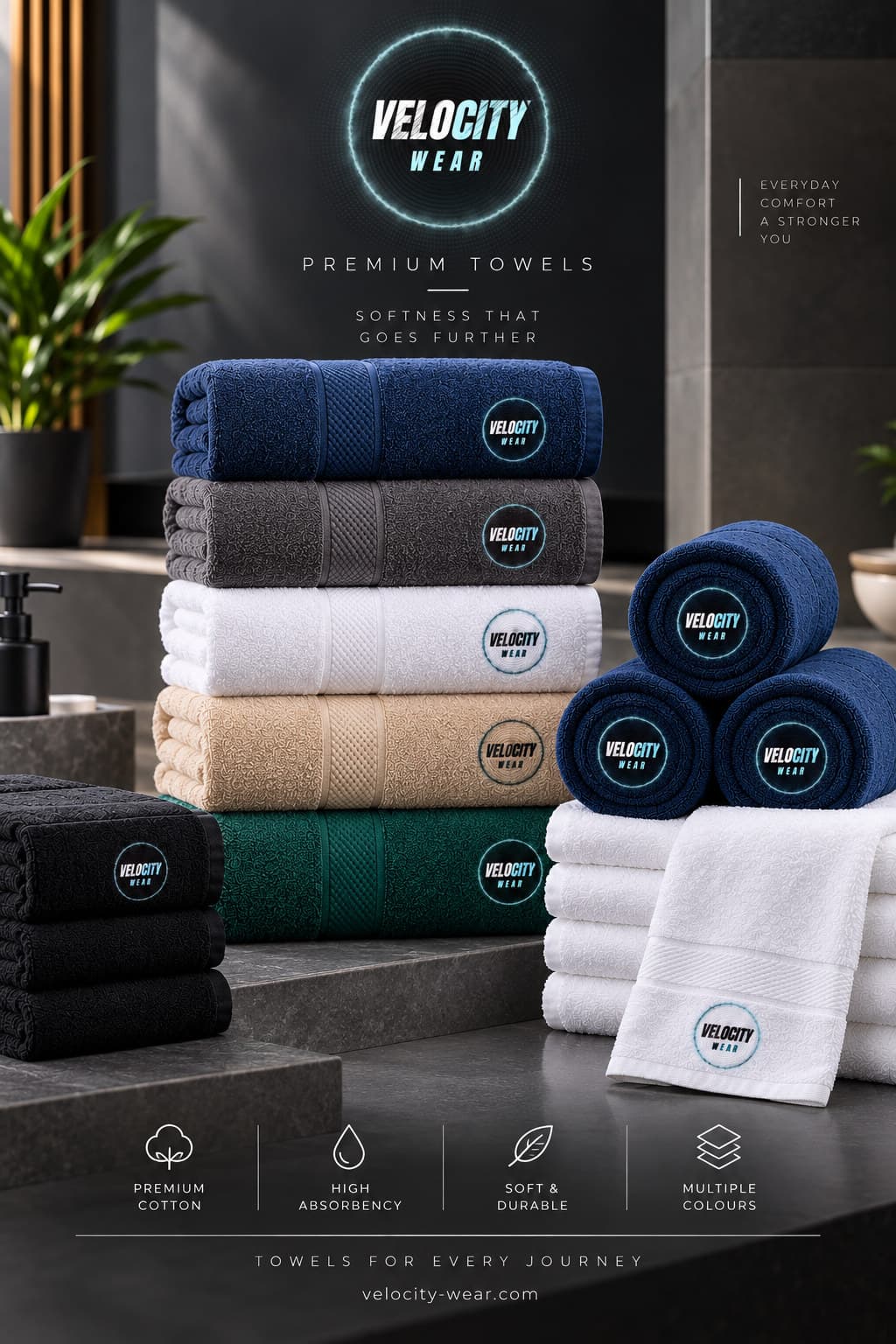
The same private label toolkit that applies to apparel: custom woven neck labels on items that carry them, tear-out labels, swing tags and packaging. On a towel the woven label is the one that does the work, because it is the detail a buyer notices when unfolding it and it survives every wash.
Swing tags and packaging matter more here than on a tee, because a towel has no fit to sell it and the presentation carries the perceived value. Brands that get this right treat the towel as a boxed item rather than a folded one. The branding itself is either woven into the towel or printed on the pile, and print is the usual pick for graphic-led ranges.
How do you price a towel in a brand range?
Above the tee, below the hoodie, is where most brands land. Towels are quoted per job, so get the unit price against a written specification before setting retail, then check the margin against what your audience already pays for a tee. If the towel has to be priced near hoodie money to make sense, the specification is heavier than the range needs.
Quantity moves the price: up to 35% comes off the 50-piece price as volume rises, across tiers at 50 to 99, 100 to 249, 250 to 499, 500 to 999 and 1,000 plus. For a first towel, take the smaller run and the worse unit price. The lesson is cheaper than the storage. Our clothing brands page sets out the rest of the range options.
How do repeat drops work on the same design?
Well, because a towel does not date. Once artwork is approved the file is reused for every repeat, so a reorder is production time only: 10 to 15 working days plus transit. There is no size curve to rebalance between drops and no fit feedback to act on, which makes the towel the simplest line in a range to restock.
Tiers are calculated per order rather than accumulated, so a brand restocking four times a year pays four times at the 50 to 99 rate unless it consolidates. If the towel has proven sell-through, a single larger run stored and released across drops is the cheaper route. Getting people back for that second drop is covered in our post on customer retention for clothing brands.
Plan the photography alongside the order. A towel is easy to shoot badly and hard to shoot flat, and a folded stack on a plain surface sells it far better than anything hanging. Brands that take the sample early can shoot the product while the bulk run is still in production, so the listing is ready on the day the boxes land rather than a week after. A drop that goes live late loses its launch window, and nothing recovers that.