Wholesale Polythene Bags: minimum order
By The Velocity Wear Team
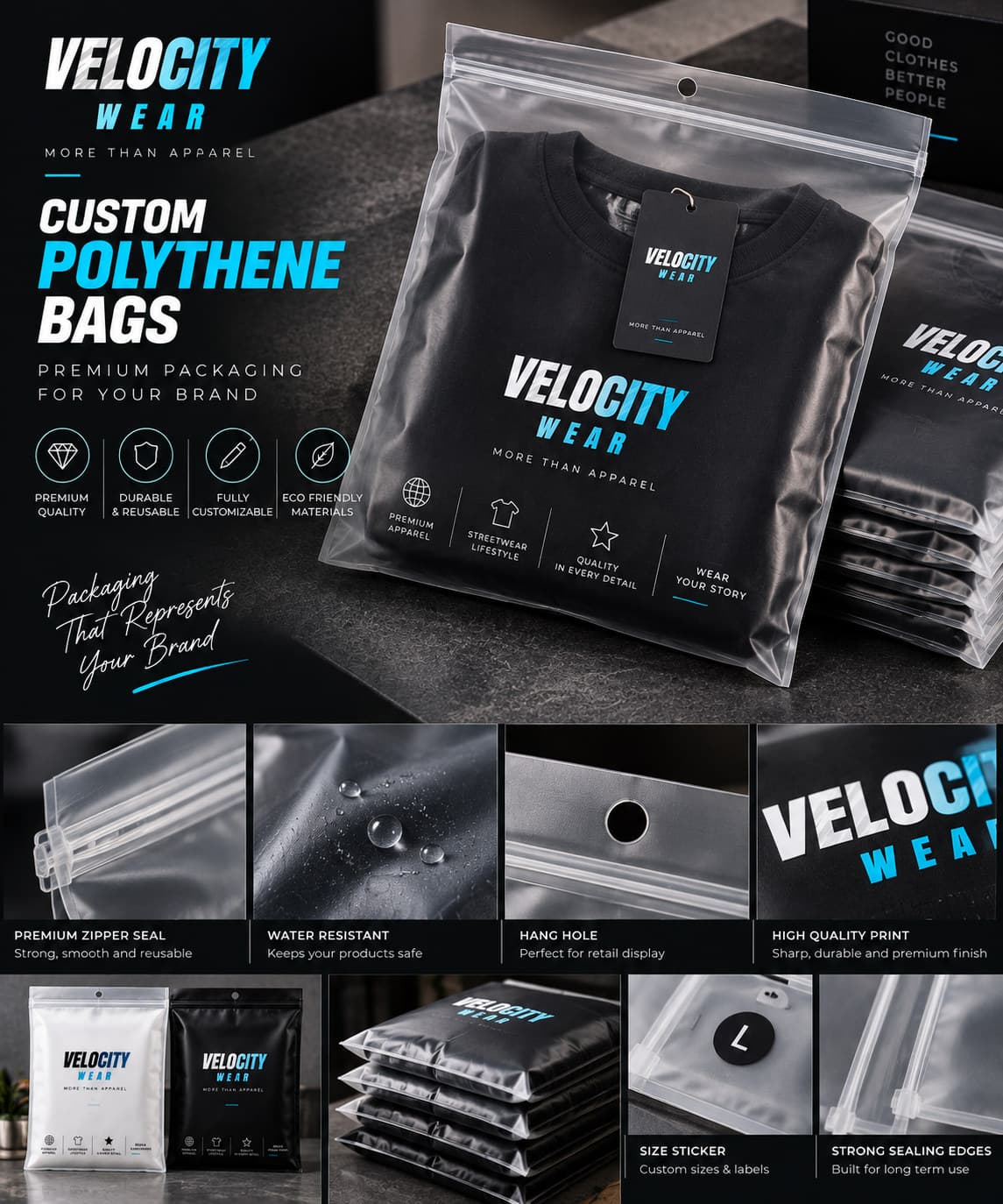
The minimum on printed polythene bags is 50 pieces per design. One artwork, one bag size, 50 units. The word design is doing the work in that sentence: a second size, or a version of the artwork that needs its own print setup, is a second design with its own 50. Understanding that before you plan a packaging range saves an awkward conversation at quote stage.
How does the 50-piece minimum apply to bags?
Think of the minimum as attaching to the setup rather than to the order. Preparing a print for one bag costs the same whether 50 or 5,000 come off the line afterwards, so the floor exists to make the setup worth doing. Once you are over it, the quantity is yours to choose, and the tiers reward going deeper: 50–99, 100–249, 250–499, 500–999 and 1,000+, with the top reaching up to 35% off the 50-piece rate.
For most buyers this is a far lower bar than it sounds, because bags are consumed steadily rather than seasonally. Fifty is an opening order that a small shop clears in a month. The polythene bags page shows what the product covers, and the wider wholesale catalogue lists everything else that shares the same minimum.
Do different sizes count as separate designs?
Yes. A small bag and a large bag are different tools and different setups, so each needs its own 50. This is the single most common surprise on a packaging enquiry: a buyer planning three sizes is planning 150 bags, not 50 split three ways. It is not a penalty, it is just how setup costs work, and the same principle governs garment orders too.
The practical response is to design the range around fewer sizes. Look at what you actually ship over a quarter and you will usually find two sizes handle 80% of it, with the rest being outliers that can go in the larger bag with a fold. That decision costs nothing and removes a whole 50-piece commitment from the plan.
What happens if you need two colourways?
Two print colourways of the same artwork are two setups, so they are two lots of 50. Where people get caught is assuming that changing an ink colour is free because the artwork file has not changed. It has not, but the press has. The logic is identical to screen printing on garments, explained in minimum order quantities explained.
If you want visual variety without doubling the commitment, vary the bag rather than the print: the same one-colour mark on a clear bag and on an opaque bag reads as two products on a shelf while keeping your artwork setup to a single job. It is a cheaper way to get range than a second ink.
Is 50 bags enough to be useful?
For a first run it is the right size. Fifty is enough to test how the bag performs in a real dispatch process — whether it fits the garment folded the way you fold it, whether the print scuffs in transit, whether the closure survives a courier — without committing to a year of stock you have not tested. New brands in particular benefit from proving the packaging before scaling it, a point covered in what a 50-piece minimum actually changes.
Once the bag is proven, the argument flips entirely. A packaging design with no date on it does not expire, so the repeat order is where you should be buying into the deeper tiers rather than reordering 50 at a time out of habit.
One habit pays for itself on that second order: write the specification down somewhere other than an email thread. Bag size, material, print colours, the position of the mark. Six months on, the person placing the reorder is often not the person who placed the first one, and a recorded specification turns a repeat into a five-minute job instead of an afternoon spent hunting through old attachments for a file nobody named sensibly. It also makes moving supplier possible without starting from scratch.