Wholesale Keychains: samples
By The Velocity Wear Team
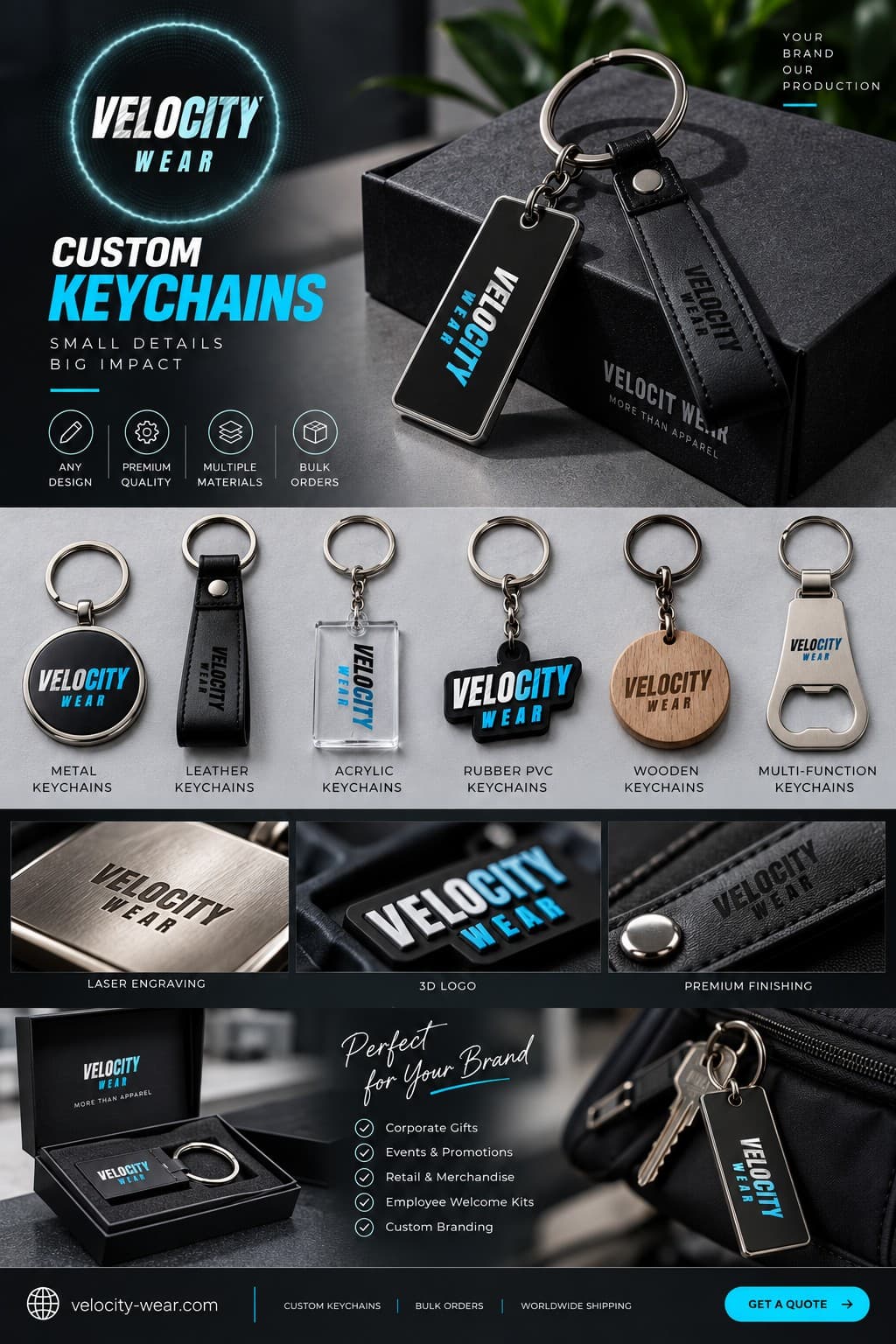
A keychain sample is £150 and the fee is credited against your bulk order when you proceed. It is made to your agreed specification rather than pulled from stock, which is why it is never free. For an item this small, the sample is mostly about one question: does the mark still read once it is the size of a coin?
Should you sample a keychain?
On a first order, yes, particularly if the design has any detail in it at all. Keychains fail in a specific way — the artwork looked right on a proof at screen scale and turns out to be illegible in a hand. That is expensive to discover across 500 pieces and cheap to discover across one.
The other reason is weight and finish. A piece that feels substantial and a piece that feels disposable can look identical in a photograph, and the difference decides whether people keep it. Confirm the specification on the keychains page, and if the keychain is going into a kit, look at the wholesale range so one sample round covers every item rather than three.
What is the £150 sample and how does it work?
It is a flat fee for the sample stage of the job, credited against the bulk invoice when the order goes ahead. It is not a per-piece price and it is not a deposit on the full run. Practically it means a buyer who intends to order is not paying twice; a buyer who is only browsing pays for what was made.
Approving the sample is the same gate as approving artwork, so once you sign it off the job enters the 10 to 15 working day production window. Book it early in the schedule rather than treating it as a final check, because the round trip sits ahead of production rather than inside it.
What does the sample rule out?
Four things. An illegible mark, which is the common one. A finish that photographs well and feels cheap in the hand. A fitting that is stiff, loose or awkward to use. And a colour that has drifted from your brand reference, which happens more readily on a small object than on fabric.
None of those is visible in a rendering, however convincing the rendering is. That gap is set out properly in AI mockups vs physical samples, and it is at its widest on small physical objects where the whole experience is tactile.
How should you test the sample?
Put it on your own keys and carry it for a fortnight. Two weeks in a pocket with coins and a door key tells you more about the finish than any inspection at a desk will. Then show it to someone who does not know your brand and ask what they see, because you are the worst possible judge of whether your own logo is legible.
Keep the approved piece afterwards as the reference for reorders. If the colour matters, check it against your brand standard in daylight rather than under office lighting — the approach to holding a colour across different materials is covered in choosing brand colours for an apparel label.
Photograph the approved piece next to a coin or a door key before you file it away. Scale is the detail that gets lost between orders, and a picture with something familiar beside it settles a question about size far faster than a dimension written on a sheet that nobody can picture in their head.
Then hand the sample to someone outside the business and watch what they do with it. Whether a small item goes into a pocket or onto a desk to be forgotten will tell you more than any opinion offered when you ask directly. People are polite about branded gifts and honest about what they carry, and only one of those two things is useful to you before a bulk run.