Sampling Caps Before a Bulk Order
By The Velocity Wear Team
A cap sample costs £150 and that amount is credited against your bulk order, so for anyone who goes on to buy it functions as a deposit rather than a cost. Samples are never free. What you get is one physical cap in your specified blank, colour and decoration, which is the only way to judge crown height, peak stiffness and how your logo actually sits on a curved panel.
What does the £150 sample get you?
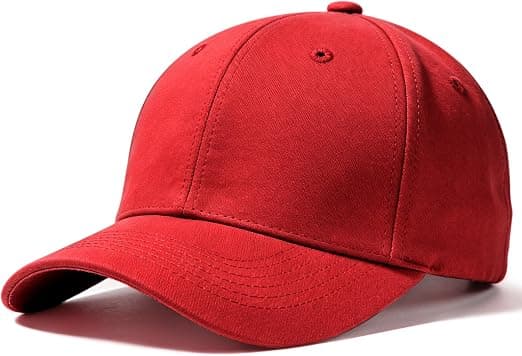
A production-representative cap: the blank you chose, in the colour you chose, decorated the way the run will be decorated. It is made the way the fifty will be made, which is the point — a sample produced by a different process proves nothing. Because it is credited against the bulk order, the effective cost of sampling for a buyer who proceeds is the time it adds rather than the money. That time is typically a week to ten days on top of the 10 to 15 working day production window.
What should you check when it lands?
- 1Logo size and position, measured with a ruler against the proof, not judged by eye.
- 2Thread or print colour against your reference, in daylight rather than under office lighting.
- 3Crown height and peak curve, worn by someone rather than sat on a desk.
- 4The back of the front panel, for puckering around dense stitching.
- 5Closure, sweatband and stitching quality at the seams, which is where a poor blank shows first.
Is a sample always worth it?
Not always. If you are reordering a design that has already run, the sample adds nothing that the previous production does not already tell you. If the artwork is a simple wordmark on a standard structured twill cap, the risk is low and many buyers go straight to bulk. Sample when there is a real unknown: a crest with fine detail, a puff mark on an unfamiliar crown, a colour match that someone senior will judge, or a retail piece where the customer is paying for the look. A render cannot settle any of those — AI mockups vs physical samples is blunt about what a mockup can and cannot prove.
How does the credit work?
You pay £150 for the sample, and when you place the bulk order that £150 comes off the invoice. It applies against the order, not against a per-piece price, so it is worth the same whether you go on to buy fifty caps or five hundred. If you sample and decide not to proceed, the £150 stands as the cost of having found out — which is still a far smaller number than a run of fifty caps you do not want. The blank options are on wholesale caps, with quantity bands on pricing, and the fabric choices worth testing are in choosing fabric for wholesale caps.
What can a sample not tell you?
It is one cap, so it cannot tell you about consistency across fifty. That is a function of the production process rather than of the piece in your hand, and it is why the first-off check exists inside the run itself. It also cannot tell you how the cap will look in eighteen months, since nobody is going to put a sample through a year of laundry before the order is placed. And it cannot settle a dye lot question for a future reorder, because the fabric in your sample came from the batch available now. What it does settle is everything physical and immediate: shape, weight, stitch quality, mark position, thread colour and how the cap sits on an actual head. Those are the things that go wrong expensively, which is why the £150 is usually money well spent even though it comes back to you anyway. Judge it as insurance against a run of fifty you would rather not have, not as a purchase.