How Offices Buy Caps Wholesale
By The Velocity Wear Team
Offices order caps for field teams, company events and welcome packs, at $12 a piece from the fifty-piece minimum. The appeal is administrative as much as visual: an adjustable cap needs no size register, no fit decision and no exchanges, so one order dresses a whole company. The risk is the opposite one, which is ordering a cap that looks like a conference handout and gets left in a drawer.
Why would an office buy caps at all?
Three reasons come up repeatedly. Field and site-visiting staff need something practical with the company on it. Company events, away days and charity runs need kit that fits everybody without a sizing exercise. And welcome packs need an item that is useful rather than decorative, which a cap manages more honestly than most branded objects. On the last of those, corporate gifting with branded apparel is worth reading before committing a budget.
What caps do badly is formal client-facing wear, where a polo or a shirt does the job. If you are dressing a reception team, the cap is not the garment; the corporate page covers what is.
Which style avoids looking like a freebie?
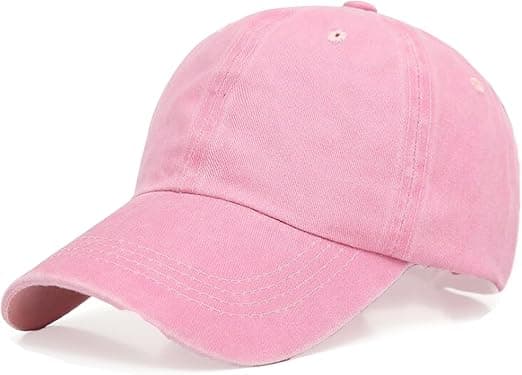
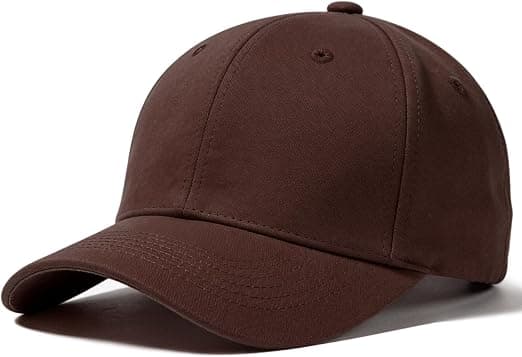
A dad cap or an unstructured six-panel in a plain, dark colour with a small stitched wordmark. The giveaway look comes from scale and from colour: an oversized logo across the whole front, in a bright corporate blue nobody would otherwise wear, is what sends a cap to the back of a cupboard. Restraint is the entire strategy. A tonal logo, stitched in a shade close to the cap colour, is worn far more often than a high-contrast one and still does the job at close range.
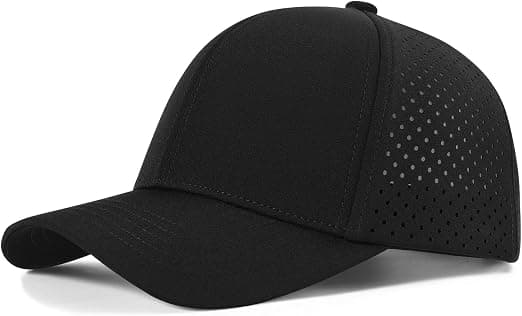
Structured six-panels and snapbacks suit teams who want a firmer, more uniform look, and truckers suit outdoor events in summer. The style list and the decoration options sit on the wholesale caps page.
What does an office cap order cost?
Fifty pieces at $12 is the starting point, and the per-piece price falls through five tiers as quantity rises, reaching up to 35% below the fifty-piece price at the largest. Because caps need no size split, the quantity decision is purely about how many people you are covering and how many spares you want, which makes it far easier to push an order into a better tier than an apparel order is.
How should the caps be handed out?
Deliberately. Caps that appear on a table in a kitchen are taken by whoever passes and worn by nobody. Put them in a welcome pack with a reason attached, hand them out at an event where they will be worn that day, or issue them to the field team as working kit. Whatever the route, order enough that the distribution does not have to be rationed, because a second run means another fifty-piece minimum and another 10 to 15 working days from artwork approval. Event teams should also read caps for events, ordered properly.
Decide in advance who signs the design off, because a cap attracts more opinions per pound than almost anything else a company buys. The logo is small, the colours are few and the decisions are genuinely simple, which is exactly why a long thread forms around them. Name one approver, give them the artwork at actual size, and set a date.
Storage is the quiet advantage. Caps stack, they do not crease and they need no sizing, so a box in a cupboard stays a usable stock for years. Printed apparel does not behave that way, since it dates with every rebrand and every change of strapline. That durability is the argument for ordering the caps once, generously, and drawing on the box for two or three years rather than running a small order each time somebody asks for one.