Bulk Caps for Trades: A Buyer's Guide
By The Velocity Wear Team
Trade firms order caps for the parts of the day a hard hat is not required: travelling between jobs, working in the yard, meeting a client on a driveway. Caps start at $12 a piece at the 50-piece minimum, which a crew of any size clears once spares are included. Embroidery is the decoration that lasts, and an adjustable back keeps the order simple across a changing workforce.
Where does a branded cap actually get worn on a job?
Anywhere the head protection policy does not apply. That is more of the working week than people assume: the drive, the merchant run, the yard, the quote visit, the outdoor work on a domestic job. A cap in those moments is the only branding a passing customer sees, and it costs a fraction of what a van wrap does. The layering questions that matter are covered on the construction and trades page.
What a cap does not do is replace certified head protection, and nothing here should be read as a substitute for it. Specify the cap for the hours it covers, and keep the site rules exactly where they are. Construction workwear specification deals with choosing kit for the work rather than from a catalogue.
Which cap style stands up to site wear?
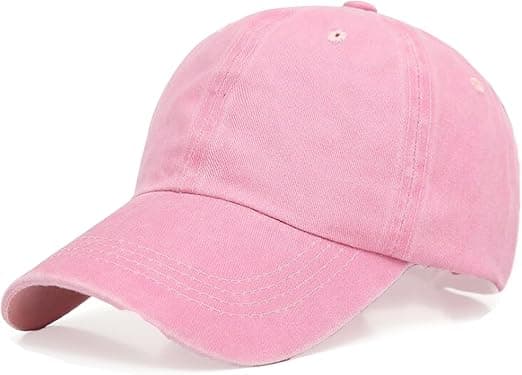
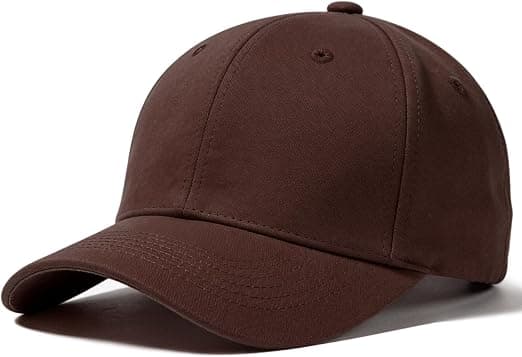
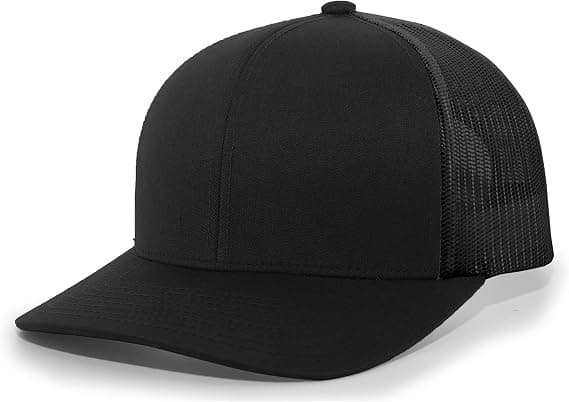
A structured six-panel is the workhorse. It keeps its shape after being thrown on a dashboard, and the buckram front gives embroidery a base that will not distort. Five-panel caps are lighter and suit summer work but crease more readily. A trucker with a mesh back is worth considering for hot outdoor months, and a dad cap sits softer for firms who want a less uniform look on client visits. Adjustable backs handle a workforce where the headcount changes between orders.
For colour, high-contrast options help on open sites where a crew needs to be picked out at distance, but a cap is not a substitute for the visibility garments that carry a standard. Many firms run a dark cap for the crew and a different colour for supervisors, which is only worth doing if you can clear fifty of each design.
How should the logo be applied?
Stitched, on the front panel, at a size that reads from across a driveway rather than across a desk. A company name and a phone number is the combination that generates calls, and the number is the part that gets set too small. Embroidery survives dust, rain and the inside of a van far better than a print on a curved panel. 3D puff suits a thick, simple wordmark; anything with fine outlines should stay as standard embroidery. The same trade-off applies to work polos, as polo shirts for trades: print or embroidery explains.
What does a trade cap order cost and how long does it take?
Fifty caps at the entry price of $12, with the unit price falling through five quantity tiers to as much as 35% below that at the top. Production is 10 to 15 working days from artwork approval before transit, and a £150 sample is available and credited against the bulk order if you want the stitching in hand before committing. The full style list sits on the wholesale caps page.
Caps also make a low-cost item to hand to clients and suppliers, which trade firms tend to overlook. One given to a homeowner at the end of a domestic job carries the company name into a street where the next job often comes from, and at the entry price it is a smaller gesture than most advertising. If that is the plan, count a few beyond the crew into the same run, since spares cost the unit price and nothing more.