Ordering Corporate Uniforms for Tour Season
By The Velocity Wear Team
Kit has to be in the production office before the first load-in, which means ordering roughly six to eight weeks ahead of the opening night. The build itself runs 10 to 15 working days from artwork approval, and everything else in that estimate is transit, distribution and the approval time a touring organisation always underestimates because everyone involved is already busy.
How do you back-date from the opening night?
Anchor on the first load-in, not the first show. Crew are in kit a day ahead of the audience, and on a bus tour the boxes have to be with the production office before the trucks leave, not shipped to a venue mid-run. Work back from the departure date instead and the schedule becomes honest. Subtract transit, subtract the full production window, then add the days it takes to get artwork agreed between management, the label and whoever owns the logo.
That last item is the one that slips. Approvals on a tour cross several organisations, and a proof can sit for a week while it moves between them. Naming one person to sign it is worth more than any amount of schedule padding.
What does a touring crew wear, and how many sets?
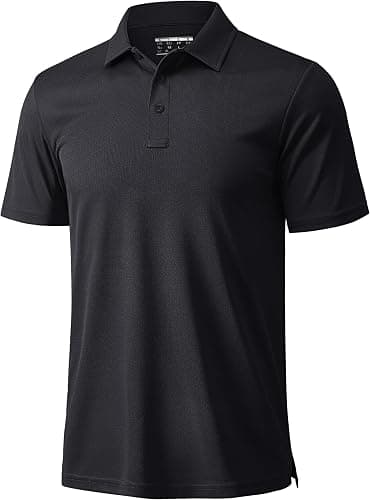
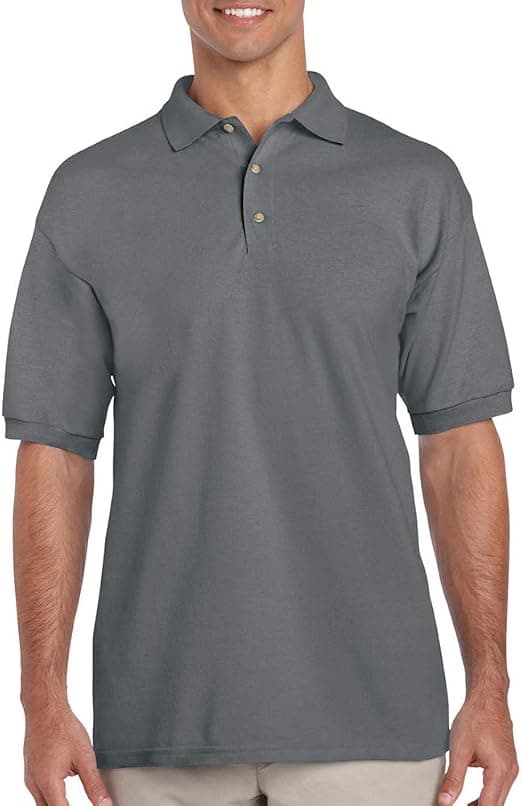
Crew kit is usually a dark shirt or polo, an outer layer for load-in and load-out, and an apron or tabard for anyone on hospitality. Three sets per person is the working number on a multi-week run, because laundry happens when it happens and a crew shirt takes a beating in a day. The wholesale uniforms range carries shirts, polos, aprons and outer layers as one programme, with jackets quoted per job.
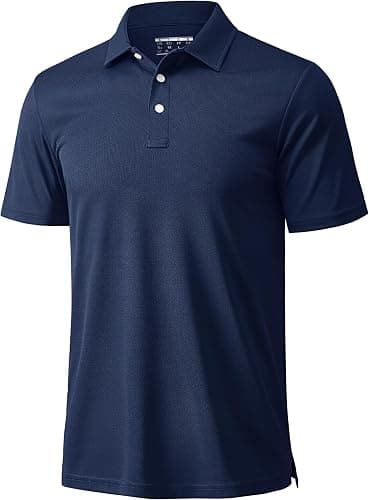
Dark colours dominate for a reason. Crew work in low light, against black drapes, and around dust and cable grease. A pale garment looks finished after two shows. Keep printing to a single high-contrast placement so the kit reads on camera without becoming a merch item people take home.
Where does freight eat into a tour budget?
At the point where the shipment has to catch up with a moving operation. One delivery to a fixed address before departure is straightforward. Chasing a tour with a second consignment is not, and the cost of doing it wipes out whatever you saved by under-ordering in the first place. We deliver to the UK, the USA and Europe and invoice in seven currencies, so the sensible plan is a single delivery into whichever territory the tour starts in.
That argues for over-ordering slightly. Pricing starts at $20 per piece at the fifty-piece minimum and falls through the tiers at 100, 250, 500 and 1,000, reaching up to 35% off the opening rate. Spare kit bought at the tier price is cheap; spare kit bought as an emergency mid-tour run is a fresh fifty-piece minimum plus expedited freight.
Can you re-run a design mid-tour?
Yes, and the design is already proofed so the approval step disappears, but you are still looking at the production window plus transit to wherever the tour has reached. Plan on that rather than hoping. If a garment is new to you, run a sample before the tour is confirmed; it is £150 and credited against the bulk order, and the samples page sets out what comes back. Where the seasonal calendar overlaps with festival work, our notes on ordering uniforms for summer events cover the multi-day side, and apparel production lead times explained breaks down where the working days actually go.
Sizing on a touring crew has one quirk worth naming. The team is often confirmed late, and freelancers join in the final fortnight, so an order built on a provisional crew list will be wrong by departure. Order against the roles rather than the names, with a generous spread through the middle of the range, and hand out by size on the first day instead of pre-allocating. It is the only approach that survives a crew list that keeps moving.