Towels for Salons: print or embroidery
By The Velocity Wear Team
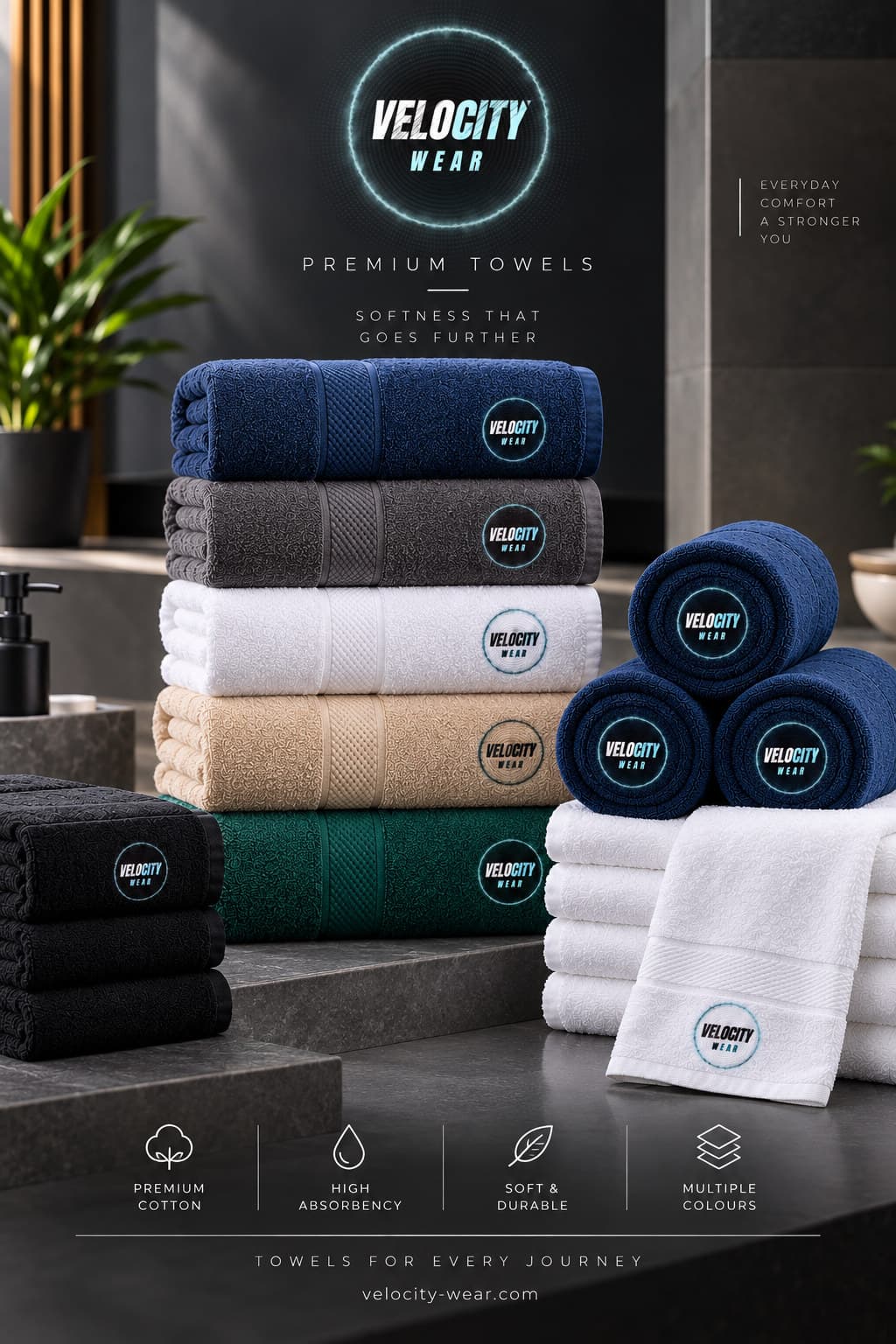
Salon towels can be branded two ways: woven into the towel as part of the construction, or printed onto the face of the pile. Woven branding lasts longer under bleach and industrial washing because the mark is structural rather than applied. Printed branding handles detail and multiple colours better. For a salon meeting peroxide daily, woven usually wins on longevity and printed wins on artwork fidelity.
Woven or printed: which branding suits a salon towel?
Woven branding means the logo is built into the fabric at the loom, normally along a border or dobby band. There is nothing sitting on top of the cotton to crack, peel or fade off, so it survives the kind of washing a salon subjects a towel to. The limitation is resolution. A woven mark works in one or two colours with clean shapes, and a logo with fine gradients or thin serif lettering will lose its character.
Printed branding goes onto the face of the towel and can reproduce more detail and more colours. It looks sharper on day one. The honest trade-off is that pile is a difficult surface to print on and bleach is unkind to pigment, so a printed towel in a colour bar will show its age sooner than a woven one. The wholesale towels page covers both routes, and the salons and barbers page sets out the wider branding decisions across uniform and towels together.
How does bleach change the decoration decision?
Peroxide, tint and colour developer are chemically aggressive, and they do not care what your brand guidelines say. A printed logo exposed to them repeatedly will lift at the edges first, then patch. A woven logo cannot lift because there is no layer to lift, though the yarn colour itself can lighten alongside the rest of the towel. That difference is why so many salons end up with woven branding on the working towels and printed branding on anything that lives at reception or on the retail shelf.
There is a related decision hiding in here: base colour. A dark towel makes bleach damage look like damage. A white or very light towel absorbs it far more gracefully. If you insist on a dark branded towel for the colour bar, budget for replacing it more often, and pick woven so the logo does not fail before the cloth does.
Where should the logo sit on the towel?
Position matters more on a towel than on a garment, because a towel is folded, hung and stacked far more often than it is seen flat. A mark along the border shows when the towel is folded on a shelf or draped over a chair back, which is where most of your visibility comes from. A mark centred on the face disappears the moment the towel is folded in half.
- Border placement reads best on a stacked shelf and survives folding in any direction.
- Corner placement works when towels are hung on hooks, which is common in treatment rooms.
- Centre placement only earns its keep on retail towels that are photographed or displayed open.
- Avoid placing a mark where a towel is habitually gripped, since that area wears fastest.
For anything involving stitched branding, the artwork complexity feeds straight into the cost, which we break down in how embroidery stitch count affects cost. Barbers have their own version of this problem, covered in barber shop towels.
Does the branding method change the minimum?
The floor stays at fifty pieces of one design whichever route you take. What changes is what counts as a separate design. A woven towel in two different base colours may need separate setup, and a printed logo in an alternative colourway is a second design with its own fifty. Deciding on one branding treatment and applying it consistently is almost always cheaper than running variants.