Towels for Gyms: print or embroidery
By The Velocity Wear Team
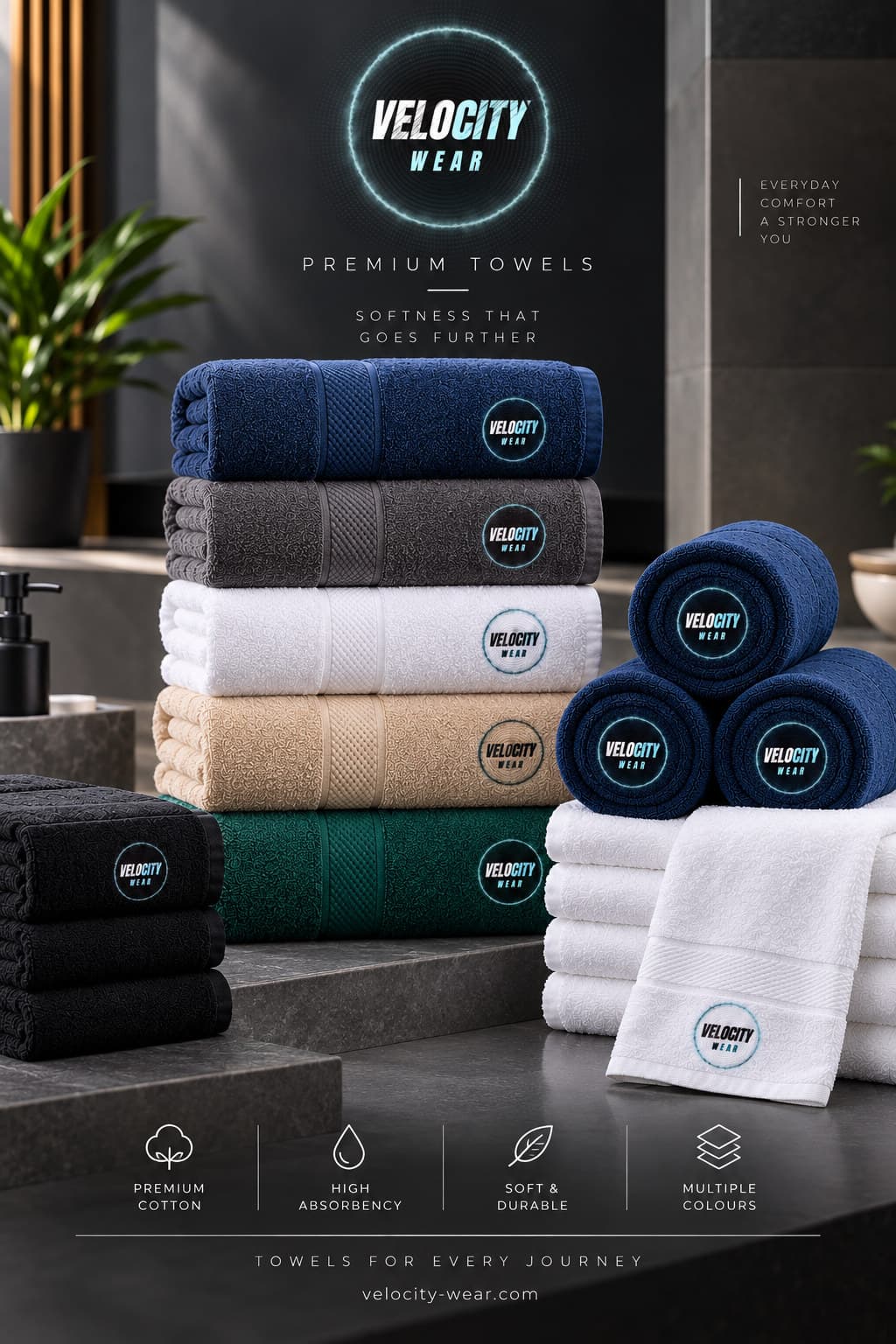
For a gym towel that goes through a commercial laundry, woven branding is the durable choice, embroidery is the considered one and printing is the flexible one. Woven is part of the cloth so nothing can lift. Embroidery holds a clean logo on the border. Printing carries detail and colour that neither of the others can, but it ages fastest under repeated hot washing.
Which decoration lasts on a gym towel?
Weaving, comfortably. The mark is made from the yarn rather than applied on top of it, so it fades at the same rate as the towel around it and there is no edge to fail. On stock that will see several hundred cycles in a contract laundry, that is the difference between a towel retired for wear and one retired because the logo looks tired.
Embroidery sits close behind and holds up well on a woven border, where the flat panel supports the stitching. It is the method that reads as most considered in a spa area or a boutique studio. Both options are described on the wholesale towels page.
The towel underneath matters as much as the method. A deep hotel-weight pile swallows a stitched outline that would read perfectly on a lighter gym towel, and a woven border gives any method a flat, stable base that open pile does not. Settle the towel specification first and choose the decoration against it, rather than picking a branding method and hoping the cloth co-operates.
When does a printed towel make sense?
When the artwork needs more than a logo. Photographic imagery, gradients, a class timetable, a campaign line or a bold all-over design can only be printed, and for a member giveaway or a retail piece that freedom is usually worth more than the extra durability.
Printing is also the sensible choice for a short-lived piece: an event towel, a challenge series, a seasonal drop. Those towels are not going into a twice-weekly industrial wash for three years, so the durability argument carries much less weight. Placement makes a large difference to how a print ages, and that is covered in print placement on towels.
Cost behaves differently between the two as the run grows. Printing carries a setup per colour that spreads across the quantity, so a multi-colour design that looks expensive at 50 pieces can look reasonable at 500. Stitching is priced closer to per piece, so it scales more evenly. Ask for both at your real quantity rather than assuming the order of the two holds at every size of run.
What does the artwork need to be?
Vector, with fonts outlined and Pantone references noted. Then simplified, because terry is an unforgiving surface. Thin strokes close up, small type fills in, and a logo with a strapline under it will be unreadable at border height whichever method you pick.
Bring a reduced lockup to the artwork stage rather than asking for the full one to be shrunk. If your mark only works at full complexity, use a wordmark on the towel and keep the detailed version for print and screen. Facilities that run both branded kit and towels usually settle this once and apply it across everything, as on the gyms and fitness page.
How do you decide between the two?
Ask where the towel ends up. Contract laundry and years of service point at woven. A treatment room or a premium studio points at embroidery. A giveaway, a retail towel or anything with real artwork on it points at printing. Then ask what your logo can survive being reduced to, because that sometimes decides it for you.
Take the £150 sample in the method you are leaning towards and wash it a dozen times before committing; the fee is credited against the bulk order. Branding that has to survive hot towel service, which is harsher again, is discussed in barber shop towels: hot towels, branding and stock.