Care and Washing for Towels
By The Velocity Wear Team
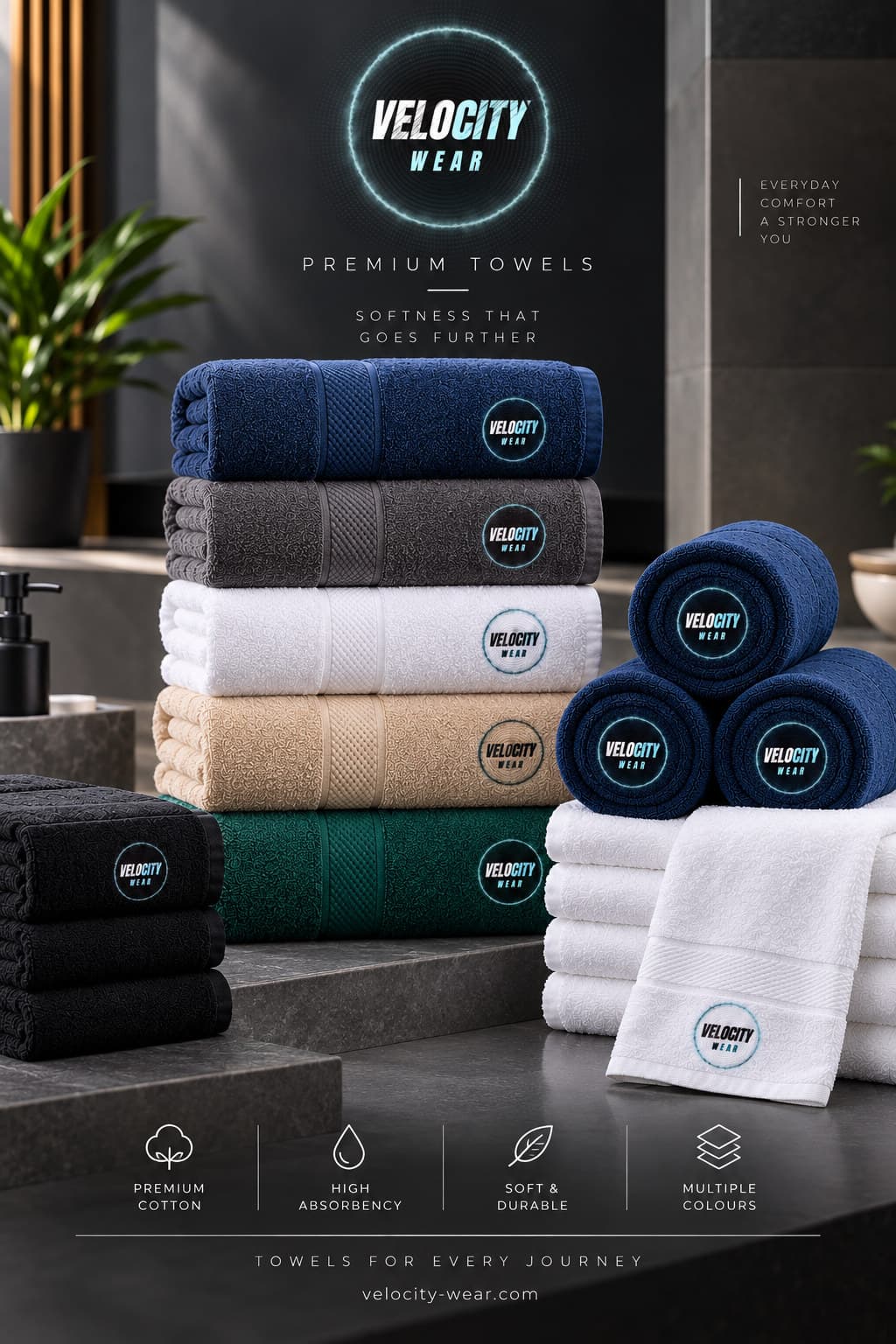
A branded towel survives a hot commercial wash if the branding is woven in rather than sitting on the surface, and if the laundry skips fabric softener. Softener coats the pile and kills absorbency; over-drying hardens it; bleach discolours it. Get a care label attached at production, because in a shared laundry the label is the only instruction anybody will ever read.
What survives a commercial hot wash?
Woven branding survives essentially as long as the towel does, because the colour is in the yarn rather than on top of it. Printed branding is more exposed. It handles domestic washing well and a controlled commercial cycle acceptably, but repeated high-temperature washes with strong alkaline detergent will take the edge off it faster than they take anything off the cloth.
If the towels are going into a contract laundry rather than a domestic machine, say so at quote stage. It changes the sensible recommendation on branding method and sometimes on the weight itself. Our wholesale towels page covers both woven and printed options.
Why do branded towels go stiff and grey?
Three culprits, and none of them is the towel. Fabric softener leaves a waxy film on the pile that stops it taking up water and makes it feel slick then stiff. Over-drying bakes the loops flat. And washing at a temperature below what the soil load needs leaves detergent and body oils behind, which is what turns white towels a dull grey over a few months.
The greying is the one that gets blamed on quality most often and is almost never a quality problem. Running an occasional hot wash with no softener and a proper dose of detergent brings most stacks back. The full diagnosis is set out in why branded towels go hard and grey.
Drying is the other half of it. Towels left damp in a bin overnight pick up a musty smell that no amount of detergent removes afterwards, and once that is in the pile the towel is finished. A rotation that washes and dries on the same shift is worth more to the life of the stock than any upgrade in specification, and it is free. Where that is not achievable, order a lighter weight that dries quickly rather than a heavier one that will not.
What has to appear on the care label?
Fibre composition and the standard wash symbols are the baseline for anything sold rather than given away, and they belong on the towel at production rather than being added later. If you are private labelling, that label is also where your brand name goes, so treat it as part of the design and not as paperwork.
For towels going into a staff laundry, print a single-sheet instruction and pin it above the machine as well. The label is on the towel, but the person loading forty towels at seven in the morning is not reading forty labels. The cost of the labelling sits inside the quote, so ask for it to be itemised rather than absorbed; the labelling and fibre terms you will see written on it are defined in the glossary.
How should the first wash be handled?
Wash new towels before they go into service, separately from the existing stock, and expect some loose lint on the first two or three cycles. New terry sheds. It is not a fault, and putting new towels straight into a mixed load is how a batch of white bath sheets picks up colour from something else on day one.
Expect a small amount of shrinkage on that first wash too, which is why the finished size should be recorded on your order. Taking the £150 sample and washing it a dozen times before the bulk order is the least expensive test available, and the fee is credited against the bulk order. What to look at when the pallet lands is covered in quality checks on bulk towels.