T-Shirts for Clothing Brands: reordering
By The Velocity Wear Team
A restock runs on the same 10 to 15 working day production window, but without the artwork, label and sampling stages that make a first drop take eight weeks. Expect roughly three to four weeks door to door. The rate follows the quantity on the new order, so a 250-piece restock is priced at the 250 tier rather than the 50-piece entry rate you paid originally.
How soon can a sold-out drop be restocked?
Three to four weeks is realistic: 10 to 15 working days of production plus transit. The saved time all comes from the front end — files are approved, screens are specified, labels exist, and no sample is needed if nothing changes. Place it the day a size drops below a week of cover rather than the day it hits zero, because a listing marked sold out for a month costs more than the stock did. The wholesale t-shirts page carries the garment spec.
Will the restock match the original run?
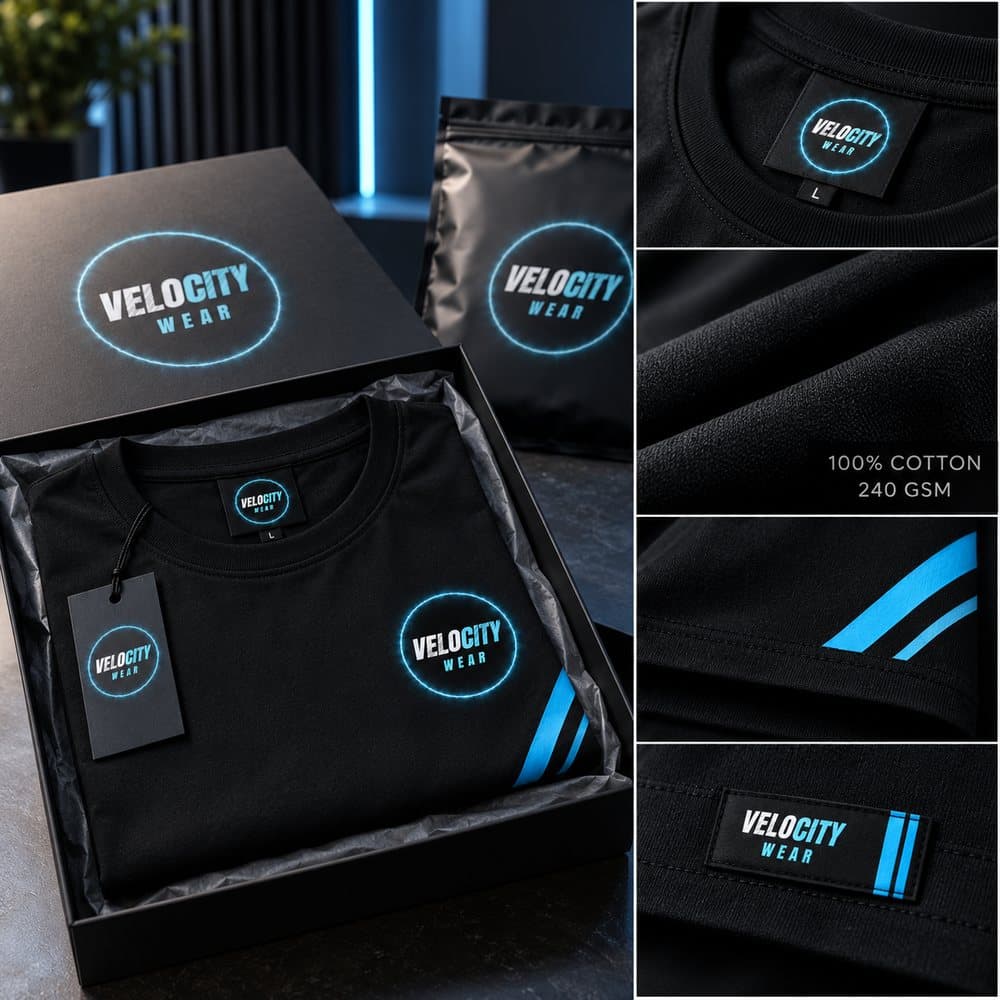
It will if you change nothing. Same base garment, same GSM, same garment colour reference, same ink references, same label spec — hold those and the two runs are interchangeable on a rail. Dyed cotton does vary fractionally between dye lots, which is unavoidable, and it shows most on mid-tone heathers rather than on black or white.
The practical protection is to keep a sealed piece from the first run as your physical reference rather than relying on a description. It settles arguments that a colour code alone cannot, and it is the single most useful thing a brand can do at the end of a production run.
Does a repeat order cost less?
Per unit, it depends entirely on how deep you go. The tiers are 50–99, 100–249, 250–499, 500–999 and 1,000 plus, with the discount reaching up to 35% off the 50-piece rate at the top, and your restock is priced on its own quantity. A brand that tested at 50 and restocks at 300 sees a real drop. One that restocks at 50 again pays the entry rate a second time — our cost breakdown sets out why ordering deeper once usually wins.
Restock or move on to the next drop?
Look at how it sold rather than that it sold. A design that cleared in days across the whole curve is a restock, ideally deeper and with the curve corrected using the data from the first run — our size-split guide covers reading that. A design that sold out only in medium was under-ordered in one size, which is a different problem. And a design that took four months to clear should not come back regardless of the fact that it eventually did. The clothing brands page covers running repeat drops as a programme rather than one at a time.
Can a design become a permanent line?
That is what a third successful run usually means, and treating it as one changes how you buy. A permanent line is ordered on a reorder point rather than a drop date: work out weekly sell-through, multiply by the production and transit window, add a safety margin, and reorder when stock falls to that level rather than when it hits zero.
A core line also justifies ordering deeper than a drop does, because the risk of being left holding stock is far lower on something with a year of sales behind it. That is where the tier discount stops being theoretical and starts being the difference between a workable margin and a thin one.
Keep the specification frozen once a line goes core. Every change resets the reference, and the whole value of a permanent product is that a repeat customer gets the same shirt they bought last time. Save the improvements for a new line, where nobody has an expectation to disappoint.