Midweight vs Heavyweight on Jackets & Outerwear
By The Velocity Wear Team
Midweight outerwear covers most of the year and most of the use cases: a bonded softshell or an unlined coach jacket that works from autumn to spring. Heavyweight means padded, lined or heavily fleeced construction built for genuine cold. Heavier is not better by default. It costs more, ships bulkier and sits unworn for most of the year if the climate does not demand it.
What does GSM mean on outerwear?
Grams per square metre, the weight of the fabric itself. On a t-shirt or a hoodie that single number tells you most of what you need. On a jacket it tells you about the shell only, and the shell may be the lightest part of the garment. A thin poly face over a thick fleece backing and a quilted fill can read as a low GSM on paper and wear as a warm coat. Ask for the shell weight, the backing and the fill separately, because a single figure on an outerwear spec sheet is usually answering a different question than the one you asked.
What does the buyer notice in the hand?
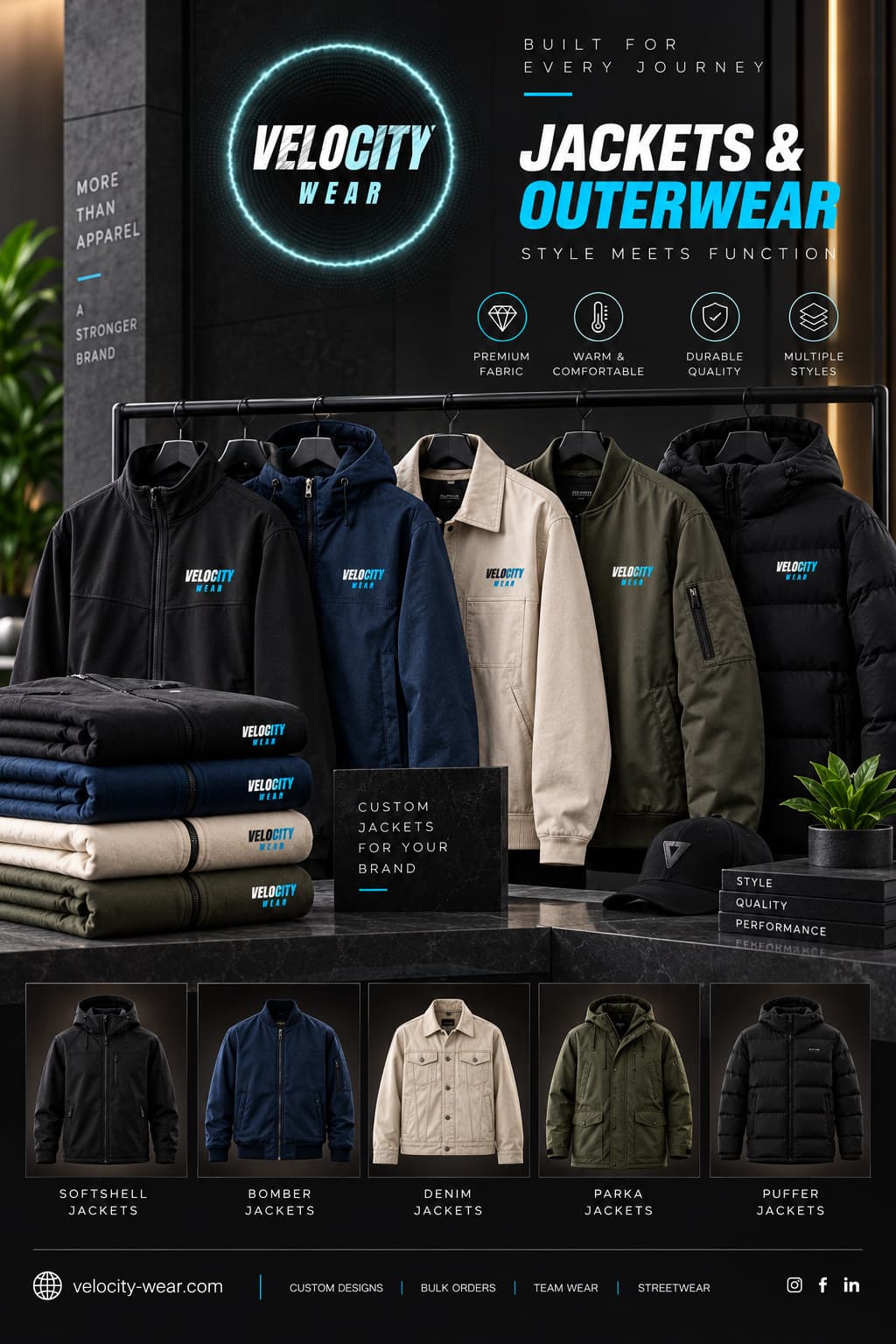
Substance, in the first two seconds. People judge a jacket by picking it up, and a garment that feels insubstantial gets dismissed before anyone checks the specification. That instinct is worth respecting on anything being sold, and worth ignoring on anything being worn indoors half the time. Zip quality registers next, then the lining. None of those are things a photograph communicates, which is the argument for spending £150 on a sample and putting the actual garment in front of whoever is signing off the order.
How does weight change freight and price?
Twice over. Heavier fabric and extra construction raise the unit cost, and bulkier garments take more cartons, which raises the shipping. Padded styles are the worst offenders because they are full of air that does not compress, so fifty puffers occupy far more space than fifty softshells of the same piece count. If the jackets are being shipped onward to customers individually, that bulk is charged a second time. Jackets are quoted per job for exactly this reason, with the quantity bands on the pricing page applying on top.
Which jobs suit midweight?
Staff who move between indoors and outdoors, event teams, hospitality, anything worn in a British spring or autumn, and anything a brand wants to sell across more than one season. A midweight softshell is the most generally useful piece of branded outerwear there is, which is why it turns out to be the default for most first orders. It also takes decoration more predictably than padded styles do.
Which jobs need heavyweight?
Outdoor work in winter, cold-storage and yard environments, and markets where the seasonal low is genuinely low. It is also the right answer for a high-value gift or an end-of-year staff piece, where the substance is part of the point. If you are looking at fleece-backed options in the same weight range, custom fleece jackets is a useful comparison, and the fibre question runs alongside it in cotton versus poly blend on jackets. Both weights are available across the wholesale jackets range, and the side-by-side comparisons are a quick way to see how the options differ.