GSM Explained for Bulk Jackets & Outerwear
By The Velocity Wear Team
GSM is grams per square metre: the weight of one square metre of the fabric a jacket is cut from. Higher numbers mean denser, warmer, more structured cloth and a higher unit price. On outerwear it is only half the story, because a light puffer with good fill can be warmer than a heavy softshell. Read the weight and the construction together.
What does GSM actually measure on a jacket?
It measures the shell, not the finished garment. Weigh a square metre of the face fabric and you have the number. That tells you how the cloth drapes, how much it resists wind, how well it holds a print and how heavy the finished jacket feels on a hanger. It does not tell you about lining, wadding, fill power or the membrane inside a softshell, all of which change warmth without changing the shell weight. Asking for GSM and getting a straight answer is a reasonable test of a supplier. So is asking what the lining is. The full range we build is on the wholesale jackets page, and the terms used on a spec sheet are defined in our glossary.
Which weight suits softshell, puffer, coach and varsity?
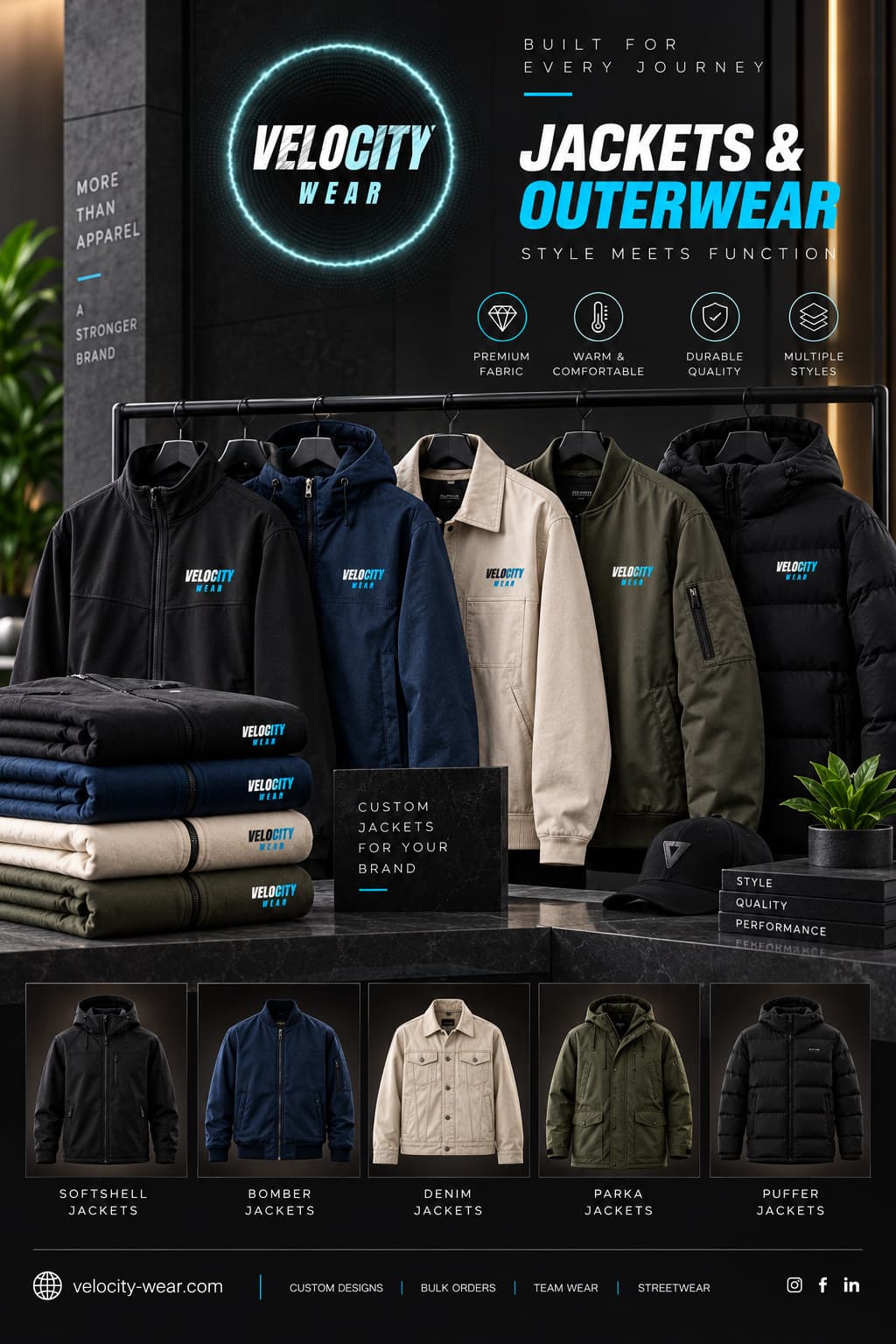
Each of the four styles sits in its own band, so comparing a coach jacket GSM to a softshell GSM is meaningless. Coach jackets use light woven shells because they are meant to be packable and worn over a hoodie. Softshell runs heavier, because the bonded construction adds weight and that weight is the wind resistance. Puffer shells are deliberately light, since the warmth comes from the fill and a heavy shell only makes the garment stiff. Varsity is the outlier: the body is usually a heavy woven or melton and the sleeves are a different material entirely, so a single number never describes the whole jacket.
Where does weight show up in the price?
Directly, because you are buying cloth by the metre, and indirectly, because heavier fabric is slower to cut, sew and finish. It also shows up in freight, since a pallet of heavy jackets hits a weight limit before it hits a volume limit. Jackets are quoted per job rather than from a fixed list price, precisely because a coach jacket and a lined varsity are not the same product. Quantity is the lever that moves the number most: discounts run up to 35% off the 50-piece price as the order climbs through the tiers.
How do you check weight without guessing?
Order one. A sample is £150 and the fee is credited against a bulk order, and handling a jacket settles in ten seconds what a spec sheet argues about for a week. If you already own a jacket that feels right, send it or name it, because matching something concrete is far easier than matching an adjective. Where fabric weight meets a wet climate, the softshell guide is worth reading, and the fill question specifically is covered in custom puffer and padded jackets.
One last use for the number: comparing quotes. Two suppliers pricing what sounds like the same softshell can be quoting fabrics a long way apart in weight, and the gap between them explains most of the price difference. Asking both for the shell weight, the lining and the composition turns an unfair comparison into a fair one, and it usually shows that the cheaper quote is cheaper for a reason rather than by generosity. Put those three figures on the quote itself so the next person to read it does not have to reconstruct the conversation.