Embroidery vs Puff Embroidery on Hoodies
By The Velocity Wear Team
Flat embroidery lays thread directly onto the fabric. Puff embroidery stitches over a strip of foam, so the design stands proud of the surface and catches light from an angle. Puff reads from further away and looks bolder on heavy fleece; flat embroidery holds far more detail. Choose puff for thick lettering, flat for crests, small logos and anything intricate.
What is different about the stitch?
In puff, a layer of foam is laid under the stitch area and the satin stitches are worked over it at a higher density, so the thread cannot sink into the foam. Excess foam at the edges is removed with heat after stitching. The result is a rounded, raised letterform with a visible height to it.
That construction imposes rules. Stitch columns need to be wide enough to wrap the foam, so hairlines and thin serifs cannot be done in puff at all. Outlines with open ends need to be closed or capped, otherwise foam shows at the ends. And density is higher throughout, which raises the stitch count and therefore the cost against the same design done flat. The process is described on our puff print service page.
Where does each belong on a hoodie?
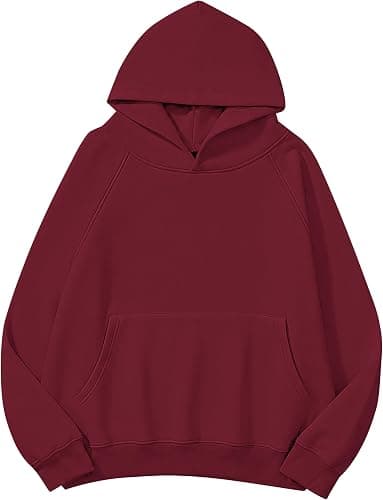
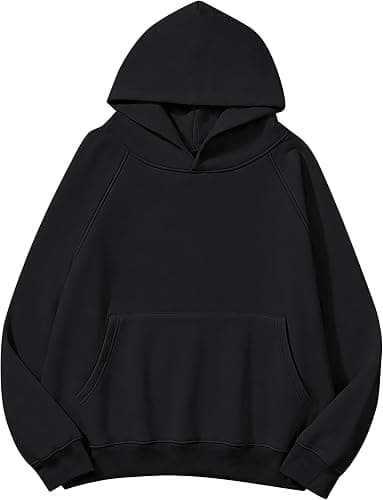
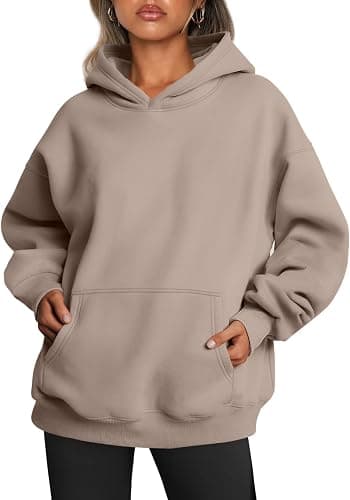
Puff belongs on chest lettering, on a hood, and occasionally on a sleeve where a raised mark catches the eye as the arm moves. It suits a bold wordmark in a heavy sans-serif at 4 inches or more. On 400 to 450 GSM brushed fleece it is particularly effective, because a heavy garment carries a heavy decoration without looking odd.
Flat embroidery belongs anywhere detail matters: a left-chest badge, a club crest with a date and a motto, a small monogram at the cuff, a neck-seam mark. It also belongs anywhere the garment is worn under something else, because a raised design under a jacket flattens and scuffs.
What artwork works as puff?
Simplify before you commit. Strip the design to the elements that can survive as thick, closed shapes. A three-element logo usually becomes one element in puff, with the rest either dropped or stitched flat around it. Mixing the two is standard practice and often the best answer: the wordmark in puff, the supporting detail in flat stitch beside it.
Colour behaves differently too. A raised surface shades itself, so the same thread reads lighter on top and darker in the valleys. That is part of the appeal, but it means a brand colour will not sit as uniformly as it does flat. If you are also considering sewn-on alternatives for texture, appliqué, patches and woven labels covers the options that are not print or plain stitch.
So which should you pick?
Pick puff when the design is a bold wordmark or a simple shape, when the hoodie is a retail or streetwear piece and you want the decoration to be the feature, and when the garment is heavy enough to carry it. Pick flat embroidery when the design has fine detail, small type or several elements, when the hoodie is workwear or team kit, or when you want the mark to read as understated.
Cost-wise, expect puff to sit above flat stitch for the same physical size because of the higher density, though both sit on the same garment from-price of $31 a piece at the 50-piece minimum. Specify the method per position when you quote on the wholesale hoodies page, and if you have not yet ruled out print, screen printing versus embroidery on hoodies covers that half of the decision.