Custom Towels and Textiles: GSM, Pile and Decoration
By The Velocity Wear Team
Need this made?Get pricing for this product— free, no obligation, 50 pieces minimum.
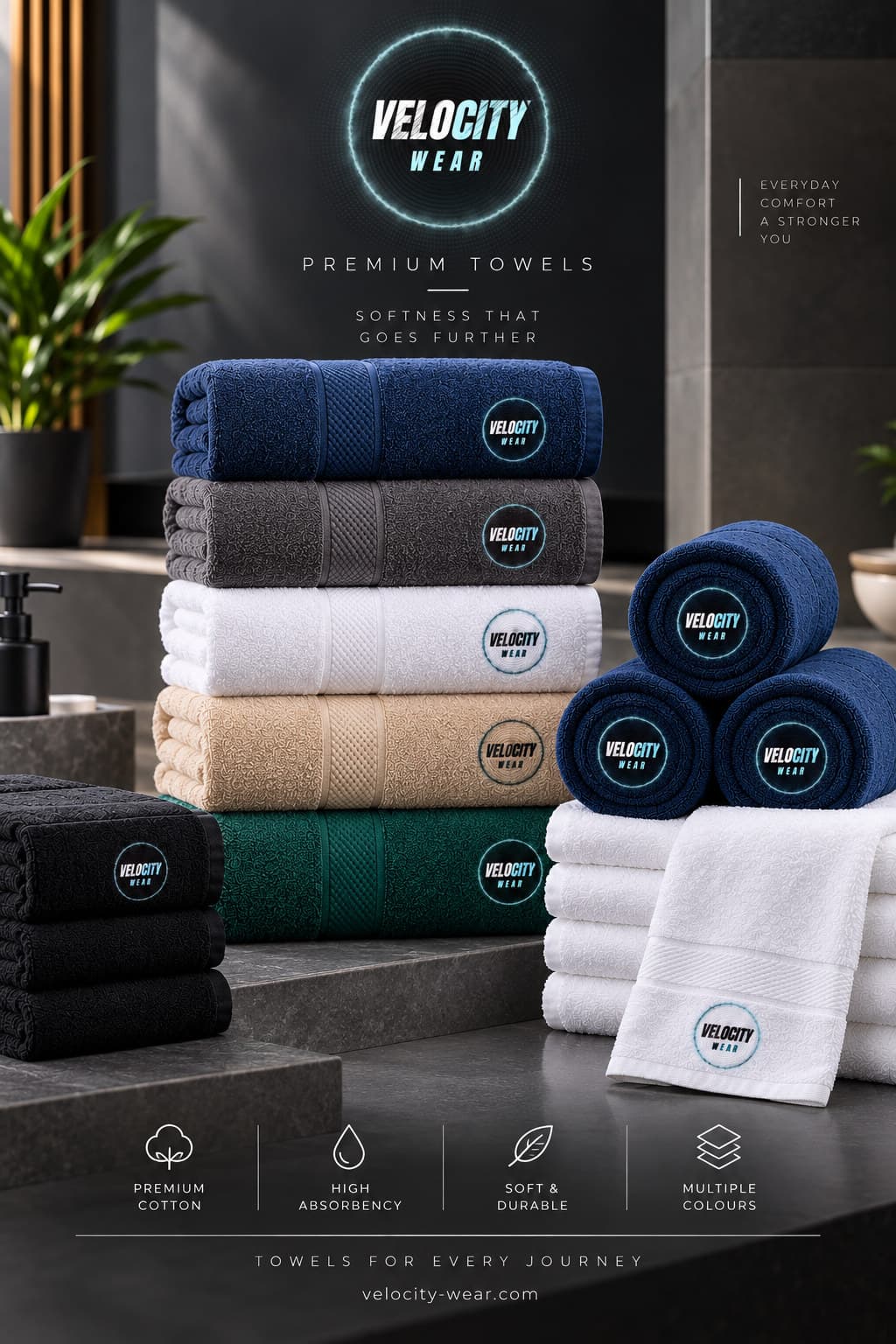
Towel decoration comes down to two things: the GSM you choose and where on the towel the logo goes. GSM sets the feel and absorbency, from around 400-500 for gym towels through 550-650 for household bath towels to 700 and above for hotel and spa weights. And logos belong on the flat dobby band woven into the towel, not in the pile, because stitching into a raised loop pile buries the detail.
Reading a Towel by Its GSM
GSM on a towel means much the same thing as it does on a hoodie: weight per square metre, and therefore how substantial it feels. A 400 GSM towel is light, dries quickly and packs small, which is why it suits gyms, sports clubs and travel. Around 550-650 is the everyday bath towel weight most people recognise from home, absorbent without taking two days to dry. Above 700 you are into hotel and spa territory, where the towel feels dense and luxurious but takes noticeably longer to dry and costs more to launder.
Heavier is not automatically better. A 700 GSM towel handed out at a five-a-side tournament is the wrong product: it is bulky in a kit bag and still damp the next day. Match the weight to how it will actually be used, not to how impressive it sounds.
Why the Dobby Band Matters
Most towels have a flat woven strip near each end, sometimes called the dobby or the border. It exists partly for looks, but for anyone branding towels it is the single most useful feature. The main body of a towel is loop pile: raised loops of yarn that make it absorbent. Embroidery stitched into that pile sinks between the loops, and fine detail closes up. Placing the logo on the flat band keeps the stitching on a stable surface and holds the shape of the design.
Where you must embroider into the pile, the technique is a water-soluble topping laid over the surface so the stitches sit on top rather than sinking, then washed away afterwards. It works, but it does not remove the problem entirely. Simplify the design regardless: heavy outlines survive, hairline serifs and small text do not.
What Works on Cotton and What Needs Polyester
Fibre decides your options here more strictly than on garments.
- Cotton terry, the standard towel construction, takes embroidery well and is the right choice where absorbency is the point.
- Screen printing and DTG do not suit loop pile, because the ink sits on the tips of the loops and breaks up as they move.
- Polyester microfibre gym and sports towels take sublimation, which gives full-colour, edge-to-edge designs with no surface layer to crack.
- Sublimation only works on light bases and only on polyester, so a full-colour dark towel is not achievable that way.
- Woven-in jacquard logos are made at the mill during weaving, so they belong to very large production runs rather than short custom orders.
The Absorbency Trade-Off Nobody Mentions
Microfibre towels are genuinely useful. They are light, fast-drying, take a full-colour sublimated print across the whole surface and pack down to nothing, which is why they dominate branded sports and swim towels. They also feel different from cotton, and some people dislike the slightly grabby texture against skin. If your towel is a giveaway, going in a gym bag or being used pitch-side, microfibre is usually right. If it is a premium gift or a spa product where the recipient is meant to enjoy using it, cotton terry with an embroidered band is the better call even though it limits you to a stitched logo.
“"Choose the fibre for how the towel gets used, then decorate it. Doing it the other way round is how people end up with a beautiful towel that nobody wants to dry with."”
Colour, Washing and the First Few Cycles
Deeply dyed towels, particularly reds and dark navies, can release loose dye in the first few washes, so they should be washed separately at first. All new towels shed lint initially, and dark towels show it more obviously on skin and clothing. Neither is a fault; both are worth mentioning to whoever receives them, especially if the towels are going to a client or being sold on. Fabric softener is the other thing to flag: it coats the fibres and reduces absorbency over time, which is a common complaint about towels that were fine when they arrived.
Ordering Branded Towels
Like aprons, towels carry no sizing burden, which makes them one of the easier items to add to a wider order. Velocity Wear works to a 50-piece minimum per order with items mixed freely within the run, so branded towels can sit alongside apparel rather than needing a separate job, and bulk discounts reach up to around 35% as quantities rise. Everything is handled online: preview your logo in the free Design Studio, check live pricing in the instant calculator, and take delivery on a tracked service. Embroidery typically runs around 10-15 working days from artwork approval, with sublimated work nearer 15-20, and UK delivery usually 2-5 working days after dispatch.