
Poly Bags for Staff Uniforms: Bagged and Size-Labelled
By The Velocity Wear Team
Need this made?Get pricing for this product— free, no obligation, 50 pieces minimum.
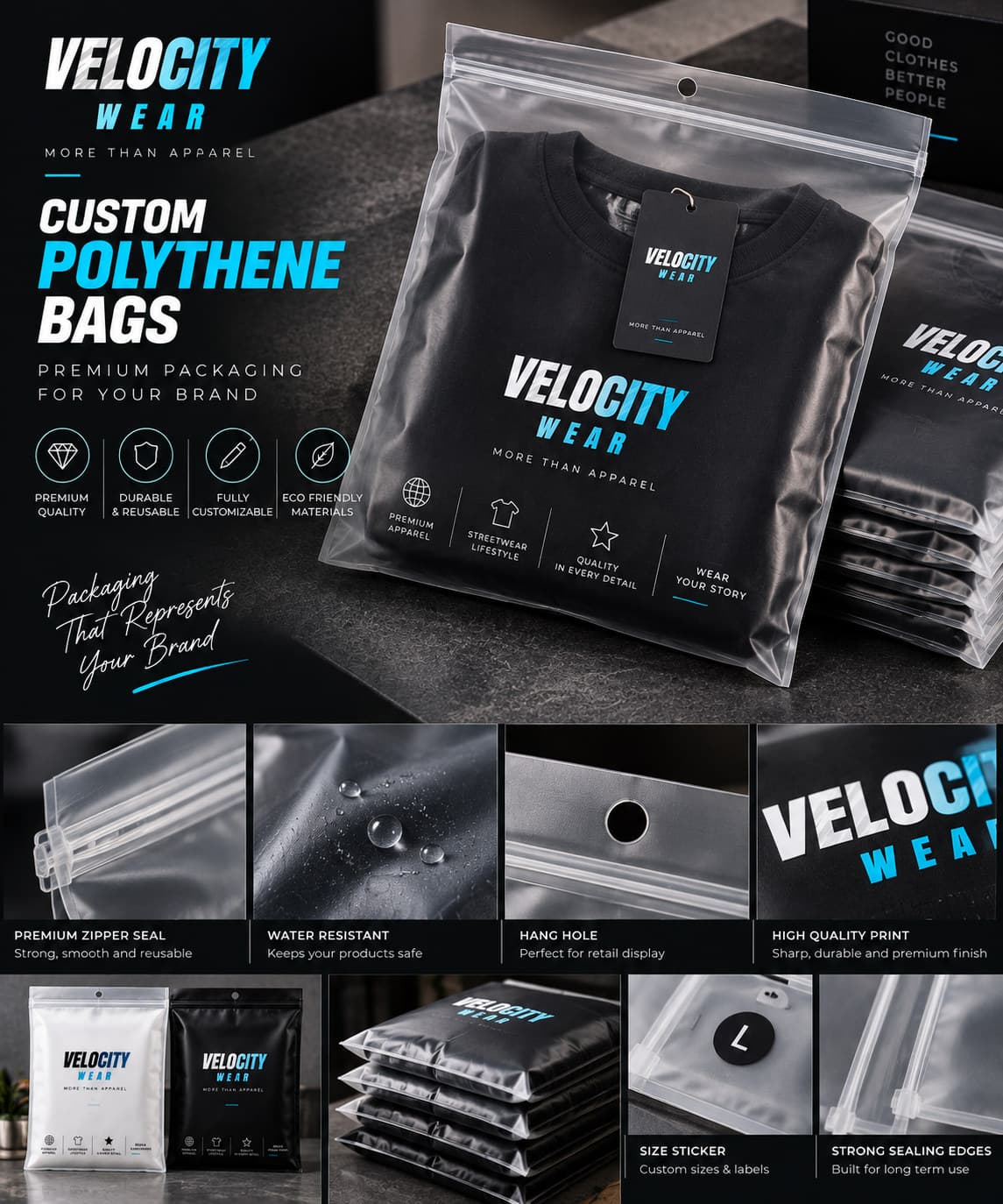
Packaging for staff uniforms works best when every garment arrives in its own bag with a size sticker, so a manager can issue kit by size without unfolding anything. Velocity Wear folds, bags and size-labels uniforms at the factory when polythene bags are ordered with the uniform run, from 50 bags per design, in 10 to 15 working days from artwork approval.
Why bag uniform garments one by one?
Because uniform stock is handled more than almost any other clothing. It arrives in bulk, sits in a stockroom, is handed out in batches on the first day, and then waits as spares for new starters, replacements and people who picked the wrong size. A loose polo on a stockroom shelf collects dust and gets unfolded every time someone hunts for a large. The same polo sealed in a water-resistant bag with a size sticker stays clean for months and can be found in seconds.
The bags carry your company logo on the face, and the printed uniform bags close with a resealable zip seal, so a garment swapped for another size goes back into its bag rather than onto the pile.
How does a manager hand out kit by size?
From a size list, by reading stickers. Most of the work happens before the order is placed, not on the day:
- 1Collect each person's size for every garment before ordering.
- 2Total them into a size breakdown per garment, which sets both the uniform quantities and the size stickers.
- 3When the cartons arrive, sort the bagged garments by size, keeping each garment type together.
- 4Work down the size list, picking each person's items by the sticker on the bag.
- 5Keep whatever is left bagged and sorted by size as spares.
The sticker tells you the size, not the wearer, so the size list is what matches kit to people. That is simple at one site; for several, split the list by site and sort on arrival. Kit for fleets and depots is covered in delivery driver uniforms and warehouse and logistics uniforms.
What should a uniform bag label show?
| Label | Example | Helps with |
|---|---|---|
| Size sticker | S, M, L, XL, XXL | Issuing kit and finding spares |
| Garment type | Polo, t-shirt, softshell | Mixed deliveries where several garments share one bag size |
| Colour or role | Navy for front of house, black for kitchen | Sites where different roles wear different colours |
| Style or reorder reference | Your own item code | Reordering the same item months later |
Size stickers are matched to the size breakdown of the uniform order, so what the sticker says agrees with the garment inside. Colour references and other custom labels sit on the bag face beside it, which matters most on multi-role sites where two garments look alike through the frosted film.
Which uniform garments can be bagged?
Anything that ships folded: polos, t-shirts, sweatshirts, hoodies and fastened jackets all bag well, each in a bag sized to its own fold. The uniform range covers the garments themselves, at 50 pieces per design with sizes mixed freely inside the 50. If your team has separate summer and winter kit, bag and label the layers separately so each season's stock can be stored on its own; summer and winter staff uniforms explains how to plan those layers.
Ordering bagged uniforms
In the enquiry form, list the garments and the size breakdown for each, the logo you want on the bags (it can differ from the one on the uniform), any colour or role labels, and the delivery country and the date the kit is needed, such as a site opening or the start of a season. Uniforms and bags are quoted together, and bags can also be ordered alone for uniforms from another supplier, at 50 per design. Details are on the bagged garment range page, and the printed polythene bag guide covers sizing and samples.