Size Splits for a Bulk T-Shirts Order
By The Velocity Wear Team
Sizes mix freely inside the 50-piece minimum, so the split is entirely yours to shape. Weight it towards the middle: something like 3 XS, 9 S, 14 M, 14 L, 7 XL and 3 XXL reflects how adult tees are actually taken up. A flat split across every size is the fastest way to end up with a box of shirts nobody wanted and a rail nobody can buy from.
What does a realistic curve look like at 50?
Medium and large together should take roughly half to sixty per cent of the run in most adult groups. Small and extra large sit either side at around fifteen per cent each, and the extremes take whatever is left. If you are buying for a known team, ignore all of that and order the actual sizes, because you have better data than any curve. If you are buying for an unknown audience, the curve is the safest starting point. Our wholesale t-shirts page lists the size range from XS to 3XL and the pricing page shows what the next tier costs if you round up.
How do you collect sizes from a group?
Publish garment measurements, not size letters. Chest width measured flat and body length from the shoulder tell people far more than a letter does, because a medium varies between manufacturers by several centimetres. Set a deadline, chase once, and then close it. Expect a proportion of non-responders and a proportion who change their mind, which is the practical argument for ordering slightly above your headcount rather than exactly to it.
Do UK and US sizes differ?
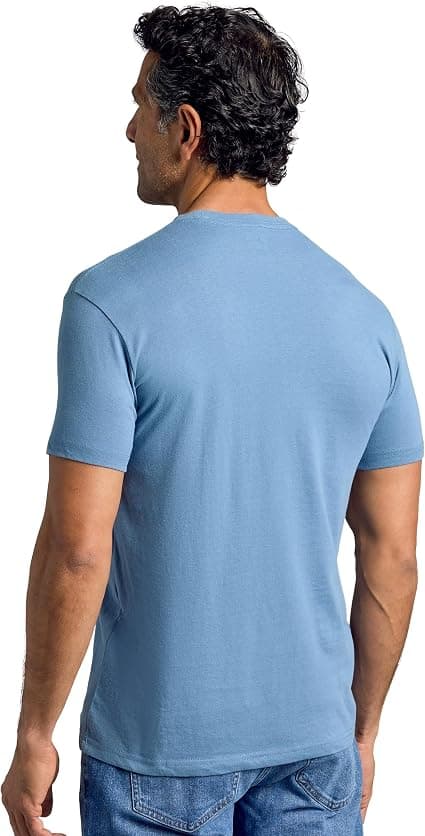
The letters are the same but the expectations are not. A US audience generally expects a slightly roomier cut for the same letter, and a run heading to the USA usually benefits from shifting the curve up one step. A boxy fit complicates it further, because the body is shorter and the chest wider, so a customer who normally takes large may want medium. Publishing measurements solves the problem in both markets at once, which is why it is worth the extra five minutes.
What do you do with the leftovers?
Plan for them before they exist. Spare shirts in the middle sizes cover new starters for a year and cost nothing to store. Extremes are harder, so keep those few and order them close to actual demand. Retailers should price the tail of the curve into the margin on the whole drop rather than treating a markdown as a failure. The alternative, ordering exactly to demand and reordering, means another 50-piece minimum and another 10 to 15 working days each time. How the minimum works sets out why that arithmetic rarely favours a small top-up.
Should a reorder use the same split?
Only if the first one sold through evenly, which it will not have. The point of a first run is to generate real data, so the second should follow what actually moved rather than what you predicted. Keep a simple record of what was left at the end and the second curve writes itself. Reordering in colour covers the other half of a repeat run.
What about a mixed group with different fits?
Order one garment and let people take the size that fits rather than trying to run two cuts. A regular-fit tee across XS to 3XL covers a mixed adult group comfortably, and the alternative, a second cut of the same artwork, is a second design and therefore a second 50-piece run. Where a group genuinely splits, it is usually worth spending the budget on a wider size range rather than a second fit, because a shirt that is the wrong length is worn and a shirt that is the wrong size is not. Publishing chest and body measurements lets people self-select accurately either way.