Bulk T-Shirts for Offices: A Buyer's Guide
By The Velocity Wear Team
Office t-shirts start at $13 a piece from 50 pieces per design, with sizes mixed freely inside that 50. The thing that distinguishes a corporate order from most others is that it repeats: onboarding kits need stock on a shelf all year, not a delivery in January. Buy for the whole year in one run and the per-piece price drops, up to 35% off the 50-piece figure at the top tier.
How many should an office actually order?
Count current headcount, add expected hires for the next twelve months, then add a buffer in the sizes that turn over fastest. Onboarding stock that runs out is worse than surplus stock, because the fix is a fresh order of 50 with its own lead time and a new hire sitting in a welcome meeting with nothing to give them. Because the minimum is per design and not per order, splitting the year into quarterly top-ups is the expensive way to do it: four orders of 50 sit in the lowest quantity band four times, while one order of 200 reaches a better one.
What fit works across a whole office?
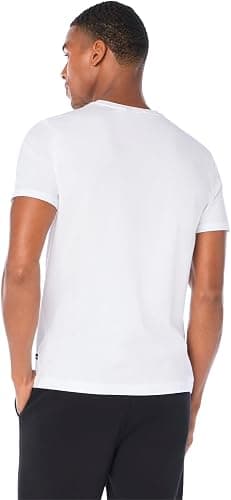
A regular unisex fit in combed ring-spun cotton at 180 GSM or so is the safe default, because it is the least likely to be rejected by anyone. Boxy fits read as fashion-forward and suit a younger workforce or an event-specific shirt, but they fit a narrower range of people comfortably. Whichever you choose, publish the flat chest measurement rather than just the letter, because staff ordering blind from a size name is the main reason a shirt gets worn once and never again. Running two fits means two designs and two minimums, which is rarely worth it for internal apparel.
Should the branding be subtle or loud?
Depends where the shirt is worn. A tee for an internal away-day can carry a large front graphic. A tee that staff might wear at a client site or on the commute gets worn far more often if the branding is a small chest mark, and shirts that get worn are what a company is actually buying. Embroidery suits that small mark and survives repeated washing; screen printing is more economical for a larger graphic across a bigger run; DTF handles multi-colour artwork without a per-colour setup. Event-specific shirts are a different brief again, covered in conference and corporate event t-shirts.
How do you keep the size data for next time?
Record what was issued, not what was ordered. After six months you will know which sizes emptied and which are still boxed, and that record is worth more than any generic size curve when you place the next run. Keep the approved sample too — it is the reference if you need to match a colour in a later order, and a £150 sample is credited against the bulk order anyway. If the same shirt is going to double as event stock, plan both at once using the approach in events: ordering t-shirts in bulk.
How do you handle a distributed team?
Order centrally and distribute yourself. Delivery covers the UK, USA and Europe, but a single consolidated shipment to one address is simpler and more predictable than trying to route an apparel order to forty home addresses. Most companies with remote staff hold the stock at head office or a fulfilment address and send shirts out with the rest of the onboarding kit, which also means a new joiner gets one parcel rather than three. Collect sizes as part of the onboarding form so nobody has to be chased separately.
If the company operates across several countries, invoicing is available in seven currencies, so the apparel line can sit on whichever entity's budget makes sense rather than forcing a cross-charge.
Weights and from-prices are on the wholesale t-shirts page, and the corporate apparel page covers polos, uniform and the rest of an office programme.