Print or Embroider Wholesale T-Shirts?
By The Velocity Wear Team
Print for graphics, embroider for marks. Screen printing suits flat artwork with a countable number of colours at volume, DTF suits photographic or many-coloured designs at smaller runs, embroidery suits small logos you want to feel premium, 3D puff suits bold simple shapes, and sublimation suits all-over patterns on polyester. The artwork usually chooses for you before the budget does.
What are the five methods, in plain terms?
Screen printing pushes ink through a mesh, one screen per colour, and gives the most durable flat colour at volume. DTF prints the design onto a film and heat-presses it, so colour count is irrelevant and there is no screen setup. Embroidery stitches the design with thread, priced by stitch count. 3D puff is embroidery or print raised off the surface with a foaming layer or dense stitch. Sublimation dyes the fibres themselves, which only works on polyester and light colours. All five are listed on our wholesale t-shirts page, and the quantity tiers are on the pricing page.
Which one suits your artwork?
Count the colours first. One to four flat colours with clean edges is screen printing territory. A gradient, a photograph or a design with twenty colours is DTF, because separating it into screens would be impractical and expensive. A logo under about 10cm wide with no fine type is a good embroidery candidate. A chunky wordmark with thick strokes is where puff works and where thin type fails. An all-over graphic that runs off the edge of the garment needs sublimation, and therefore a polyester blank.
Where on the garment should it go?
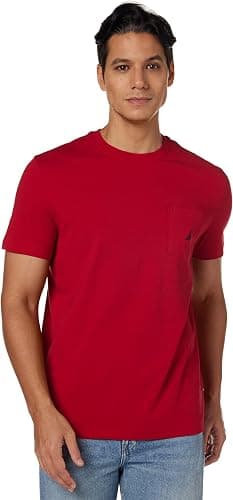
Left chest for anything corporate or staff-facing, because it reads as uniform rather than merchandise. Full front for retail and campaign work. Back placements sell the design to the room behind the wearer, which is why event and band tees use them. Sleeve and nape prints are small additions that make a tee feel designed rather than branded. Each additional position is another pass through the process, so two positions cost more than one larger print in a single position.
How does the method change cost at 50 versus 500?
Screen printing carries a setup per colour that is spread across the run, so it is at its least attractive at the 50-piece minimum and its most attractive at 1,000. DTF has no screen setup, so it is level across quantities and often the sensible choice at 50. Embroidery is priced on stitches, so quantity moves it less than design size does. Across all methods the run itself still benefits from the volume tiers, up to 35% off the 50-piece price. The head-to-head is in screen printing against embroidery and DTF against screen printing.
Which lasts longest on a shirt that is washed constantly?
Embroidery, because thread does not crack. A properly cured screen print is close behind and will usually outlast the garment in normal use. DTF sits slightly behind a screen print on very heavy wash cycles, though the gap is smaller than it used to be. Puff is the most fragile of the group under an iron. On a 150 to 240 GSM cotton tee, all of them are fine for a year of ordinary wear; the difference shows on uniform that is washed hot every single day.
How do you decide if you are still unsure?
Answer three questions in order. How many colours are in the artwork, counting flat colours rather than shades on a screen. How many pieces are you ordering, and is that near 50 or near 500. And is the shirt being sold, issued as uniform, or given away. Four colours and 500 pieces points at screen printing. Twenty colours and 50 pieces points at DTF. A small logo on uniform washed daily points at embroidery. A bold wordmark on a streetwear drop points at puff. If two answers pull in different directions, the artwork wins, because a method that cannot reproduce the design is not a saving.