DTF vs Screen Printing on T-Shirts
By The Velocity Wear Team
DTF prints your design onto a film and heat-presses it onto the garment, so colour count costs nothing and there is no screen setup. Screen printing pushes ink through one screen per colour, which costs more to set up and less to run. At the 50-piece minimum DTF usually wins on price; at several hundred pieces with few colours, screen printing usually wins on both price and feel.
What is DTF, in practical terms?
Direct to film. The artwork is printed onto a transfer film, an adhesive powder is applied and cured, and the transfer is pressed onto the shirt under heat. Because it is a digital print, the file goes straight to the machine with no separations and no screens, which is why a twenty-colour photographic design costs the same to set up as a single-colour one. That is the whole argument for it. Our wholesale t-shirts page covers the garment side, and the DTF printing service page covers the method.
How many colours can each handle?
DTF has no practical limit, so gradients, photographs, drop shadows and complex illustration all reproduce. Screen printing is limited by how many screens are worth burning: one to four colours is comfortable, five or six is possible, and beyond that the setup starts to make no sense on an ordinary run. If your design was drawn in flat colour it is a screen printing design. If it came out of a photograph or a painting, it is a DTF design, and trying to force it through screens will cost more and look worse.
What do they feel like on the garment?
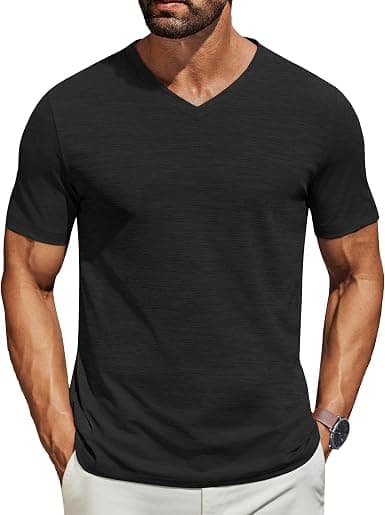
A screen print sits in the weave and, on a large solid area, feels like a slightly stiffer patch of fabric. DTF sits on top as a thin film, which is smooth but noticeably a layer rather than part of the shirt. Small DTF transfers are hard to distinguish by touch; large ones are not. On a lighter 150 GSM tee a big DTF panel is more noticeable than on a 240 GSM body, so the fabric weight is part of this decision too. Choosing fabric has the weights in full.
Which is cheaper at your quantity?
Run the arithmetic per design, not in the abstract. Screen printing carries a per-colour setup spread across the run, so at 50 pieces a multi-colour print carries the setup thinly and at 1,000 pieces it disappears. DTF has no setup, so its per-piece cost is broadly flat across quantities and it does not improve much as the run grows. The crossover for a simple one or two colour design comes early; for a six-colour design it comes much later. The garment itself still moves through the tiers regardless, up to 35% off the 50-piece price, which is covered in what wholesale t-shirts cost.
Pick DTF when, pick screen printing when
Pick DTF when the design is photographic or has many colours, when the run is at or near the 50-piece minimum, when you need per-garment variations such as names or numbers, and when the artwork you have is a high-resolution raster file rather than vector. Pick screen printing when the design has one to four flat colours, when you are ordering 250 pieces or more, when the tee will be washed hard for years, and when you want the decoration to feel like part of the shirt rather than a layer on it. If the mark is small and corporate, screen printing against embroidery is the more relevant comparison.
How does each handle small text and fine detail?
Screen printing holds fine line work well, because the ink is pushed through a mesh that can carry surprisingly small detail on a smooth, denser fabric. Very thin lines on a lightweight knit are where it struggles, since the surface is more open. DTF is a digital print and resolves small text cleanly, but the transfer edge has to be cut or released around the artwork, so isolated hairlines and tiny detached elements can lift over time. For anything with small legal type or a fine outline, both work on the heavier end of the 150 to 240 GSM range and neither does its best on the lightest.