Wholesale Polythene Bags: artwork setup
By The Velocity Wear Team
Send bag artwork as vector where you can, with the colours specified rather than guessed, and with the print area sized to the bag rather than to a page. A logo and a web address usually make the whole job. We proof it back to you before anything is printed, and that proof is what the 10 to 15 working day production window is measured from.
What artwork should you send for a printed bag?
Vector first: an AI, EPS or PDF file where the mark is built from paths rather than pixels. Vector scales to any bag size without softening, which matters because the same logo may need to appear on a small bag and a large one. If all you have is a raster file, it needs to be big enough for the printed size at full resolution, and the difference that makes is explained in what 300 DPI actually means.
Specify colours rather than describing them. A named reference removes the argument entirely; the word navy does not. Send the references with the file and they go straight onto the proof. The polythene bags page covers what the product supports, and the broader wholesale range shows which other items can carry the same mark if you are building a consistent set.
How is a logo positioned on a bag?
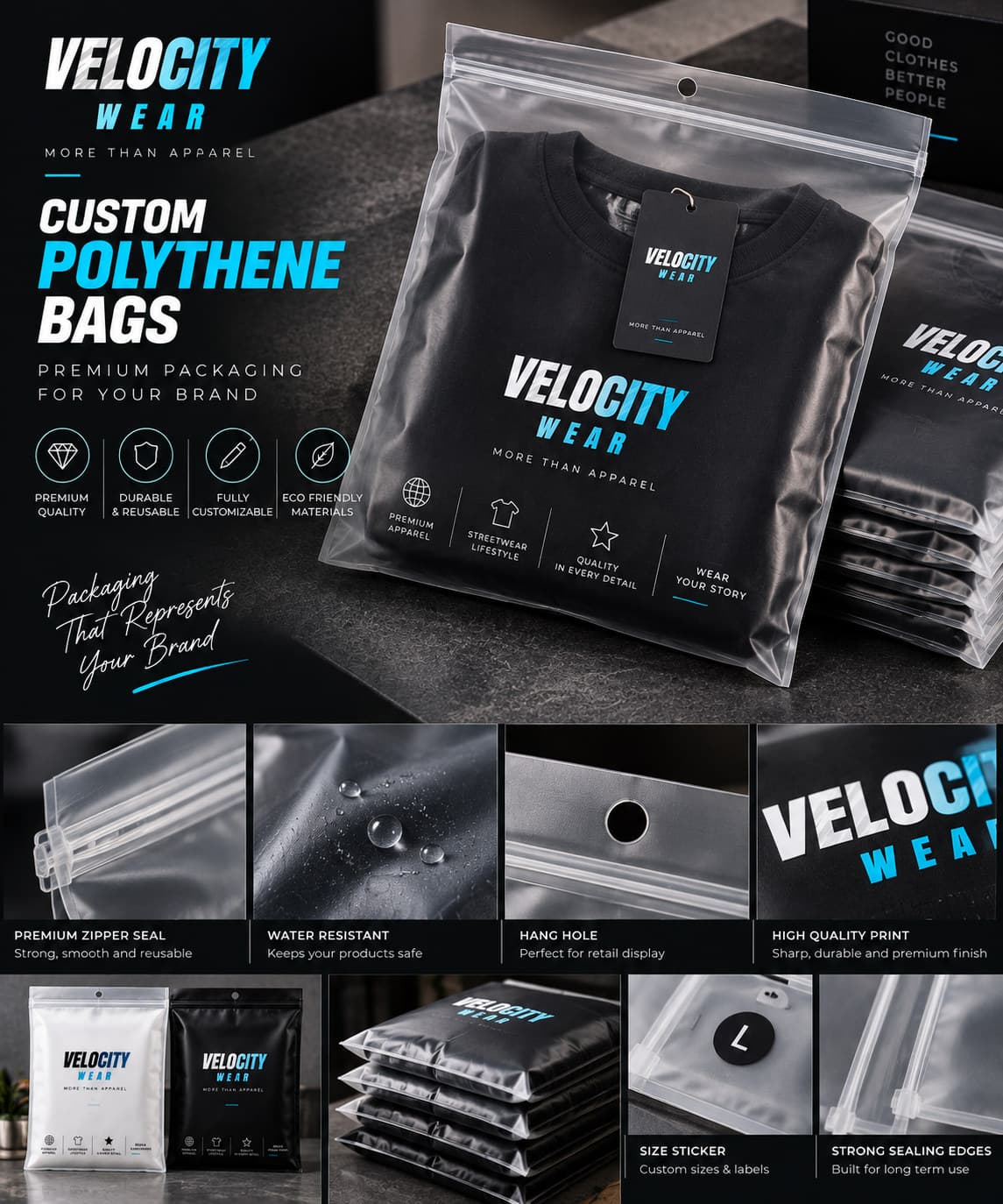
Position is dictated by how the bag is used, not by how it looks flat on screen. A bag that hangs on a rail wants the mark high; a bag that sits in a stack wants it centred. A mark printed too close to the seal or the edge risks distortion where the material is handled, so leave a margin all the way round and do not push a design to the limit of the print area for the sake of scale.
Decide early whether you are printing one face or two. A second face is a second print operation and shows up in the quote, and in most cases the back of the bag is against something and never seen. One well-placed mark almost always beats two mediocre ones.
What gets checked before print?
We send a proof showing the artwork at position and size on the bag, with the colours called out. Check three things on it: that the mark is the current version of your brand, that any text is spelled correctly, and that the scale reads the way you expected. Proof stage is the last free moment in the job, a point made bluntly in can I change my order after approving artwork.
It is also worth checking the file you sent is the one you think it is. Marketing teams routinely have three versions of a logo circulating, and the one on the shared drive is often not the one in use. A minute of verification here prevents 500 bags carrying an old strapline.
What if the artwork needs rebuilding?
It happens often, usually with a logo that only exists as a small image pulled from a website. Rebuilding it as vector is straightforward for a simple mark and less so for something with gradients or fine detail, which is why simplifying is the better move. The general file rules in preparing artwork files for custom clothing printing apply to packaging without much change.
If your artwork came out of an image generator, look at it closely at full size before sending. Soft edges, half-formed letters and inconsistent line weights are invisible on a phone screen and obvious on a printed bag.
Then keep the production file somewhere findable, named for the job rather than for the day it was exported. Artwork that exists only in a freelancer's account is artwork you will pay to recreate when the reorder comes round, and a design rebuilt from a printed bag will never match the original exactly. Five minutes of filing at the end of a job removes an afternoon of work from the next one.