Wholesale Keychains: minimum order
By The Velocity Wear Team
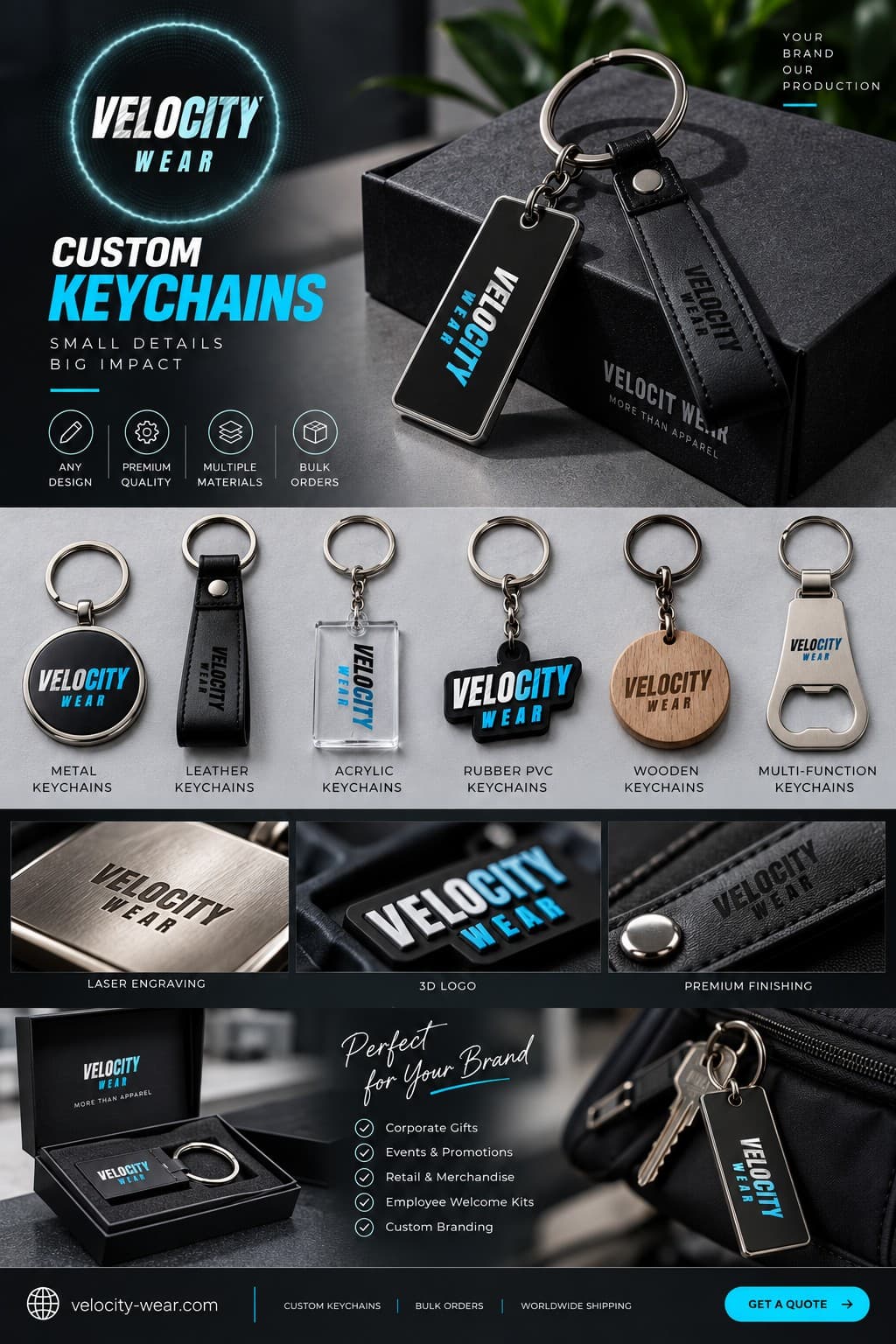
Custom keychains carry the same minimum as everything else we produce: 50 pieces per design. One shape, one branding setup, 50 units. A second shape or a second version of the mark is a separate design with its own 50. There is no smaller run, and no version of the order where the floor is waived for a small item.
Is there a minimum on keychains?
Yes, and it surprises people because the item is small. The logic has nothing to do with the size of the product, though. Setting up production for a branded keychain takes the same preparation whether 50 come off the line or 2,000, so the floor is what makes the setup viable. A small item does not mean a small setup.
Fifty is a low bar in practice. A gym handing one to every new member clears it in a month; a brand putting one in each product box clears it in a single batch of orders. The keychains page covers what the product can be, and the wholesale catalogue lists the other items that share the same 50-piece floor if you are assembling a kit.
Why is the minimum per design and not per order?
Because the cost being covered is preparation, and preparation happens once per design. Ordering 50 of design A and 50 of design B is two preparations, so it is two minimums — not one order of 100 split down the middle. This is the single most common misunderstanding on a first enquiry, and it applies identically to garments, as set out in minimum order quantities explained.
The practical implication is that variety is expensive at low volume. If your budget is 100 pieces, one design at 100 sits in a better tier and looks more deliberate than two designs at 50 each. Range is something to add on a reorder, not something to buy into on a first run.
How do you use 50 keychains?
Put them where something else is already going. Fifty in a box of product orders, fifty in staff welcome packs, fifty distributed with a membership sign-up. Keychains attached to another transaction get kept; keychains handed over in isolation get lost. The same pattern applies to small accessories generally, discussed in custom tote bags and accessories: low-cost merch that works.
Hold some back, too. A run of 50 spent entirely in one weekend leaves nothing for the next three months, and reordering 50 at a time is the most expensive way to buy them since every run sits in the 50–99 band.
Should a first order be exactly 50?
If you are unsure about the design, yes. Fifty proves whether people keep the thing before you commit to a cupboard full. If the design is settled and the item is a permanent part of your packaging, the first order is the wrong place to be cautious, because the tiers at 250+ change the economics substantially and a keychain does not date.
New brands in particular tend to over-order the uncertain items and under-order the certain ones. The argument for using a low minimum as a testing tool rather than a budget constraint is made in why a 50-piece minimum works for new brands.
Decide who hands them out before the box arrives. Small items vanish into cupboards when nobody owns the job, and a run meant to last six months is either gone in a fortnight or still sealed at the end of the year. Naming one person and one occasion for them is the difference between a purchase that does something and a shelf of stock nobody remembers ordering.
Consider as well whether a single design can serve two audiences. A mark that suits staff and customers equally keeps the job on one setup, and one setup is where the economics of a small item genuinely sit. Two audience-specific versions double the commitment for a distinction most people never notice.