Size Splits for a Bulk Jackets & Outerwear Order
By The Velocity Wear Team
Sizes can be mixed freely inside the 50-piece minimum, so the split is entirely your decision. A workable default for a mixed adult group is a small number of XS and XXL, a middle weighted to M and L, and a deliberate lean one size up on outerwear because jackets are worn over other layers. Collect real sizes first wherever the wearers are known.
How do you split fifty jackets across sizes?
Think of the fifty as a curve rather than an even spread. Sizes at the ends of the range move slowly and sizes in the middle move fast, so loading the middle is what keeps stock clearing. A split that puts roughly half the run in the two central sizes, a quarter either side of that, and only a handful at the extremes will fit most adult groups without leaving a pile behind. Adjust it for who is actually wearing the jackets: a construction crew and a university society do not have the same shape. The general principles are set out in apparel sizing and fit.
Why does outerwear run differently to a tee?
Because of what goes underneath it. A jacket is worn over a hoodie or a shirt, so the same person who takes a medium t-shirt often wants a large softshell. Padded styles eat more room again, since the fill takes up space that a flat shell does not. Varsity bodies tend to be cut generously through the chest and short in the body, while coach jackets are usually the roomiest of the group. This is why a size chart for one style does not transfer to another, and why the measurements matter more than the letter on the label. Ask for the chest and body length figures for the exact style you are ordering.
What do you do about the sizes nobody claims?
Plan for them before they happen. If the run is for a known group, run a short form and collect sizes by name, then order to that list with two or three spares in the busiest sizes for replacements and late joiners. If the run is for sale to customers, the leftovers are the cost of the guess, so keep the extremes thin on the first order and build a fuller curve on the reorder once you have sell-through data. A colleague who cannot get a jacket is a worse outcome than one spare XL in a cupboard, so err toward the middle rather than toward the ends.
Should you collect sizes before or after ordering?
Before, every time the wearers are identifiable. The 10 to 15 working day build starts at artwork approval, and chasing sizes after that point does nothing but delay your own order. If the group is genuinely unknown, order a first fifty on a conservative curve and treat it as a test rather than a stock buy. Reordering the same design later is straightforward, which takes some of the pressure off the first guess, and can I reorder the same design later explains what carries over between runs.
Does a wider size range cost more?
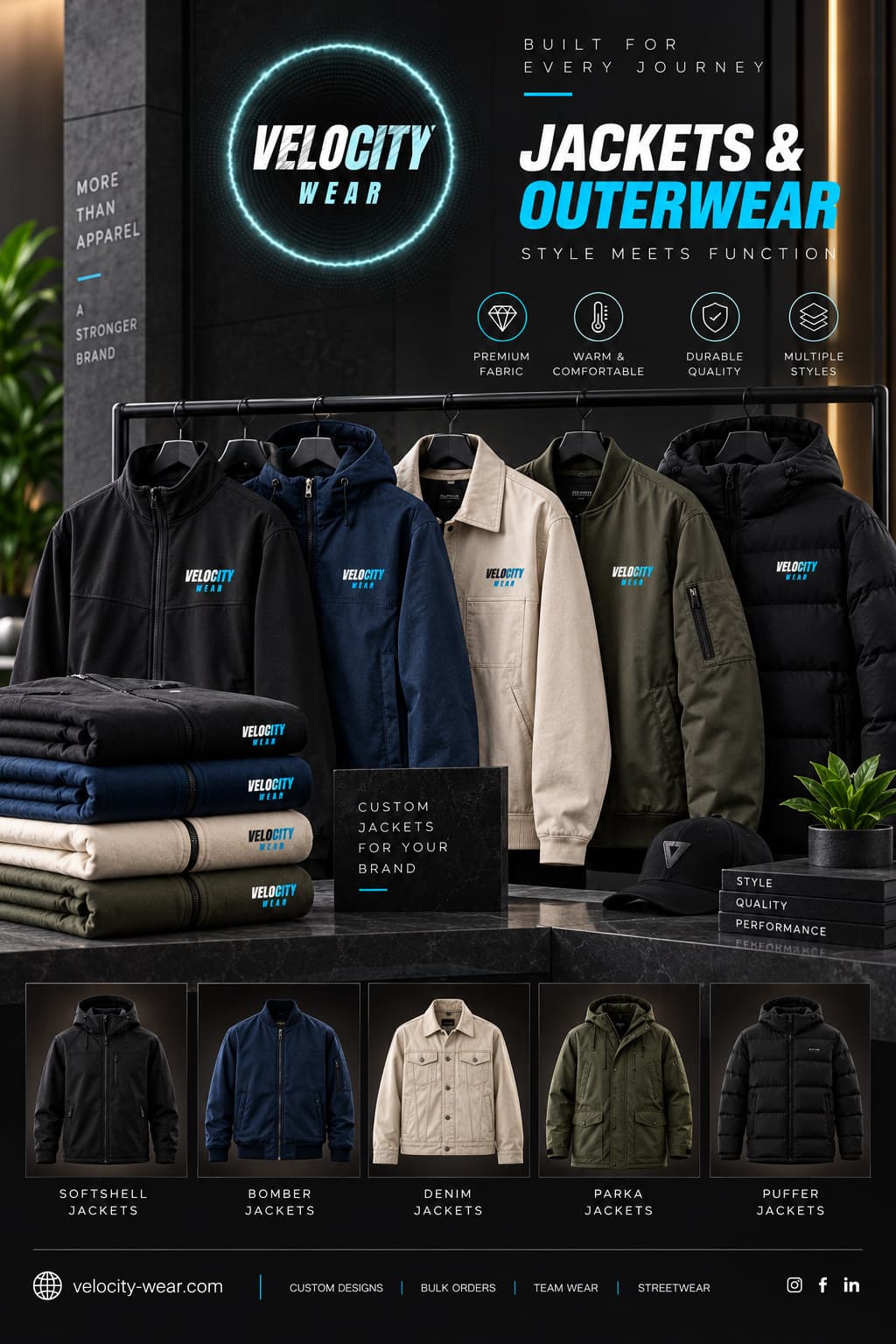
The mix itself does not change the minimum or the tier you land in. Fifty pieces is fifty pieces whether they are all large or spread across seven sizes, and the discount ladder on the pricing page is driven by quantity alone, rising to 35% off the 50-piece price at the top tier. What a wider range does change is the risk you are carrying, because every size you add is another bucket that can be left over. The wholesale jackets range covers softshell, puffer, coach and varsity styles, and each of them is quoted with its own measurements so you can build the curve against real numbers.