Wholesale Jackets & Outerwear for Retailers
By The Velocity Wear Team
A retailer buying outerwear is buying stock, not uniform, so the numbers that matter are margin, size curve and how fast the rail refills. Jackets are quoted per job rather than at a published price, the minimum is fifty per design, and the discount reaches 35% as quantity rises from that fifty-piece price.
What margin does a wholesale jacket leave?
That depends where you land on the tiers. The fifty-piece price is the highest per unit you will pay, and it falls through 100–249, 250–499, 500–999 and 1,000+. A retailer pricing at a standard multiple will usually find outerwear only works above the first tier, because a jacket carries more landed cost than a tee and occupies the same shelf space. Model the rail at two tiers before deciding which to buy.
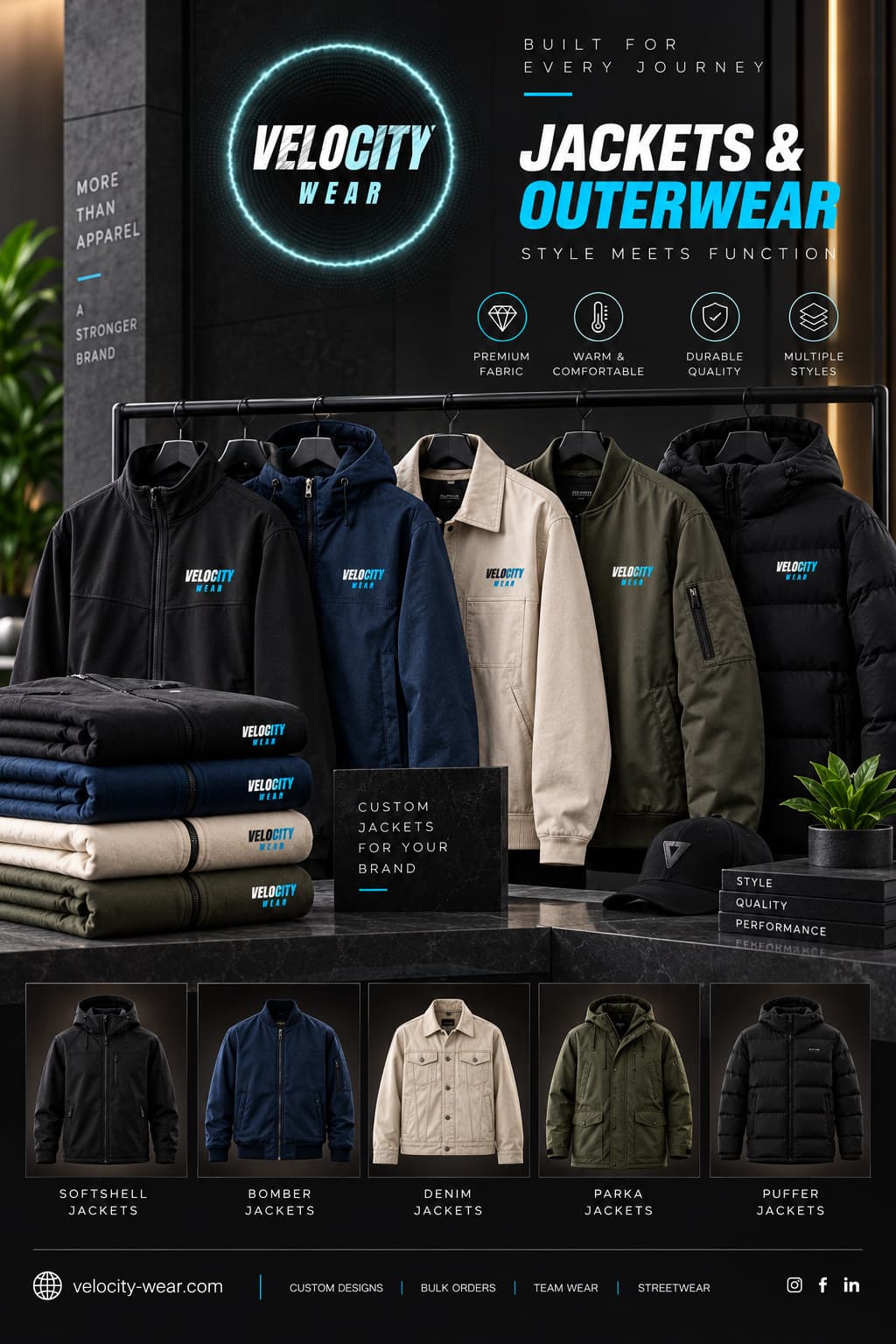
The full range available at wholesale is on the wholesale catalogue, and outerwear specifically on the wholesale jackets page.
What size curve should you buy?
Not an even one. Outerwear sells to a curve weighted towards M and L, and a retailer who splits fifty evenly across six sizes ends up with a rail of XS and XXL by week three. Buy the middle heavy, keep the ends thin, and record what actually sells so the second run is bought against evidence rather than instinct. Sizes mix freely inside the fifty, which makes the curve free to set.
How often should a rail be restocked?
Set a trigger level rather than a calendar date. Making time is 10–15 working days from artwork approval plus transit, so the reorder has to go in while stock is still on the rail, not after the last piece sells. Work out how many weeks of cover that lead time represents at your current rate and place the repeat at that point. Reorder timing and safety stock works through the calculation properly.
The figures that tell you when to pull that trigger are the ones worth tracking anyway, and ecommerce KPIs for clothing brands sets out which ones earn their place.
Can a retailer put its own label in?
Yes. Custom woven neck labels, tear-out labels, swing tags and packaging turn a wholesale shell into own-brand stock, and on outerwear that is what supports the ticket price. Specify the label at order time, since a woven label is built into the garment rather than added to it. Invoicing runs in seven currencies and delivery covers the UK, USA and Europe, so a retailer selling into more than one market can buy once and ship to each.
How do you choose which styles to carry?
Start with what your existing customers already buy. A shop selling mostly heavyweight cotton will move a coach jacket or a varsity; one selling technical gear will not. Outerwear is a considered purchase, so it sells on the back of trust you have already built rather than on impulse, and a style that sits outside your usual range tends to sit on the rail as well.
Carry fewer styles more deeply. Two colourways of one shell, each at fifty, cost more per piece and cover less demand than a hundred of a single colourway in a full size run. Depth is what prevents the most common lost sale, which is a customer who wants the jacket in a size you sold out of in week two.
Then track sell-through per style rather than total revenue, so the second buy is led by evidence instead of by which sample you liked most.