Jackets & Outerwear for Bands, Ordered Properly
By The Velocity Wear Team
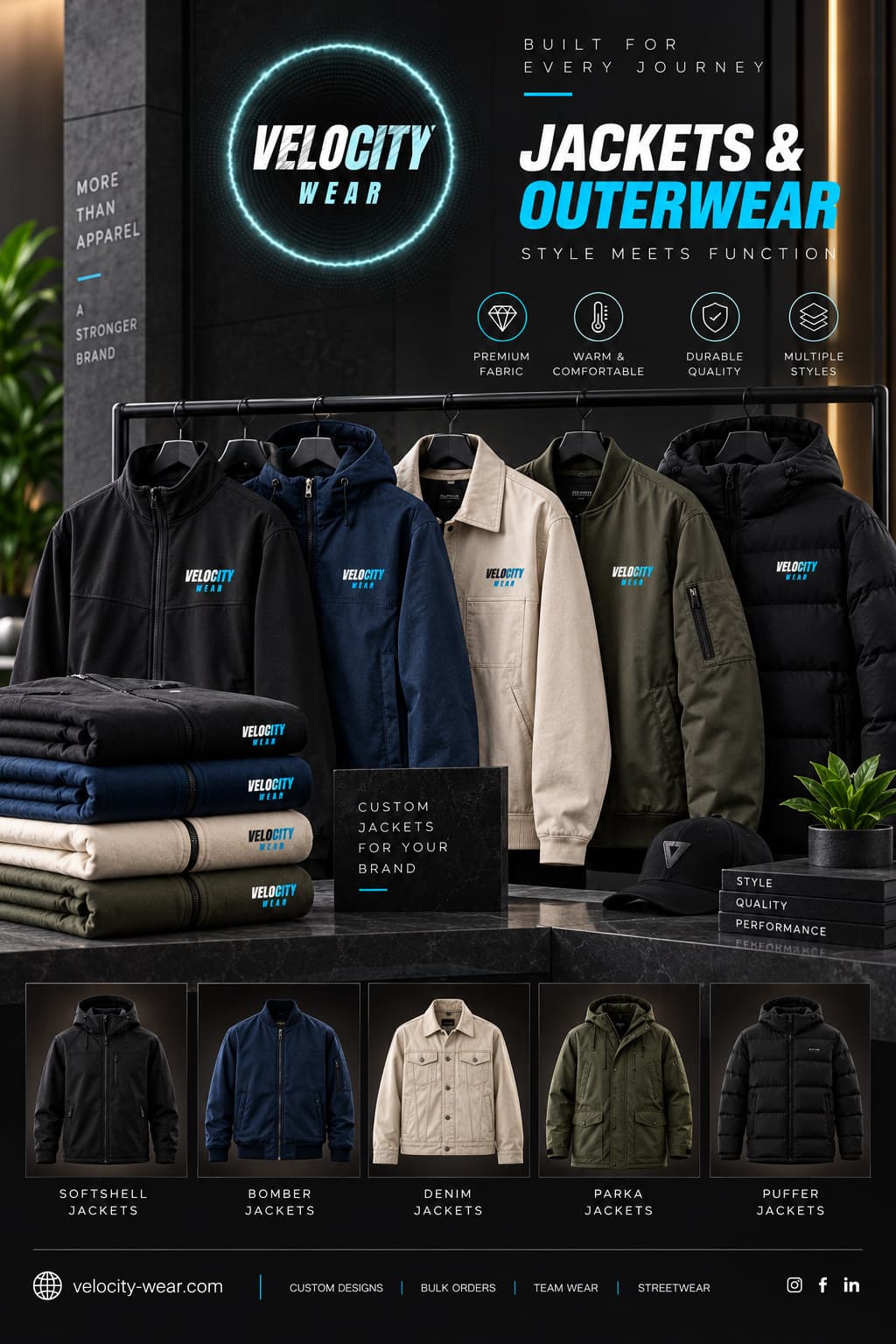
Outerwear on a merch table is a high-ticket, low-volume item. It will not outsell a tee, but each sale is worth several of them, and a jacket is the piece a fan keeps. Jackets are quoted per job rather than at a listed price, and the fifty-piece minimum per design is what makes the maths interesting for a touring act.
Does outerwear sell on a merch table?
It sells slowly and at a good margin, which suits a run of dates rather than one night. A coach jacket or a varsity is the format that moves; a technical softshell does not read as band merch at all. Expect it to sit as the top item on the table rather than the volume one, and price the tee to carry the stand while the jacket carries the margin.
Printing for events and merch goes through how the rest of a table should be built around it.
How do you price a jacket for a tour run?
Start from the quote for the quantity you will actually make, add the cost of carrying the stock from city to city, then set a price a fan can pay in cash at a table. The tiers matter here: the price falls as quantity rises, up to 35% from the fifty-piece price, so a fifty-piece run is the most expensive per unit you will ever buy. If the tour is long enough to sell a hundred, buying a hundred is cheaper per jacket and cheaper per sale.
The bands and music page covers the rest of the merch line, and the shells are listed on the wholesale jackets page.
What should a limited run leave you holding?
Nothing you cannot sell online after the last date. That means leaving tour dates off the back unless you are confident of selling out, because a dated jacket is worthless in February. Undated artwork with a small date patch, or a design that works as a catalogue piece, keeps the stock alive. Weight the size curve towards M and L, because that is what sells first and what you will run out of on night three.
When should the order go in?
Making time is 10–15 working days from artwork approval, plus transit to the UK, USA or Europe. For a tour that means artwork signed off at least two months before the first date, since a sample adds its own making time — £150, credited against the bulk order — and you want the boxes in hand before the stock is loaded. Planning a seasonal push at the same time? Black Friday for small clothing brands covers whether a discount is worth taking on a high-ticket item.
How do you sell a jacket you cannot show in person?
With measurements and photographs of the real garment, not a mockup. Someone spending jacket money wants to know the chest width and the sleeve length, and a render tells them neither. Photograph the sample on a person, list flat measurements for every size, and say plainly how it fits against a standard tee.
Sell it in the same places the tees sell. A separate landing page for one high-ticket item splits attention; the jacket does better at the top of the existing merch list where everyone already looks. Keep it listed between tours rather than pulling it, because outerwear moves through autumn whether or not anyone is on the road.
Hold the stock somewhere you can ship from quickly. A jacket that takes three weeks to post after payment generates more refund requests than any other item on the table.