Bulk Jackets & Outerwear for Agencies: A Buyer's Guide
By The Velocity Wear Team
An agency ordering outerwear is ordering on someone else's brand and against someone else's deadline. The risk is not the garment, it is the approval chain: a client who signs off artwork late leaves the production window exactly where it was. Outerwear carries a per-job quote, a fifty-piece minimum per design, and ten to fifteen working days of production once the artwork is signed.
How do you hold a client's brand guidelines on a jacket?
Get the source artwork, not a logo lifted from a deck, and get the colour reference the client uses in print rather than the hex value from their website. A screen colour and a thread colour are not the same thing, and the difference is what a brand manager notices first. Where a guideline specifies minimum clear space, check it survives at garment scale, because a chest mark is smaller than anything most guidelines were written for.
The corporate page covers the wider staff kit an agency is usually briefed on at the same time.
What does a campaign timeline need to allow for?
Four blocks, in this order: artwork gathering, client approval, production at 10–15 working days, and transit. Agencies routinely plan the last two and forget the first two, then compress the only part that cannot be compressed. Put the client approval deadline in the campaign plan as a dated milestone with a named owner, and treat a missed one as a moved delivery date rather than a problem to absorb.
Where a sample is needed for the client to see the thing in the flesh, add its making time as well. Taking one adds £150, credited back when the bulk order is placed.
Who signs off the artwork, and when?
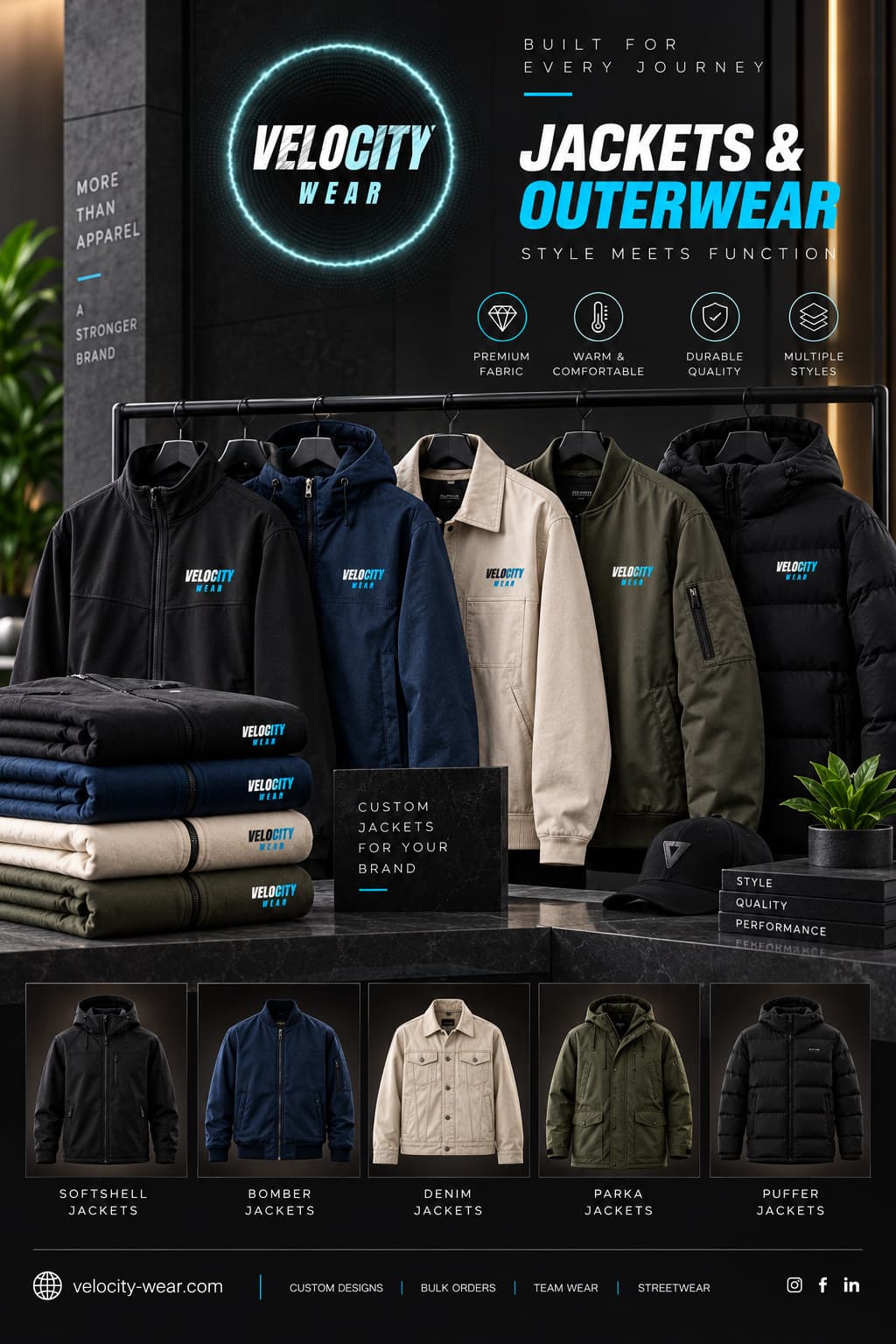
One named person on the client side, before production, in writing. The failure mode on agency orders is a proof approved by an account manager and then queried by a brand lead after the screens are made, at which point the run already exists. A single named approver and a dated proof removes that entirely. The shells and their decoration options are on the wholesale jackets page.
Agencies handling an internal staff order alongside the client one will find the same sizing and stock questions in outerwear for offices.
How do you handle quantities on a client campaign?
Fifty per design, sizes mixed freely, is the unit you are buying in. That shapes the recommendation you give the client: one design across the whole campaign beats three designs at a third of the volume, both on cost and on the tiers, where discounts reach 35% as quantity rises. Where a campaign covers several client teams, distinguish them with something that is not artwork — a lanyard, a badge, a pin — so the run stays a single design. Corporate gifting with branded apparel covers what tends to get worn afterwards.
What should the agency keep on file afterwards?
Enough that the repeat does not become a fresh project. That means the approved artwork as supplied, the colour references used in thread and ink, the shell and size range ordered, the quantity, and the dated approval itself. A retainer client who asks for the same jacket eighteen months later should cost an email rather than a week.
It also protects the agency. When a brand team changes and someone queries why a mark sits where it does, a dated proof with a name on it answers the question in one message. Without it, the conversation becomes a negotiation about who pays for a reprint.
Store it with the campaign assets rather than in an account manager's inbox, because account managers move on and outerwear orders outlast them.