Wholesale Bottles: lead time
By The Velocity Wear Team
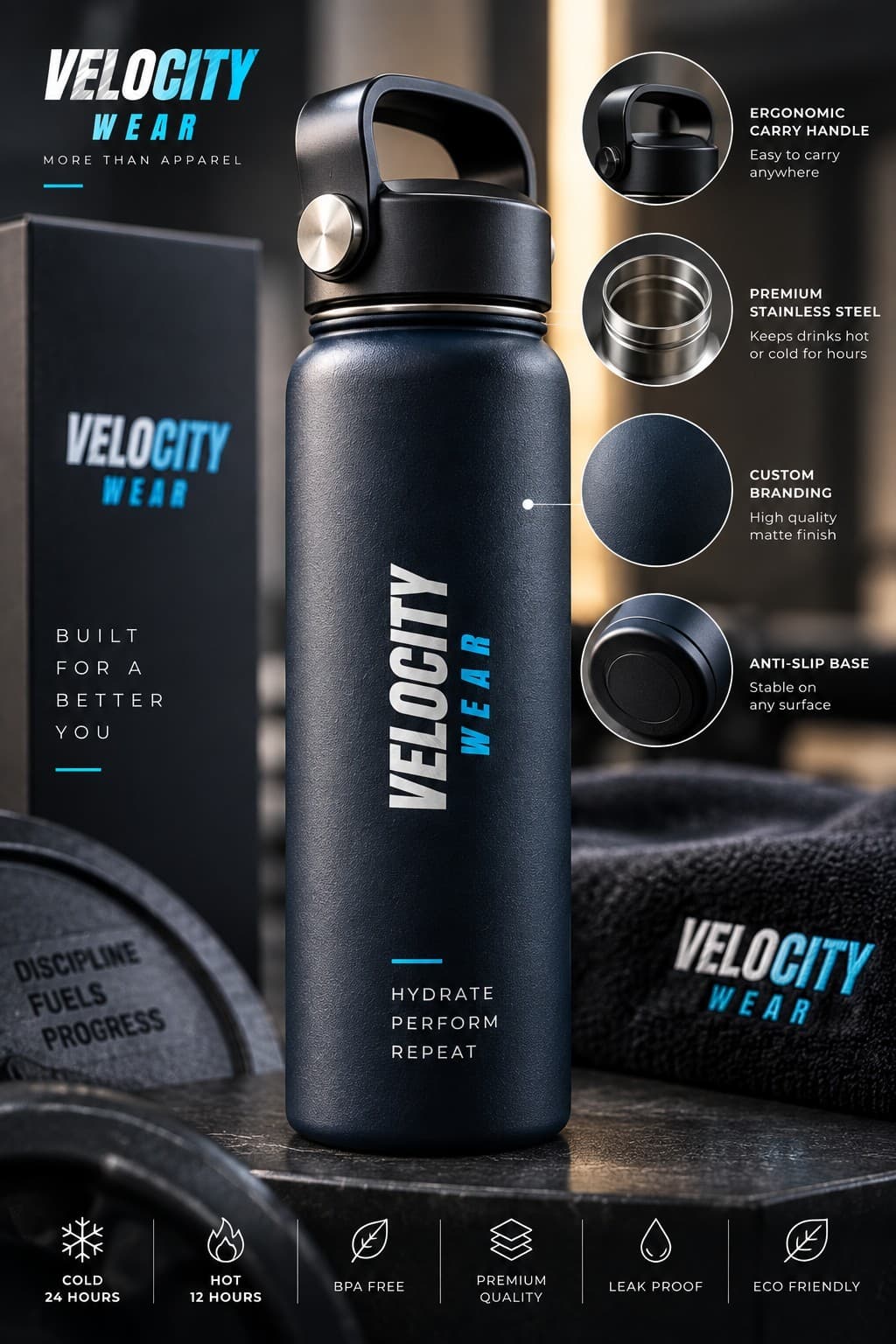
Branded bottles take 10 to 15 working days from artwork approval, with delivery transit on top of that. Because bottles are heavier and bulkier than clothing, the transit portion is worth checking separately rather than assuming it matches a garment shipment. Plan on roughly a month from approval to having them in hand for a UK delivery.
How fast can branded bottles be made?
The production window is 10 to 15 working days and it is the same for drinkware as for apparel. Use the upper figure when you plan. Fifteen working days is three calendar weeks, and a public holiday inside that span pushes it further, so converting to real dates early is the only way to know whether your deadline is comfortable or optimistic.
Quantity has less effect on this than people expect. An order of 500 bottles does not take five times as long as an order of 100; both sit inside the normal window. What does affect it is a specification that is still moving when you thought it was settled. Check what the bottles page covers before you commit, and look across the wholesale range if bottles are going into a kit with other items.
What date should you work back from?
The day people receive the bottles, not the day the event happens. For a staff rollout that means the day of the handout; for a gym membership drive it means the day the campaign opens. Subtract transit, subtract 15 working days, then subtract your own approval time, and you have the date the artwork has to be signed off.
Add a buffer beyond that if the bottles are one component of a larger kit. A kit is only as ready as its slowest item, and the method for handling that across several products at once is set out in planning apparel lead times so you never air freight.
Where do delays usually come from?
Almost never from the production line. They come from the gap between sending artwork and approving the proof, and from specification changes made after the quote — a different capacity, a colour switch, a late decision to add individual packing. Each of those resets part of the setup and pushes the start date back.
If you want a physical check first, the £150 sample is the way to get one, and it is credited against the bulk order. Budget an extra round trip for it rather than squeezing it into an existing schedule. The general pattern of what pushes an order late is covered in understanding lead times: what delays a clothing order.
Can bottles arrive with the rest of a kit?
Yes, if everything is approved together. Bottles, garments and accessories share the 10 to 15 working day window, so a single approval date generally produces a single delivery. What breaks that is approving three items on three different days and expecting them to converge on one.
Where one component is genuinely slower to settle, ship in two waves rather than holding the whole order. Getting the bulk of a kit in on time and one item a week later is almost always better than everything arriving after the date it was needed for.
Confirm the delivery address early rather than late. Drinkware arrives as a heavy pallet or a stack of cartons, and an address that copes with a few boxes of clothing may not cope with that: a first-floor office with no lift, a site with restricted access hours, a home address with nobody in during the day. Settling the destination at order stage avoids a failed delivery that costs more days than the production window ever could.
Book time in your own calendar for the approval as well as setting a deadline for the supplier. Approval is routinely treated as something that happens whenever everyone is free, which is exactly how a fortnight disappears from a schedule that looked comfortable when it was drawn up.